

Sign up to explore more
Create a free account to navigate family trees, view ancestors, and discover connections.


Sign up to explore more
Create a free account to navigate family trees, view ancestors, and discover connections.
Armistead Family Genealogy & History
Discover the Global Legacy of the Armistead Surname
The Armistead surname, both a family name and a masculine given name, finds its roots in England, where it first appeared in the early 15th century. This name has a rich history and cultural significance, originating in the United Kingdom's historical landscape. Over time, the Armistead name has been borne by many notable figures, including military officers, politicians, and writers, reflecting a legacy deeply embedded in various cultural and historical contexts.
Throughout the centuries, the Armistead surname evolved and spread geographically, primarily within England before making its way across the Atlantic. By the 17th century, Armistead families had begun to establish themselves in the United States, marking a significant period of expansion and adaptation. The 18th and 19th centuries saw further growth as these families laid down roots across different U.S. regions, contributing to a rich and diverse Armistead family tree. This widespread presence offers a tapestry of stories and connections that continue to intrigue genealogists today.
YourRoots data confirms the early presence of the Armistead surname in England during the 15th century, highlighting the historical roots of this lineage. The dataset provides insights into the surname's proliferation, particularly in England during the 16th century, aligning with historical records. As Armistead families migrated to the United States in the 17th century, YourRoots data enriches this narrative by detailing the surname's establishment and growth across the continent.
In the 21st century, Armistead genealogy records continue to uncover the global spread of the surname, offering valuable insights for family history researchers. The consistency between historical accounts and YourRoots data presents a robust framework for those interested in tracing the Armistead family tree, revealing a legacy that spans continents and generations.
Find the Armistead Family Tree
Search more Armistead trees & genealogy records
Records
-
MAMary Elizabeth Armistead1716–1768Public Tree Person5 treesScore: AMAMary Elizabeth Armistead1716–1768Public Tree Person5 treesScore: A
-
WAWilliam Armistead1610–1671Public Tree Person3 treesScore: AWAWilliam Armistead1610–1671Public Tree Person3 treesScore: A
-
SASusanna Armistead1708–1793Individual Tree PersonParents: Thomas Meriwether & Elizabeth YoungSpouse: John ArmisteadChildren: Lucy, Robert, William, John, Susanna, Letitia, JohnScore: ASASusanna Armistead1708–1793Individual Tree PersonParents: Thomas Meriwether & Elizabeth YoungSpouse: John ArmisteadChildren: Lucy, Robert, William, John, Susanna, Letitia, JohnScore: A
-
MAMary Ann ARMISTEAD1680–1724Individual Tree PersonParents: John Armistead & Judith RobinsonSpouse: Peter RogersChildren: JosephScore: AMAMary Ann ARMISTEAD1680–1724Individual Tree PersonParents: John Armistead & Judith RobinsonSpouse: Peter RogersChildren: JosephScore: A
-
EAElizabeth Armistead1850–1934Individual Tree PersonParents: James Armstead & Jane LeverScore: AEAElizabeth Armistead1850–1934Individual Tree PersonParents: James Armstead & Jane LeverScore: A
-
LALucy Armistead1725–1770Individual Tree PersonParents: Henry Armistead & Martha ArmisteadSpouse: Thomas NelsonChildren: John, WilliamScore: ALALucy Armistead1725–1770Individual Tree PersonParents: Henry Armistead & Martha ArmisteadSpouse: Thomas NelsonChildren: John, WilliamScore: A
-
EAEliza Armistead1854–1924Individual Tree PersonParents: Augustus ArmisteadSpouse: Fredrick SneedChildren: Alexander, Clara, Sarah, MaryScore: AEAEliza Armistead1854–1924Individual Tree PersonParents: Augustus ArmisteadSpouse: Fredrick SneedChildren: Alexander, Clara, Sarah, MaryScore: A
-
HAHenry Armistead1670–1739Individual Tree PersonParents: John Armistead & Judith RobinsonSpouse: Martha BurwellChildren: WilliamScore: AHAHenry Armistead1670–1739Individual Tree PersonParents: John Armistead & Judith RobinsonSpouse: Martha BurwellChildren: WilliamScore: A
-
WAWilliam Westwood Armistead1813–1882Individual Tree PersonParents: 6 1791 & 6 1792Spouse: Nancy PresnallChildren: John, LeeScore: AWAWilliam Westwood Armistead1813–1882Individual Tree PersonParents: 6 1791 & 6 1792Spouse: Nancy PresnallChildren: John, LeeScore: A
-
CACapt. William Armistead1762–1842Individual Tree PersonParents: Anthony Armistead & Elizabeth LeeSpouse: Rebecca KimballChildren: Jane, Robert, John, Elizabeth, WestwoodScore: ACACapt. William Armistead1762–1842Individual Tree PersonParents: Anthony Armistead & Elizabeth LeeSpouse: Rebecca KimballChildren: Jane, Robert, John, Elizabeth, WestwoodScore: A
-
AAAlfred D Armistead1902–1994Individual Tree PersonParents: Robert Armistead & Georgia ReidScore: AAAAlfred D Armistead1902–1994Individual Tree PersonParents: Robert Armistead & Georgia ReidScore: A
-
CACecil Guy Armistead1903–1991Individual Tree PersonParents: James 1867 & Lula HearnScore: ACACecil Guy Armistead1903–1991Individual Tree PersonParents: James 1867 & Lula HearnScore: A
-
JAJudith Armistead1665–1699Individual Tree PersonParents: John Armistead & Judith RobinsonSpouse: King CarterChildren: John, Elizabeth, Judith, Judith, Sarah, LucyScore: AJAJudith Armistead1665–1699Individual Tree PersonParents: John Armistead & Judith RobinsonSpouse: King CarterChildren: John, Elizabeth, Judith, Judith, Sarah, LucyScore: A
-
MAMary Armistead1706–1788Individual Tree PersonParents: John Armistead & Elizabeth PerkinsSpouse: William FieldenChildren: William, Alice, Armistead, Ann, Elizabeth, JohnScore: AMAMary Armistead1706–1788Individual Tree PersonParents: John Armistead & Elizabeth PerkinsSpouse: William FieldenChildren: William, Alice, Armistead, Ann, Elizabeth, JohnScore: A
-
JAJohn Armistead1694–1734Individual Tree PersonParents: William Armistead & Hannah HindeSpouse: Susanna Armistead, Susannah MeriwetherChildren: Lucy, Robert, William, John, Susanna, Letitia, JohnScore: AJAJohn Armistead1694–1734Individual Tree PersonParents: William Armistead & Hannah HindeSpouse: Susanna Armistead, Susannah MeriwetherChildren: Lucy, Robert, William, John, Susanna, Letitia, JohnScore: A
-
TAThelma Armistead1908–1976Individual Tree PersonParents: Robert Armistead & Georgia ReidSpouse: Andrew PattersonScore: ATAThelma Armistead1908–1976Individual Tree PersonParents: Robert Armistead & Georgia ReidSpouse: Andrew PattersonScore: A
-
MAMary Armistead1921–2013Individual Tree PersonParents: John Armistead & Lue ArmisteadSpouse: James SobolikScore: AMAMary Armistead1921–2013Individual Tree PersonParents: John Armistead & Lue ArmisteadSpouse: James SobolikScore: A
-
KAKathline Armistead1902–2001Individual Tree PersonParents: Robert Armistead & Georgia ReidScore: AKAKathline Armistead1902–2001Individual Tree PersonParents: Robert Armistead & Georgia ReidScore: A
-
MAMary Marot Armistead1761–1797Individual Tree PersonParents: Robert Armistead & Anne ShieldsSpouse: John TylerChildren: Christina, William, Wat, Maria, Martha, Elizabeth, Anne, 10thScore: AMAMary Marot Armistead1761–1797Individual Tree PersonParents: Robert Armistead & Anne ShieldsSpouse: John TylerChildren: Christina, William, Wat, Maria, Martha, Elizabeth, Anne, 10thScore: A
-
WAWilliam Armistead1715–1755Individual Tree PersonParents: Henry Armistead & Martha BurwellSpouse: Rebecca BowlesChildren: Charles, JudithScore: AWAWilliam Armistead1715–1755Individual Tree PersonParents: Henry Armistead & Martha BurwellSpouse: Rebecca BowlesChildren: Charles, JudithScore: A
Search more trees & records for
Armistead for free
Tracing Your Armistead Family Lineage
Origin of the Armistead Family: Where does the Armistead surname come from?
The earliest known appearance of the Armistead surname is found in records from England during the early 15th century. This initial documentation marks a significant point in the genealogy of the Armistead family, suggesting the roots of this lineage began in the rich historical and cultural landscape of the United Kingdom. From these early beginnings, families with the Armistead surname began to carve out their identities, laying the groundwork for future generations to explore and expand their family trees.
Genealogy and Early Family History of Armistead
Throughout the subsequent centuries, the Armistead family began to spread primarily across England, establishing notable branches in various regions. During the late 15th century, the surname saw increased prevalence, indicating a period of growth and consolidation for families bearing the Armistead name. As generations progressed, these families began to build extensive family trees, with connections formed through marriages, migrations, and community ties that would shape the lineage further.
In the 16th century, the Armistead name began to appear in records more frequently, suggesting a flourishing presence in England. The families that emerged during this time laid the foundation for future migrations, setting the stage for the wider dispersal of the Armistead surname in the following centuries. This period was crucial for the establishment of familial connections that would resonate through the ages.
Tracing the Armistead Family Tree Through the Centuries
As the centuries progressed, the Armistead surname began to expand beyond its English origins, particularly during the 17th century when many families found their way to the United States. This migration marked a significant transformation, as the Armistead name became more prominent in American records, indicating a robust adaptation to new environments and opportunities. The 18th century continued this trend, with families establishing themselves across various regions in the United States, contributing to a diverse and interconnected family history.
In the 19th century, the Armistead lineage grew substantially in the United States, further solidifying its presence and influence. Families migrated across states and regions, creating branches of the family tree that spanned the continent. By the 20th century, the global reach of the Armistead surname showcased its adaptability and resilience, with connections extending beyond North America to include varied international ties.
Where to Find Armistead Genealogy Records Today
Today, the Armistead surname can be traced through a diverse array of records that reflect its global spread. In the 21st century, families continue to explore their connections, discovering rich histories that intertwine across continents. Readers are encouraged to delve into the Arm
Famous People with Armistead (and Their Family Tree)

George Armistead
George Armistead, an American military officer, is renowned for his command of Fort McHenry during the pivotal Battle of Baltimore in the War of 1812. His leadership during the 25-hour bombardment inspired Francis Scott Key to write "The Star-Spangled Banner," now the U.S. national anthem. Armistead's strategic acumen led to a brevet promotion to lieutenant colonel. His career began in the Quasi War with France, demonstrating a lifelong dedication to military service. Armistead's legacy is immortalized by a marble monument in Baltimore, celebrating his role in defending the city.
Born on April 10, 1780, George Armistead hailed from a family with deep military roots. His parents, Lucinda Baylor Page and John Armistead, resided at Newmarket Plantation in Virginia. The Armistead family included five brothers, all of whom served as officers in the War of 1812, illustrating a strong tradition of military service. His family's lineage traces back to British emigrants who settled in Virginia before the American Revolutionary War, aligning with the Patriot cause.

Walker Keith Armistead
Walker Keith Armistead (1773–1845) was a distinguished military officer who served as Chief of Engineers for the United States Army Corps of Engineers. Born in Upperville, Virginia, Armistead played a crucial role in American military history, participating as an orderly sergeant in the Battle of Fallen Timbers and serving as Chief Engineer during the War of 1812. He was promoted to colonel and Chief Engineer in 1818 and eventually became a brigadier general. Armistead also commanded the army during the Second Seminole War, demonstrating exemplary leadership in various strategic military roles throughout his 42-year career.
Walker Keith Armistead's family included notable military figures. His brother, George Armistead, famously commanded Fort McHenry during the Battle of Baltimore, inspiring the writing of "The Star-Spangled Banner." His son, Lewis Addison Armistead, served as a Confederate general and died during Pickett's Charge at the Battle of Gettysburg. The Armistead family legacy is marked by significant contributions to American military history.

Samuel G. Armistead
Samuel Gordon Armistead (1927–2013) was a distinguished American ethnographer, linguist, and historian renowned for his expertise in medieval Spanish literature and Hispanic folk traditions. A prolific author, he contributed over twenty books and numerous articles, focusing on the Sephardic Jewish community's oral literature, Ladino, and the Spanish dialects in Louisiana. Armistead's academic career spanned prestigious institutions, including the University of California, Davis, where he served as professor emeritus. His collaborative works with noted scholars like Joseph H. Silverman and Israel J. Katz on Sephardic and Portuguese oral traditions have cemented his legacy as a leading Hispanist scholar.
Samuel G. Armistead hailed from Philadelphia, Pennsylvania, born to Elizabeth Tucker Russell Armistead, a historian and linguist. He grew up in a family of lawyers and bankers, alongside his brother, Harry Armistead. His familial connections and upbringing in a culturally rich environment likely influenced his passion for languages and Hispanic culture.
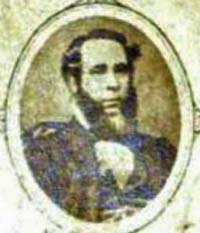
Wilson Armistead
Wilson Armistead, an influential English businessman and abolitionist from Leeds, is renowned for his leadership in the Leeds Anti-Slavery Association and his pivotal role in the abolitionist movement. Known for his anti-slavery writings, his most acclaimed work, "A Tribute for the Negro" (1848), remains a significant academic resource. Armistead's activism included hosting fugitive slaves Ellen and William Craft, marking a bold abolitionist stance. His connections with key abolitionists like William Wells Brown and Joseph Sturge further amplified his impact in the fight against slavery.
Wilson Armistead was born on 30 August 1819 in Leeds to Joseph and Hannah Armistead. He grew up in Holbeck, where his family operated a flax and mustard business, and was raised in the Quaker faith, which deeply influenced his humanitarian endeavors.
Bill Armistead
Bill Armistead is a prominent American politician from Alabama, known for his significant contributions to the state's political landscape. Born on May 29, 1944, in Campbell, Alabama, Armistead served as the chairman of the Alabama Republican Party from 2011 to 2015 and represented the 14th district in the Alabama Senate from 1994 to 2002. He played pivotal roles in several gubernatorial campaigns, including those of Tim James and Robert J. Bentley. Armistead's career highlights include working as a chief economic advisor for Governor H. Guy Hunt and founding the Samford chapter of the College Republicans, showcasing his long-standing dedication to the Republican Party and his influence on Alabama politics.
Armistead Surname Meaning, Origin, and History
The surname "Armistead" is of notable historical significance, associated with various prominent figures in American history, including military officers, politicians, and cultural contributors. It also serves as a masculine given name, borne by individuals involved in politics, law, and the arts. The name is linked to both American and British heritage, with connections to military and abolitionist efforts.
VIEW MOREWhere to Find Genealogy Records for Armistead
We’ve analyzed YourRoots tree and records data to uncover where genealogists are finding key sources such as census, birth certificates, marriage records, and obituaries for the Armistead family. Explore our most popular genealogy record sources for the Armistead surname to learn more.
VIEW MOREAbout YourRoots
Explore your family tree geographically
Import your GEDCOM file to transform your family tree into an interactive global map. See your roots laid out visually and understand your true geographic heritage.
Powerful tools like "Trace Back To Me" instantly map your family's migration paths from a chosen ancestor all the way back to you.
Discover ancestors beyond "end-of-line" automatically
Import your family tree and let AI expand it for you. AI Ancestor Finder scans "end-of-line" ancestors to uncover their parents across hundreds of family lines at once. AI Deep Research analyzes selected ancestors and family clusters, suggesting relevant records and next steps.
Turn on Auto Research Mode to get new discoveries daily or weekly, so your tree keeps growing even while you're away.
Find more DNA matches across all DNA tests
Combine your DNA data with your family tree to unlock the full power of YourRoots DNA Match. Connect with relatives across major testing services — Ancestry, 23andMe, MyHeritage, and more.
View your matches' maps and trees to identify shared ancestors, and soon you'll be able to add them directly to your own tree and map.
Ancestry DNA analysis that goes deeper than others
Unlock exclusive reports that reveal your deeper origins.
- Deep Ancestry Report — Analyze 130+ ethnicities, sub-regions, and 1,800+ communities in one detailed view.
- Global & Native American Reports — Developed with Stanford researchers to uncover hidden ancestries across all 22 chromosomes.
- Ancient DNA Series — Compare your DNA with 1,000+ ancient genomes from Viking, Celtic, and early American civilizations.
Sign up to explore more
Create a free account to navigate family trees, view ancestors, and discover connections.
Coming Soon
We're actively working on many new features for YourRoots. Features marked v2 are ones we're planning to launch soon.
Have a particular feature request? Let us know below!