
Sign up to explore more
Create a free account to navigate family trees, view ancestors, and discover connections.
Sign up to explore more
Create a free account to navigate family trees, view ancestors, and discover connections.
Barrow Family Genealogy & History
Discover the Global Legacy of the Barrow Surname
The Barrow surname traces its origins to England, where it first appeared in records during the early 15th century. The name likely derives from the Old English term for a hill or mound, reflecting geographical features significant to the family's early settlement areas. Over time, the Barrow surname became associated with various notable figures, establishing a rich historical tapestry within English-speaking regions.
As the Barrow family thrived in England, their surname began to spread culturally and geographically. The late medieval period saw the Barrow family expanding its presence, and by the early modern period, branches of the Barrow family tree had firmly established themselves in the United States. This migration highlights the adaptability and resilience of the Barrow lineage as it sought new opportunities and contributed to the growing diversity of the New World.
YourRoots dataset insights confirm the Barrow surname's deep roots in England, dating back to the 15th century, and its subsequent spread to the United States. This aligns with historical patterns of migration and settlement, illustrating how the Barrow genealogy reflects broader historical trends. As the Barrow family branched out over the centuries, they left a lasting impact across various regions, enriching the tapestry of their family tree.
Today, Barrow genealogy records offer a wealth of information for researchers interested in tracing their ancestry. The YourRoots database provides valuable resources for uncovering unique connections within the Barrow family tree, revealing the enduring legacy of a surname that has transcended borders and time. This continuity between historical records and YourRoots data provides a comprehensive view for anyone exploring Barrow family history.
Find the Barrow Family Tree
Search more Barrow trees & genealogy records
Records
-
HBHenry Basil Barrow1874–1957Public Tree Person3 treesScore: AHBHenry Basil Barrow1874–1957Public Tree Person3 treesScore: A
-
MBMary Barrow1598–1650Public Tree Person4 treesScore: AMBMary Barrow1598–1650Public Tree Person4 treesScore: A
-
WBWinifred Barrow1920–2003Individual Tree PersonParents: Edmund Barrow & Florence PeelSpouse: John DouthwaiteScore: AWBWinifred Barrow1920–2003Individual Tree PersonParents: Edmund Barrow & Florence PeelSpouse: John DouthwaiteScore: A
-
LBLenora Mae Barrow1912–1998Individual Tree PersonParents: Calvin Davis & Annie RockettScore: ALBLenora Mae Barrow1912–1998Individual Tree PersonParents: Calvin Davis & Annie RockettScore: A
-
EBEdward Barrow1886–1960Individual Tree PersonParents: Isaac Barrow & Mary BonsonScore: AEBEdward Barrow1886–1960Individual Tree PersonParents: Isaac Barrow & Mary BonsonScore: A
-
MBMary Jane Barrow1878–1943Individual Tree PersonParents: John Barrough & Lewrincy BarrowSpouse: John SappChildren: James, Irena, William, Gena, Mattie, Colquet, AnnieScore: AMBMary Jane Barrow1878–1943Individual Tree PersonParents: John Barrough & Lewrincy BarrowSpouse: John SappChildren: James, Irena, William, Gena, Mattie, Colquet, AnnieScore: A
-
MBMartha Matilda "Mattie" Barrow1870–1942Individual Tree PersonParents: Joseph Barrow & Virginia SowellSpouse: Neanian MayesChildren: Ruth, Alberta, William, Agnes, Essie, Eugene, OraScore: AMBMartha Matilda "Mattie" Barrow1870–1942Individual Tree PersonParents: Joseph Barrow & Virginia SowellSpouse: Neanian MayesChildren: Ruth, Alberta, William, Agnes, Essie, Eugene, OraScore: A
-
JBJohn Thomas Barrow1862–1945Individual Tree PersonParents: Melinda Primeau & John BarrowChildren: RuthScore: AJBJohn Thomas Barrow1862–1945Individual Tree PersonParents: Melinda Primeau & John BarrowChildren: RuthScore: A
-
CBCalvin Lynn Barrow1875–1952Individual Tree PersonParents: John Barrow & Margaret NoneScore: ACBCalvin Lynn Barrow1875–1952Individual Tree PersonParents: John Barrow & Margaret NoneScore: A
-
ABAlton Thompson Barrow1923–2016Individual Tree PersonParents: Lewis Barrow & Mary AskinsSpouse: Charlene EnsorScore: AABAlton Thompson Barrow1923–2016Individual Tree PersonParents: Lewis Barrow & Mary AskinsSpouse: Charlene EnsorScore: A
-
SBSarah Barrow1825–1896Individual Tree PersonParents: John Barrow & Winford BarrowScore: ASBSarah Barrow1825–1896Individual Tree PersonParents: John Barrow & Winford BarrowScore: A
-
HBHenry J Barrow1866–1939Individual Tree PersonParents: William Barrow & Mary LewisSpouse: Amanda BlaylockChildren: Bessie, James, Julia, Mary, Ocie, William, EffieScore: AHBHenry J Barrow1866–1939Individual Tree PersonParents: William Barrow & Mary LewisSpouse: Amanda BlaylockChildren: Bessie, James, Julia, Mary, Ocie, William, EffieScore: A
-
ABAaron William Barrow1762–1839Individual Tree PersonParents: William Barrow & Amy LeeSpouse: Susan Miskell, Susan Miskell, Martha Tatum, Martha Tatum, Martha TatumChildren: Rebecca, Moses, Susannah, Nancy, Mary, Rebecca, Thomas, Nancy, Rebecca, John, Jesse, MARY, DAVID, THOMAS, SUSANNA, Samuel, MOSES, Isaac, Charles, Hannah, Rebecca, Sarah, Nancy, Francis, Mariah, William, John, Mariah, Susan, William, Susannah, Anna, Martha, Sarah, William, Lucy, Rebecca, Mary, Aaron, Mary, Sarah, Isaac, John, Susanna, Hanna, Moses, Samuel, Rebecca, David, Nancy, Charles, Thomas, Mariah, William, William, William, Sarah, William, Rebecca, Mary, Charles, Moses, William, Anna, Jesse, John, Francis, Martha, Aaron, Susan, David, Lucy, Martha, William, SarahScore: AABAaron William Barrow1762–1839Individual Tree PersonParents: William Barrow & Amy LeeSpouse: Susan Miskell, Susan Miskell, Martha Tatum, Martha Tatum, Martha TatumChildren: Rebecca, Moses, Susannah, Nancy, Mary, Rebecca, Thomas, Nancy, Rebecca, John, Jesse, MARY, DAVID, THOMAS, SUSANNA, Samuel, MOSES, Isaac, Charles, Hannah, Rebecca, Sarah, Nancy, Francis, Mariah, William, John, Mariah, Susan, William, Susannah, Anna, Martha, Sarah, William, Lucy, Rebecca, Mary, Aaron, Mary, Sarah, Isaac, John, Susanna, Hanna, Moses, Samuel, Rebecca, David, Nancy, Charles, Thomas, Mariah, William, William, William, Sarah, William, Rebecca, Mary, Charles, Moses, William, Anna, Jesse, John, Francis, Martha, Aaron, Susan, David, Lucy, Martha, William, SarahScore: A
-
MBMarian Harriet Barrow1882–1941Individual Tree PersonParents: Stephen Barrow & Mary WorsleySpouse: Joseph WilsonChildren: Ethel, Leonard, William, ElsieScore: AMBMarian Harriet Barrow1882–1941Individual Tree PersonParents: Stephen Barrow & Mary WorsleySpouse: Joseph WilsonChildren: Ethel, Leonard, William, ElsieScore: A
-
GBGladys Barrow1899–1979Individual Tree PersonParents: Augustus Barrow & Alice TuckerSpouse: William ClarkeChildren: William, AliceScore: AGBGladys Barrow1899–1979Individual Tree PersonParents: Augustus Barrow & Alice TuckerSpouse: William ClarkeChildren: William, AliceScore: A
-
LBL A Barrow1815–1890Individual Tree PersonParents: Zadock Sr & Margaret ErwinSpouse: Jane Thomas, Delilah (Barrow)Children: Richard, Sittene, Emma, Jane, Nancy, Zetie, WilliamScore: ALBL A Barrow1815–1890Individual Tree PersonParents: Zadock Sr & Margaret ErwinSpouse: Jane Thomas, Delilah (Barrow)Children: Richard, Sittene, Emma, Jane, Nancy, Zetie, WilliamScore: A
-
RBRebecca Jane BARROW1857–1946Individual Tree PersonParents: Aaron BARROW & Sarah HooverSpouse: James BARROWChildren: Nina, EdwardScore: ARBRebecca Jane BARROW1857–1946Individual Tree PersonParents: Aaron BARROW & Sarah HooverSpouse: James BARROWChildren: Nina, EdwardScore: A
-
RBREUBEN Henry Barrow1745–1812Individual Tree PersonParents: Rev Sr & Mary BarrowSpouse: Milbery Barrow, Patience Barrow, Mary Barrow, Sarah BurrissChildren: ABSALOM, Charity, **James, Edy, John, Ferriby, John, John, Abraham, Reuben, Jasper, James, Susan, Lieuraney, Robert, Isabella, Thomas, Elisha, Elizabeth, AbigailScore: ARBREUBEN Henry Barrow1745–1812Individual Tree PersonParents: Rev Sr & Mary BarrowSpouse: Milbery Barrow, Patience Barrow, Mary Barrow, Sarah BurrissChildren: ABSALOM, Charity, **James, Edy, John, Ferriby, John, John, Abraham, Reuben, Jasper, James, Susan, Lieuraney, Robert, Isabella, Thomas, Elisha, Elizabeth, AbigailScore: A
-
SBStephen Barrow1828–1903Individual Tree PersonParents: James Barrow & Sarah HicksSpouse: Eleanor RenallChildren: Frank, Robert, Alfred, Emily, WilliamScore: ASBStephen Barrow1828–1903Individual Tree PersonParents: James Barrow & Sarah HicksSpouse: Eleanor RenallChildren: Frank, Robert, Alfred, Emily, WilliamScore: A
-
MBMelvin Claud BARROW1875–1930Individual Tree PersonParents: Robert BARROW & Maria BarrowSpouse: Ida BarrowChildren: Homer, James, Annie, Leona, SusieScore: AMBMelvin Claud BARROW1875–1930Individual Tree PersonParents: Robert BARROW & Maria BarrowSpouse: Ida BarrowChildren: Homer, James, Annie, Leona, SusieScore: A
Search more trees & records for
Barrow for free
Tracing Your Barrow Family Lineage
Origin of the Barrow Family: Where does the Barrow surname come from?
The Barrow surname first appears in records from England during the early 15th century, marking the beginning of its genealogical journey. This early mention connects to the roots of family trees that would branch out over time, establishing a lineage that would evolve significantly across various regions. The origins of the surname likely reflect both geographical and cultural influences of the time, paving the way for future generations to carry the Barrow name forward.
Genealogy and Early Family History of Barrow
In its formative centuries, the Barrow family began to establish itself in England, particularly in regions where agricultural and trade activities thrived. During the late medieval period, the surname saw a notable increase in presence, indicating the establishment of family lines that would grow and expand. These early Barrows built branches of their family trees, interconnecting with other local families and contributing to the broader tapestry of English genealogy.
As the centuries progressed, the Barrow family began to spread beyond England, with significant expansions noted in the New World. The later centuries saw Barrow family lines establishing themselves in the United States, where they adapted and thrived in a new environment. This expansion reflects the resilience and adaptability of the Barrow lineage as they sought new opportunities across the ocean.
Tracing the Barrow Family Tree Through the Centuries
Throughout the centuries, the Barrow surname experienced remarkable growth and geographical spread. In the early modern period, families bearing the Barrow name began to establish themselves prominently in the United States, reflecting patterns of migration and settlement. By the 19th century, the Barrow family tree had diversified across various states, showcasing a rich tapestry of connections and branches that linked back to their English origins.
In the 20th century, the Barrow surname continued to flourish, with families spreading into new regions and adapting to the changing societal landscape. The global reach of the surname is evident as it found its way into various communities around the world, showcasing a legacy that transcends borders. This ongoing evolution of the Barrow family tree highlights the dynamic nature of genealogy as it adapts to new generations and cultures.
Where to Find Barrow Genealogy Records Today
In the modern centuries, the Barrow surname has maintained a presence in many regions, particularly in the United States and other English-speaking countries. The widespread nature of the Barrow name today can be traced back through family trees that have evolved over centuries, offering a wealth of information for those researching their ancestry. Readers are encouraged to explore the Barrow genealogy records available in the YourRoots database to uncover their own unique family connections and contribute to the ongoing story of the Barrow lineage.
Famous People with Barrow (and Their Family Tree)

Isaac Barrow
Isaac Barrow (1630-1677) was a distinguished English theologian and mathematician, renowned for his contributions to the development of infinitesimal calculus, particularly the proof of the fundamental theorem of calculus. As the inaugural Lucasian Professor of Mathematics at Cambridge, a position later held by Isaac Newton, Barrow made significant advancements in geometry and optics. His scholarly work includes a complete edition of Euclid's Elements and his famous Lectiones Mathematicae, which explored the metaphysical basis for mathematical truths. Barrow's intellectual prowess and dedication to mathematics and divinity were recognized during his lifetime, culminating in his appointment as Master of Trinity College.
Isaac Barrow was born in London, the son of Thomas Barrow, a linen draper, and Ann Buggin of North Cray, Kent. After Ann's death around 1634, Isaac was sent to live with his grandfather, Isaac, the Cambridgeshire J.P. Thomas Barrow remarried Katherine Oxinden, with whom he had at least two children, Elizabeth and Thomas. Isaac's family connections included an uncle, Isaac Barrow, who became Bishop of St Asaph, and support from a member of the Walpole family, which facilitated his education at Trinity College, Cambridge.

West Kennet Long Barrow
The West Kennet Long Barrow, also known as South Long Barrow, is a prominent Neolithic chambered long barrow located near Avebury, Wiltshire. Constructed in the thirty-seventh century BC, it is part of the Cotswold-Severn Group, a regional variant of barrows in Western Britain. This archaeological site, constructed by pastoralist communities, was used for collective burials and later became a focal point for rituals in the Neolithic and Early Bronze Age. It is now a scheduled monument under English Heritage and part of the "Stonehenge, Avebury and Associated Sites" UNESCO World Heritage Site, attracting numerous visitors annually.
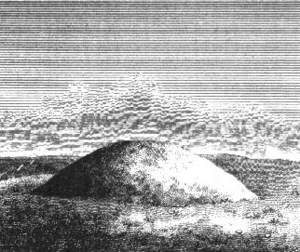
Bowl barrow
Bowl barrow is a type of burial mound prominently found in Great Britain, dating back to the Neolithic through the Bronze Age. Known for its hemispherical shape resembling an upturned bowl, it covers inhumations or cremations. A barrow is a mound of earth or stone used to cover a tomb, and a bowl barrow can be identified by its structured or unstructured form, with variations like kerbed or ditchless designs. The term "cairn" is used when the mound is entirely of stone. John Thurnam, an English psychiatrist and archaeologist, first identified bowl barrows in Great Britain, contributing significantly to our understanding of ancient burial practices.

Irvine Barrow
Augustus Irvine Barrow was a prominent Canadian chartered accountant and Senator, known for his significant contributions to the financial and political landscape of Nova Scotia. Born in Montreal in 1913, Barrow co-founded Barrow Nicoll & Company, an influential accounting firm in the Maritime provinces. He held esteemed positions, including President of the Nova Scotia Institute of Chartered Accountants and Director of the Bank of Canada. Appointed to the Senate by Prime Minister Pierre Trudeau in 1974, Barrow served as Chairman of the Standing Senate Committee on Banking, Trade, and Commerce until his retirement in 1988. Despite facing legal challenges in the 1980s, Barrow's career remains notable for his leadership and service.
Irvine Barrow was born to Hartley F. Barrow and Margaret E. (Irvine) in Montreal, Quebec. In 1918, the Barrow family relocated to Halifax, Nova Scotia, where Irvine's career and influence would later flourish. His parents' names suggest a blend of possibly Scottish or Irish heritage, typical of many Canadian families of the time.
Barrow Surname Meaning, Origin, and History
The surname "Barrow" is of English origin and is associated with a diverse array of notable individuals across various fields, including politics, music, sports, and academia. The name has been borne by figures such as English statesman Sir John Barrow, American gangster Clyde Barrow, and Gambian President Adama Barrow, reflecting its widespread presence and influence.
VIEW MOREWhere to Find Genealogy Records for Barrow
We’ve analyzed YourRoots tree and records data to uncover where genealogists are finding key sources such as census, birth certificates, marriage records, and obituaries for the Barrow family. Explore our most popular genealogy record sources for the Barrow surname to learn more.
VIEW MOREAbout YourRoots
Explore your family tree geographically
Import your GEDCOM file to transform your family tree into an interactive global map. See your roots laid out visually and understand your true geographic heritage.
Powerful tools like "Trace Back To Me" instantly map your family's migration paths from a chosen ancestor all the way back to you.
Discover ancestors beyond "end-of-line" automatically
Import your family tree and let AI expand it for you. AI Ancestor Finder scans "end-of-line" ancestors to uncover their parents across hundreds of family lines at once. AI Deep Research analyzes selected ancestors and family clusters, suggesting relevant records and next steps.
Turn on Auto Research Mode to get new discoveries daily or weekly, so your tree keeps growing even while you're away.
Find more DNA matches across all DNA tests
Combine your DNA data with your family tree to unlock the full power of YourRoots DNA Match. Connect with relatives across major testing services — Ancestry, 23andMe, MyHeritage, and more.
View your matches' maps and trees to identify shared ancestors, and soon you'll be able to add them directly to your own tree and map.
Ancestry DNA analysis that goes deeper than others
Unlock exclusive reports that reveal your deeper origins.
- Deep Ancestry Report — Analyze 130+ ethnicities, sub-regions, and 1,800+ communities in one detailed view.
- Global & Native American Reports — Developed with Stanford researchers to uncover hidden ancestries across all 22 chromosomes.
- Ancient DNA Series — Compare your DNA with 1,000+ ancient genomes from Viking, Celtic, and early American civilizations.
Sign up to explore more
Create a free account to navigate family trees, view ancestors, and discover connections.
Coming Soon
We're actively working on many new features for YourRoots. Features marked v2 are ones we're planning to launch soon.
Have a particular feature request? Let us know below!