
Sign up to explore more
Create a free account to navigate family trees, view ancestors, and discover connections.
Sign up to explore more
Create a free account to navigate family trees, view ancestors, and discover connections.
Burgh Family Genealogy & History
Discover the Global Legacy of the Burgh Surname
The Burgh surname, of Anglo-Norman origin, has deep roots in England. Emerging during a formative period in history, it signifies the evolution of family lines that would later gain prominence. The surname Burgh is associated with notable historical figures, including politicians, peers, and clerics, reflecting a legacy intertwined with England's and Ireland's rich historical tapestry.
Throughout the centuries, the Burgh surname spread across England and into Ireland, with significant growth observed from the 11th century onward. By the 12th century, the Burgh family tree had firmly established branches in Ireland, indicating a diversification of lines and cultural influence. The Burgh genealogy reveals a strong presence in England through the 13th and 14th centuries, leading to distinct family branches and a lasting impact on the regions they inhabited.
YourRoots data supports the historical trajectory of the Burgh surname, highlighting its presence in England since the 11th century. This aligns with the early establishment of Burgh families and their subsequent expansion into Ireland. The dataset shows how Burgh records evolved over time, with later centuries witnessing migration to the United States, illustrating the adaptability and resilience of the Burgh families as they established new roots globally.
Today, Burgh genealogy records reflect a wide-reaching family network, with significant populations in both the United States and the United Kingdom. The YourRoots database offers an invaluable resource for those looking to uncover their Burgh family tree, providing insights into a rich heritage and the evolution of the Burgh surname across centuries.
Find the Burgh Family Tree
Search more Burgh trees & genealogy records
Records
-
EBElizabeth De Burgh1332–1363Public Tree Person7 treesScore: AEBElizabeth De Burgh1332–1363Public Tree Person7 treesScore: A
-
KBKatherine Burgh1377–1451Individual Tree PersonParents: John Burgh & Katherine EngaineSpouse: Sir WatertonChildren: SirScore: AKBKatherine Burgh1377–1451Individual Tree PersonParents: John Burgh & Katherine EngaineSpouse: Sir WatertonChildren: SirScore: A
-
RBRichard De Burgh1186–1242Individual Tree PersonParents: Isabel PlantagenetSpouse: Hodierna Gernon, Egidia LacyChildren: WalterScore: ARBRichard De Burgh1186–1242Individual Tree PersonParents: Isabel PlantagenetSpouse: Hodierna Gernon, Egidia LacyChildren: WalterScore: A
-
ABAlbert Burgh1931–1965Individual Tree PersonParents: George Burgh & Blanche BurghSpouse: Patricia RumbaughScore: AABAlbert Burgh1931–1965Individual Tree PersonParents: George Burgh & Blanche BurghSpouse: Patricia RumbaughScore: A
-
TBTHOMAS DeBurgh II Sir Knight of the Garter, 5th Lord of Gainsborough, 3rd Baron Burgh1558–1597Individual Tree PersonParents: Sir Gainsborough & Katherine ClintonSpouse: Lady VaughnChildren: ElizabethScore: ATBTHOMAS DeBurgh II Sir Knight of the Garter, 5th Lord of Gainsborough, 3rd Baron Burgh1558–1597Individual Tree PersonParents: Sir Gainsborough & Katherine ClintonSpouse: Lady VaughnChildren: ElizabethScore: A
-
JBJohn BURGH1328–1393Individual Tree PersonParents: Thomas BURGH & Margaret WALDEGRAVESpouse: Catherine ENGAINE, John BURGH, Mary GREYChildren: Hugh, Elizabeth, Thomas, Joan, Margaret, KatherineScore: AJBJohn BURGH1328–1393Individual Tree PersonParents: Thomas BURGH & Margaret WALDEGRAVESpouse: Catherine ENGAINE, John BURGH, Mary GREYChildren: Hugh, Elizabeth, Thomas, Joan, Margaret, KatherineScore: A
-
ABAdam de Burgh1320–1347Individual Tree PersonParents: John Giffard & Eleanor CowleySpouse: Alilitha HarcourtChildren: Joan, ElizabethScore: AABAdam de Burgh1320–1347Individual Tree PersonParents: John Giffard & Eleanor CowleySpouse: Alilitha HarcourtChildren: Joan, ElizabethScore: A
-
RBRichard (Earl of Ulster) De Burgh1259–1326Individual Tree PersonParents: Walter Ulster & Aveline FitzJohnSpouse: Margaret DeBurghChildren: Elizabeth, Aveline, Joan, Eleanor, Walter, John, Katherine, Thomas, William, Eleanor, Edmund, LadyScore: ARBRichard (Earl of Ulster) De Burgh1259–1326Individual Tree PersonParents: Walter Ulster & Aveline FitzJohnSpouse: Margaret DeBurghChildren: Elizabeth, Aveline, Joan, Eleanor, Walter, John, Katherine, Thomas, William, Eleanor, Edmund, LadyScore: A
-
ABAlice Burgh1137–1173Individual Tree PersonParents: John Ponchard & Adelm MortaigneSpouse: Walter BurghChildren: HubertScore: AABAlice Burgh1137–1173Individual Tree PersonParents: John Ponchard & Adelm MortaigneSpouse: Walter BurghChildren: HubertScore: A
-
HBHavise Burgh1260–1284Individual Tree PersonParents: Sir Deburge & Cecilia BaliolSpouse: Robert GresleiChildren: JoanScore: AHBHavise Burgh1260–1284Individual Tree PersonParents: Sir Deburge & Cecilia BaliolSpouse: Robert GresleiChildren: JoanScore: A
-
LBLady ELIZABETH Queen of Scotland De BURGH1284–1327Individual Tree PersonParents: Richard Burgh & Marguerite GuinesSpouse: Robert ----Children: David, Lady, Matilda, Maud, Lady, John, MatildaScore: ALBLady ELIZABETH Queen of Scotland De BURGH1284–1327Individual Tree PersonParents: Richard Burgh & Marguerite GuinesSpouse: Robert ----Children: David, Lady, Matilda, Maud, Lady, John, MatildaScore: A
-
HBHugh DE BURGH1380–1430Individual Tree PersonParents: John BURGH & Catherine ENGAINESpouse: Elizabeth POLEChildren: John, ThomasScore: AHBHugh DE BURGH1380–1430Individual Tree PersonParents: John BURGH & Catherine ENGAINESpouse: Elizabeth POLEChildren: John, ThomasScore: A
-
WBWilliam Governor Limerick Ireland Fitz Adelm deBurgo Burgh1165–1205Individual Tree PersonParents: Walter Burgh & Alice PonchardSpouse: Mor OBrienChildren: RichardScore: AWBWilliam Governor Limerick Ireland Fitz Adelm deBurgo Burgh1165–1205Individual Tree PersonParents: Walter Burgh & Alice PonchardSpouse: Mor OBrienChildren: RichardScore: A
-
JBJoan DE BURGH1290–1359Individual Tree PersonParents: Richard BURGH & Margaret GUINESSpouse: John DARCY, Thomas GERALDChildren: Lady, Henry, William, HonoraScore: AJBJoan DE BURGH1290–1359Individual Tree PersonParents: Richard BURGH & Margaret GUINESSpouse: John DARCY, Thomas GERALDChildren: Lady, Henry, William, HonoraScore: A
-
TBThomas DE BURGH1268–1315Individual Tree PersonParents: John BURGH & Cecily BALLIOLSpouse: Lucy BELLEWChildren: Thomas, John, JoanScore: ATBThomas DE BURGH1268–1315Individual Tree PersonParents: John BURGH & Cecily BALLIOLSpouse: Lucy BELLEWChildren: Thomas, John, JoanScore: A
-
WBWilliam de Burgh1265–1324Individual Tree PersonParents: Walter, Burgh & Isabel FitzJohnScore: AWBWilliam de Burgh1265–1324Individual Tree PersonParents: Walter, Burgh & Isabel FitzJohnScore: A
-
ABAveline Burgh1234–1274Individual Tree PersonParents: Gilbert LACY & Isabel BIGODSpouse: Walter BURGHChildren: Richard, GilleScore: AABAveline Burgh1234–1274Individual Tree PersonParents: Gilbert LACY & Isabel BIGODSpouse: Walter BURGHChildren: Richard, GilleScore: A
-
WBWilliam de Burgh1312–1338Individual Tree PersonParents: John Burgh & Elizabeth ClareSpouse: Maud PlantagenetChildren: Elizabeth, JoaneScore: AWBWilliam de Burgh1312–1338Individual Tree PersonParents: John Burgh & Elizabeth ClareSpouse: Maud PlantagenetChildren: Elizabeth, JoaneScore: A
-
EBElizabeth de Clare , Lady de Burgh1295–1316Individual Tree PersonParents: Gilbert Clare & Johanna PlantagenêtSpouse: John R1a1a1b1a2b3a3a1a2c2aChildren: WilliamScore: AEBElizabeth de Clare , Lady de Burgh1295–1316Individual Tree PersonParents: Gilbert Clare & Johanna PlantagenêtSpouse: John R1a1a1b1a2b3a3a1a2c2aChildren: WilliamScore: A
-
TBThomas de Burgh1265–1332Individual Tree PersonParents: John Burgh & Cecilia BaliolSpouse: Lucy Bellew, Lucie BellaquaChildren: Joan, Sir, JohnScore: ATBThomas de Burgh1265–1332Individual Tree PersonParents: John Burgh & Cecilia BaliolSpouse: Lucy Bellew, Lucie BellaquaChildren: Joan, Sir, JohnScore: A
Search more trees & records for
Burgh for free
Tracing Your Burgh Family Lineage
Origin of the Burgh Family: Where does the Burgh surname come from?
The earliest known appearance of the Burgh surname can be traced back to England during a formative period in history. This initial record marks a significant moment in the genealogical timeline, suggesting the beginnings of family lines that would evolve over centuries. The connection to this early English context lays the foundation for understanding how the Burgh family tree began to take root across various regions.
Genealogy and Early Family History of Burgh
In its early centuries, the Burgh family began to spread notably across England and later into Ireland. The 11th century saw a significant increase in the presence of Burgh families in England, which continued to grow in subsequent centuries. By the 12th century, the family lines had established themselves firmly in Ireland, indicating a diversification of branches within the family tree.
Throughout the 13th and 14th centuries, the Burgh surname maintained a strong presence in England, revealing how these families were building their genealogical connections and expanding their networks. This period of growth facilitated the emergence of distinct family branches, each contributing to the rich tapestry of Burgh genealogy.
Tracing the Burgh Family Tree Through the Centuries
As the centuries progressed, the Burgh surname experienced notable expansion across various regions. In the 15th and 16th centuries, England became the epicenter of Burgh family records, while the later centuries saw a gradual migration of some family lines to the United States. This global spread during the 17th and 18th centuries illustrates the adaptability and resilience of Burgh families as they established new roots in different countries.
By the 19th century, the Burgh surname was found not only in England but also in the United States, showcasing a trend towards transatlantic migration. This movement reflects the broader shifts in society and economy during that time, which influenced how Burgh families continued to grow and evolve through their genealogical lines.
Where to Find Burgh Genealogy Records Today
The global spread of the Burgh surname has continued into the modern centuries, with family lines found across various regions, including significant populations in the United States and the United Kingdom. In the 20th and 21st centuries, the Burgh name has remained relevant, with many descendants eager to explore their ancestral roots. Readers are encouraged to delve into the YourRoots database to uncover Burgh genealogy records and connect with their own family tree, tracing the rich history and evolution of their Burgh heritage.
Famous People with Burgh (and Their Family Tree)
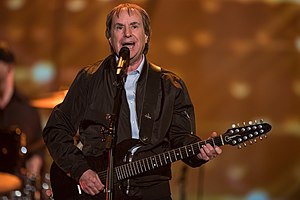
Chris de Burgh
Chris de Burgh, born Christopher John Davison, is a renowned British-Irish singer-songwriter and musician. Known for his transition from art rock to pop, he gained international acclaim with his 1986 hit "The Lady in Red," which topped charts worldwide. Despite limited success in the UK and US initially, de Burgh found a substantial following in Norway, Brazil, and other countries. With over 45 million albums sold globally, his career highlights include the chart-topping albums "The Getaway" and "Into the Light," and enduring singles like "Don't Pay the Ferryman" and "High on Emotion."
Chris de Burgh was born in Venado Tuerto, Argentina, to Colonel Charles John Davison, a British diplomat, and Maeve Emily (née de Burgh). His maternal grandfather, Sir Eric de Burgh, was a notable British Army officer. The family settled in Bargy Castle, County Wexford, Ireland, after living in various countries due to Colonel Davison's diplomatic career. The castle, purchased by Eric de Burgh in the 1960s, was converted into a hotel, where young Chris performed for guests, marking the early beginnings of his music journey.
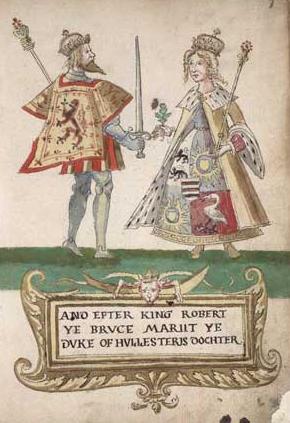
Elizabeth de Burgh
Elizabeth de Burgh, Queen Consort of Scotland, was the second wife of Robert the Bruce, King of Scots. Born around 1289 in Ulster, she became queen when Robert was crowned in 1306. Despite her noble status, Elizabeth endured years of imprisonment during the Scottish-English conflict, demonstrating resilience amidst hardship. She was eventually released in 1315 and had three children, including David II of Scotland. Elizabeth passed away at approximately 38 years old after a fall from her horse, with her body interred at Dunfermline Abbey, a revered burial site for Scottish royalty.
Elizabeth was the daughter of Richard Óg de Burgh, the 2nd Earl of Ulster, a powerful Norman noble and ally to King Edward I of England. Her mother was Margarite de Burgh.

House of Burgh
The House of Burgh, also known as Burke or Bourke, is a prominent Irish family descending from the Anglo-Norman de Burgh dynasty. They played a significant role in the Anglo-Norman invasion of Ireland, gaining the earldoms of Kent, Ulster, Clanricarde, and Mayo. Their influence extended to providing queens consort of Scotland and Thomond, and through matrilineal lines, they are ancestors of English kings and the current British royal family. William de Burgh, a key figure, was instrumental in establishing this family's legacy in Ireland.
The de Burgh family originated from William de Burgh, who was the elder brother of Hubert de Burgh, Earl of Kent. William's descendants became Lords of Connaught and held the Earldoms of Ulster and Clanricarde. His lineage includes Elizabeth, who married King Robert I of Scots, and another Elizabeth who married Lionel of Antwerp, connecting them to the Yorkist Plantagenet Kings of England. Hubert de Burgh's descendants, although initially becoming obscure, later emerged as Barons Burgh of Gainsborough.
William de Burgh
William de Burgh (c.1160–1205/06) was a pivotal figure in medieval Ireland, founding the House of Burgh. As Governor of Limerick, he fortified and expanded Anglo-Norman influence with key castles like Tibberaghny and Castleconnell. His alliances with the Ó Briain family and military campaigns in Desmond and Connacht significantly shaped Irish history. De Burgh's efforts secured him the title "Lord of Connacht" by 1203, marking him as a crucial player in Ireland's socio-political landscape.
William de Burgh was the eldest son of Walter de Burgh and Alice of Burgh-next-Aylsham, Norfolk. His notable siblings included Hubert de Burgh, 1st Earl of Kent, and Geoffrey de Burgh, Bishop of Ely, indicating a family deeply rooted in medieval nobility.

Thomas Burgh, 1st Baron Burgh
Thomas Burgh, 1st Baron Burgh of Gainsborough, was a prominent English peer known for his roles as Lord Chamberlain to Anne Boleyn and one of the King's Spears, serving as a bodyguard to King Henry VIII. Knighted in 1513 on Flodden Field, Burgh played a significant part in the trial of Anne Boleyn in 1536. His commitment to the reformed religion and his influence in the royal court marked his distinguished career. Despite his achievements, Burgh was also known for his overbearing nature and volatile temper, which affected his family dynamics.
Thomas Burgh was born around 1488 in Gainsborough, Lincolnshire, to Edward Burgh, 2nd Baron Burgh, and Anne Cobham, suo jure 6th Baroness Cobham. Through his mother, he inherited titles such as de jure 5th Baron Strabolgi and 7th Baron Cobham. His lineage connected him to notable figures, including Sir Thomas Cobham and Lady Anne Stafford, daughter of the 1st Duke of Buckingham. His family background was deeply rooted in English nobility, providing a foundation for his roles and influence in the Tudor court.
Burgh Surname Meaning, Origin, and History
The surname "Burgh" is of Anglo-Norman origin. It is associated with notable historical figures, including English and Irish politicians, peers, and military engineers. The name is linked to the House of Burgh, an influential Anglo-Norman and Hiberno-Norman dynasty established in the late 12th century.
VIEW MOREWhere to Find Genealogy Records for Burgh
We’ve analyzed YourRoots tree and records data to uncover where genealogists are finding key sources such as census, birth certificates, marriage records, and obituaries for the Burgh family. Explore our most popular genealogy record sources for the Burgh surname to learn more.
VIEW MOREAbout YourRoots
Explore your family tree geographically
Import your GEDCOM file to transform your family tree into an interactive global map. See your roots laid out visually and understand your true geographic heritage.
Powerful tools like "Trace Back To Me" instantly map your family's migration paths from a chosen ancestor all the way back to you.
Discover ancestors beyond "end-of-line" automatically
Import your family tree and let AI expand it for you. AI Ancestor Finder scans "end-of-line" ancestors to uncover their parents across hundreds of family lines at once. AI Deep Research analyzes selected ancestors and family clusters, suggesting relevant records and next steps.
Turn on Auto Research Mode to get new discoveries daily or weekly, so your tree keeps growing even while you're away.
Find more DNA matches across all DNA tests
Combine your DNA data with your family tree to unlock the full power of YourRoots DNA Match. Connect with relatives across major testing services — Ancestry, 23andMe, MyHeritage, and more.
View your matches' maps and trees to identify shared ancestors, and soon you'll be able to add them directly to your own tree and map.
Ancestry DNA analysis that goes deeper than others
Unlock exclusive reports that reveal your deeper origins.
- Deep Ancestry Report — Analyze 130+ ethnicities, sub-regions, and 1,800+ communities in one detailed view.
- Global & Native American Reports — Developed with Stanford researchers to uncover hidden ancestries across all 22 chromosomes.
- Ancient DNA Series — Compare your DNA with 1,000+ ancient genomes from Viking, Celtic, and early American civilizations.
Sign up to explore more
Create a free account to navigate family trees, view ancestors, and discover connections.
Coming Soon
We're actively working on many new features for YourRoots. Features marked v2 are ones we're planning to launch soon.
Have a particular feature request? Let us know below!