
Sign up to explore more
Create a free account to navigate family trees, view ancestors, and discover connections.
Sign up to explore more
Create a free account to navigate family trees, view ancestors, and discover connections.
England Family Genealogy & History
Discover the Global Legacy of the England Surname
The surname England has its roots in both English and Irish heritage, emerging prominently in early medieval records. It is believed to be a geographical surname, possibly referring to someone from the country of England or a specific place named England. This surname has been carried through generations, signifying a connection to the region's rich social and cultural history, and serving as a foundation for family histories that span centuries.
Over time, the England surname has expanded beyond its origins, with notable bearers contributing to various fields such as politics, sports, and the arts. Figures like Anthony W. England, an American astronaut, and Bethany England, an English footballer, highlight the diverse paths descendants have taken. As England families migrated, particularly during the early modern period, they established roots in new regions, including the United States, reflecting broader patterns of migration and cultural exchange.
YourRoots data provides insights into the England family's journey, revealing its presence in England since the medieval period. The dataset highlights how the family name flourished in key regions during the medieval centuries, supporting the documented spread of the surname. This evolution is evidenced by the England surname's continued prominence across continents, as descendants explored new opportunities while maintaining connections to their ancestral origins.
For genealogical enthusiasts, the YourRoots database is an invaluable resource for exploring the England family tree. The comprehensive records showcase the surname's global reach, offering a detailed view of its historical and cultural trajectory. This rich tapestry of England genealogy records serves as a vital tool for those seeking to uncover their heritage and deepen their understanding of family history.
Find the England Family Tree
Search more England trees & genealogy records
Records
-
CECatherine England1253–1256Public Tree Person4 treesScore: ACECatherine England1253–1256Public Tree Person4 treesScore: A
-
EEEdward IV England1442–1483Public Tree Person3 treesScore: AEEEdward IV England1442–1483Public Tree Person3 treesScore: A
-
EEEdward IV King of England1442–1483Public Tree PersonParents: Richard Plantagenet14 treesScore: AEEEdward IV King of England1442–1483Public Tree PersonParents: Richard Plantagenet14 treesScore: A
-
HEHenry Ii England1133–1189Public Tree Person3 treesScore: AHEHenry Ii England1133–1189Public Tree Person3 treesScore: A
-
HEHenry II Of England1133–1189Public Tree PersonParents: Geoffrey Plantagenet & Matilda England4 treesScore: AHEHenry II Of England1133–1189Public Tree PersonParents: Geoffrey Plantagenet & Matilda England4 treesScore: A
-
HEHenry II King of England1133–1189Public Tree PersonParents: Geoffrey Plantagenet & Matilda England3 treesScore: AHEHenry II King of England1133–1189Public Tree PersonParents: Geoffrey Plantagenet & Matilda England3 treesScore: A
-
HEHenry VII Tudor King of England1457–1509Public Tree Person4 treesScore: AHEHenry VII Tudor King of England1457–1509Public Tree Person4 treesScore: A
-
JEJoseph Edward Cornelius Watts - England1590–1640Public Tree Person7 treesScore: AJEJoseph Edward Cornelius Watts - England1590–1640Public Tree Person7 treesScore: A
-
LELady Margaret Tudor, Queen of Scotland, Princess of England1489–1541Public Tree Person13 treesScore: ALELady Margaret Tudor, Queen of Scotland, Princess of England1489–1541Public Tree Person13 treesScore: A
-
MEMatilda of England1102–1167Public Tree Person7 treesScore: AMEMatilda of England1102–1167Public Tree Person7 treesScore: A
-
SESarah Ann Elizabeth England1867–1925Public Tree PersonParents: William England3 treesScore: ASESarah Ann Elizabeth England1867–1925Public Tree PersonParents: William England3 treesScore: A
-
SESir Henry I "The Poet" Howard, English Courtier, English Renaissance Poet, 3rd Earl of Surrey, Earl Marshal of England1517–1547Public Tree Person6 treesScore: ASESir Henry I "The Poet" Howard, English Courtier, English Renaissance Poet, 3rd Earl of Surrey, Earl Marshal of England1517–1547Public Tree Person6 treesScore: A
-
EEEdward 17th Earl of Oxford De Vere Lord Great Chamberlain of England1550–1604Individual Tree PersonParents: Sir Vere & Margaret IiScore: AEEEdward 17th Earl of Oxford De Vere Lord Great Chamberlain of England1550–1604Individual Tree PersonParents: Sir Vere & Margaret IiScore: A
-
HEHenry Fitzroy Earl of Euston and 1st Duke of Grafton, Lord High Constable of England1663–1690Individual Tree PersonParents: Charles Ireland & Barbara IISpouse: Lady ArlingtonChildren: Charles, LordScore: AHEHenry Fitzroy Earl of Euston and 1st Duke of Grafton, Lord High Constable of England1663–1690Individual Tree PersonParents: Charles Ireland & Barbara IISpouse: Lady ArlingtonChildren: Charles, LordScore: A
-
HEHenry I Sinclair Lion Beauclerc King of England1068–1135Individual Tree PersonParents: WILLIAM ENGLAND & Matilda FlandersSpouse: Nesta TewdwrChildren: HenryScore: AHEHenry I Sinclair Lion Beauclerc King of England1068–1135Individual Tree PersonParents: WILLIAM ENGLAND & Matilda FlandersSpouse: Nesta TewdwrChildren: HenryScore: A
-
TEThomas II 2 Atherold, Atherhold Atherall of Burgh Suffolk England1590–1658Individual Tree PersonParents: Thomas Atherold & Mary AtheroldSpouse: Mary Atherold, Elizabeth Church-HarveyChildren: Hannah, Thomas, Nathaniell, Margrett, Elizebeth, JamesScore: ATEThomas II 2 Atherold, Atherhold Atherall of Burgh Suffolk England1590–1658Individual Tree PersonParents: Thomas Atherold & Mary AtheroldSpouse: Mary Atherold, Elizabeth Church-HarveyChildren: Hannah, Thomas, Nathaniell, Margrett, Elizebeth, JamesScore: A
-
EEEdward III King Of England1312–1377Individual Tree PersonParents: Edward England & England NoneSpouse: England NoneChildren: EdmundScore: AEEEdward III King Of England1312–1377Individual Tree PersonParents: Edward England & England NoneSpouse: England NoneChildren: EdmundScore: A
-
EEEaldgyth England1017–1070Individual Tree PersonParents: Earl Alfgar & Elfgifu WESSEXSpouse: Gruffydd LlewelynChildren: NestScore: AEEEaldgyth England1017–1070Individual Tree PersonParents: Earl Alfgar & Elfgifu WESSEXSpouse: Gruffydd LlewelynChildren: NestScore: A
-
MEMatilda of Flanders Queen of England1031–1083Individual Tree PersonParents: Baldwin Flanders & Aelisadele FranceSpouse: William EnglandChildren: Henry, Agatha, Adela, Constance, Robert, Cecilia, Richard, Cecilia, Agatha, Constance, Constance, William, Adeliza, RichardScore: AMEMatilda of Flanders Queen of England1031–1083Individual Tree PersonParents: Baldwin Flanders & Aelisadele FranceSpouse: William EnglandChildren: Henry, Agatha, Adela, Constance, Robert, Cecilia, Richard, Cecilia, Agatha, Constance, Constance, William, Adeliza, RichardScore: A
-
PEPhilippa d'Avesnes, Countess of Hainault Queen of England1311–1369Individual Tree PersonParents: William * & Joan *Spouse: Edward IIIChildren: Prince, Edward,, John, Thomas, Isabella, Edmund, Lionel, Margaret, Mary, William, Blanche, Joan, John, Thomas, William, ThomasScore: APEPhilippa d'Avesnes, Countess of Hainault Queen of England1311–1369Individual Tree PersonParents: William * & Joan *Spouse: Edward IIIChildren: Prince, Edward,, John, Thomas, Isabella, Edmund, Lionel, Margaret, Mary, William, Blanche, Joan, John, Thomas, William, ThomasScore: A
Search more trees & records for
England for free
Tracing Your England Family Lineage
Origin of the England Family: Where does the England surname come from?
The England surname traces its earliest known appearance in records from England, marking the beginning of a significant genealogical journey. This initial presence connects families to their roots in the region, establishing a foundation for the England family tree that would grow and evolve over centuries. The context of its emergence during early medieval times reflects the social and cultural dynamics of the period, setting the stage for future generations.
Genealogy and Early Family History of England
In the early centuries, the England family began to spread primarily throughout England, particularly in regions that would later become important centers of population and influence. During the medieval period, family lines flourished, with branches of the family tree developing as communities grew and families expanded. Key regions where the England surname appeared include both rural and urban settings, as families adapted to changing circumstances and opportunities.
As time progressed, these families not only established themselves in their localities but also began to form connections with others, thereby enriching their genealogical narratives. The interactions of families during this time fostered new alliances and connections, further diversifying the England family tree and contributing to its complexity.
Tracing the England Family Tree Through the Centuries
The expansion of the England surname across regions became more pronounced in later centuries, reflecting migration patterns and social changes. By the time of the early modern period, families began to establish themselves in various countries, including significant numbers in the United States. This global movement continued into the 19th century, showcasing how the England surname adapted to new environments and circumstances while remaining rooted in its ancestral origins.
Throughout the 20th century, the England surname maintained a presence not only in its homeland but also across continents, as descendants sought new opportunities. The family tree branches intertwined with diverse cultures, leading to a rich tapestry of genealogical connections. This evolution of the England surname highlights the broader historical movements that shaped family histories and identities.
Where to Find England Genealogy Records Today
In modern centuries, the England surname can be traced through a variety of global locations, reflecting its extensive reach. The records demonstrate a continuous evolution of the family tree, with many descendants residing in regions like the United States, where the surname gained additional prominence. Readers are encouraged to explore the YourRoots database to uncover their own connections to the England family heritage and continue the journey of their family tree.
Famous People with England (and Their Family Tree)

Henry VII of England
Henry VII of England, also known as Henry Tudor, was the first monarch of the House of Tudor, reigning as King from 1485 to 1509. He famously seized the crown by defeating Richard III at the Battle of Bosworth Field, concluding the Wars of the Roses. Henry strengthened England's economy through administrative reforms and supportive policies toward the wool industry. His reign, marked by prudent financial management, restored stability to the monarchy and he was succeeded peacefully by his son, Henry VIII.
Henry's lineage was significant, with his mother, Margaret Beaufort, descending from John of Gaunt of the House of Lancaster, and his father, Edmund Tudor, connected to the Welsh Tudors. His paternal grandfather, Owen Tudor, was linked to the English court through marriage to Catherine of Valois, the widow of Henry V.

Charles II of England
Charles II of England (1630-1685) was a pivotal figure in British history, serving as King of Scotland from 1649 to 1651 and King of England, Scotland, and Ireland from the 1660 Restoration until his death. His reign, marked by the Restoration of the monarchy, saw the enactment of the Clarendon Code and the Treaty of Dover with his cousin Louis XIV of France. Despite challenges like the Exclusion Crisis, Charles maintained power, ruling alone after dissolving Parliament in 1681. Known for his patronage of the arts and sciences, he left a legacy of affability and political acumen.
Born to Charles I and Henrietta Maria of France, Charles II was the eldest surviving son, with his maternal lineage linked to Louis XIII of France. His birth granted him titles like Duke of Cornwall and Duke of Rothesay. During his early years, he was heavily influenced by both Protestant and Catholic figures, reflecting the complex religious dynamics of his time. His familial connections to European royalty shaped his political alliances and strategies throughout his reign.

Henry V of England
Henry V of England, also known as Henry of Monmouth, reigned as King of England from 1413 to 1422. Celebrated as one of medieval England's greatest warrior-kings, he achieved significant military success during the Hundred Years' War against France, notably at the Battle of Agincourt. His campaigns expanded English territories in France, and the Treaty of Troyes named him regent of France and heir to the French throne. His reign, though short, inspired English nationalism and set the stage for England's rise as a global power.
Born in 1386 at Monmouth Castle, Henry was the eldest son of Henry IV and Mary de Bohun. His paternal grandfather was John of Gaunt, a son of Edward III. After his father's ascension in 1399, Henry became Prince of Wales and heir apparent to the English throne.

Henry II of England
Henry II of England (1133–1189) was a pivotal figure in medieval history, reigning as King of England from 1154 to 1189. Known for his role in establishing the Angevin Empire, he controlled England, Wales, Ireland, and vast territories in France, including Normandy, Anjou, and Aquitaine. Henry's military and political acumen restored royal authority in England after a period of civil unrest and conflict. His reign was marked by significant legal reforms that laid the groundwork for English Common Law. However, his rule was marred by familial rebellions and a notorious conflict with Thomas Becket, Archbishop of Canterbury, which led to Becket's murder in 1170.
Henry was the eldest son of Geoffrey Plantagenet, Count of Anjou, and Empress Matilda, daughter of Henry I of England. The Angevin lineage sought to extend its influence across France through strategic marriages and alliances, with Anjou becoming largely autonomous from the French crown by the 11th century. Henry's ancestry linked him to the English throne through his mother, Matilda, positioning him as a key player in the power struggles of medieval Europe.
John, King of England
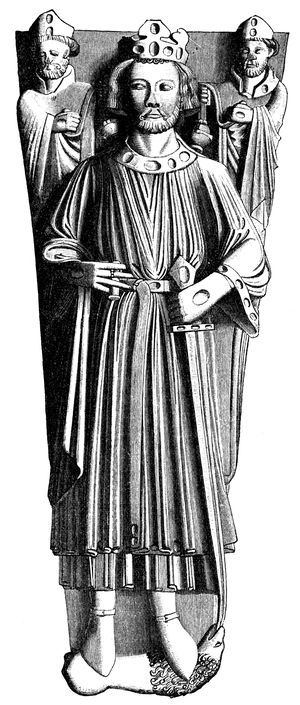
John, King of England (1166–1216), reigned from 1199 to 1216, known for losing the Duchy of Normandy and other French territories to King Philip II. His reign saw the collapse of the Angevin Empire and significant baronial revolts, leading to the signing of the Magna Carta, a cornerstone in UK constitutional history. Despite his reputation as a hard-working administrator and capable general, contemporary chroniclers and historians often highlight his negative traits, such as pettiness and cruelty, which have influenced his portrayal in popular culture, especially as a villain in Robin Hood folklore.
John was the youngest son of King Henry II of England and Duchess Eleanor of Aquitaine. His father amassed significant territories like Anjou, Normandy, and England, forming the Angevin Empire. Eleanor, a former queen of France, brought claims to regions like Toulouse and Auvergne, contributing to the empire's complex heritage.
England Surname Meaning, Origin, and History
The surname "England" is of English and Irish origin. It is borne by individuals across various professions, including politics, sports, and the arts, reflecting a broad geographical and cultural presence.
VIEW MOREWhere to Find Genealogy Records for England
We’ve analyzed YourRoots tree and records data to uncover where genealogists are finding key sources such as census, birth certificates, marriage records, and obituaries for the England family. Explore our most popular genealogy record sources for the England surname to learn more.
VIEW MOREAbout YourRoots
Explore your family tree geographically
Import your GEDCOM file to transform your family tree into an interactive global map. See your roots laid out visually and understand your true geographic heritage.
Powerful tools like "Trace Back To Me" instantly map your family's migration paths from a chosen ancestor all the way back to you.
Discover ancestors beyond "end-of-line" automatically
Import your family tree and let AI expand it for you. AI Ancestor Finder scans "end-of-line" ancestors to uncover their parents across hundreds of family lines at once. AI Deep Research analyzes selected ancestors and family clusters, suggesting relevant records and next steps.
Turn on Auto Research Mode to get new discoveries daily or weekly, so your tree keeps growing even while you're away.
Find more DNA matches across all DNA tests
Combine your DNA data with your family tree to unlock the full power of YourRoots DNA Match. Connect with relatives across major testing services — Ancestry, 23andMe, MyHeritage, and more.
View your matches' maps and trees to identify shared ancestors, and soon you'll be able to add them directly to your own tree and map.
Ancestry DNA analysis that goes deeper than others
Unlock exclusive reports that reveal your deeper origins.
- Deep Ancestry Report — Analyze 130+ ethnicities, sub-regions, and 1,800+ communities in one detailed view.
- Global & Native American Reports — Developed with Stanford researchers to uncover hidden ancestries across all 22 chromosomes.
- Ancient DNA Series — Compare your DNA with 1,000+ ancient genomes from Viking, Celtic, and early American civilizations.
Sign up to explore more
Create a free account to navigate family trees, view ancestors, and discover connections.
Coming Soon
We're actively working on many new features for YourRoots. Features marked v2 are ones we're planning to launch soon.
Have a particular feature request? Let us know below!