
Sign up to explore more
Create a free account to navigate family trees, view ancestors, and discover connections.


Sign up to explore more
Create a free account to navigate family trees, view ancestors, and discover connections.
Hanover Family Genealogy & History
Discover the Global Legacy of the Hanover Surname
The surname Hanover has its roots in Germany, specifically linked to the city of Hanover, the capital of Lower Saxony. The name "Hanover" is believed to originate from the German phrase "(am) hohen Ufer," meaning "on the high (river) bank." Over time, Hanover became a significant surname, reflecting the historical and cultural development of the region. The surname's prominence is tied to the city's historical significance as the capital of various states and its connection to the British royal family through the House of Hanover.
As Hanover evolved from a small village to a notable city, its surname spread geographically and culturally. Initially concentrated in Germany, the Hanover family tree expanded during the personal union of the British and Hanoverian crowns in the 18th century. This led to the migration of Hanoverians to England, further diversifying the surname's lineage. By the 19th century, Hanover had become a key part of the cultural tapestry of both Germany and England, a trend that continued as descendants migrated further afield.
YourRoots data provides valuable insights into the Hanover genealogy, confirming the surname's emergence in Germany during the 16th century. This aligns with historical records, highlighting the surname's early presence and expansion in Germany. The YourRoots dataset also traces the migration patterns of the Hanover family, marking their significant presence in England during the 18th century. This movement exemplifies the adaptability and resilience of the Hanover lineage, enriching their genealogical heritage.
For those researching the Hanover family tree, YourRoots offers a comprehensive resource for tracing lineage and exploring familial connections. The Hanover records available through YourRoots enrich the existing historical context, offering a robust foundation for genealogical exploration across continents. This blend of historical and genealogical data makes YourRoots an essential tool for anyone interested in uncovering the breadth of the Hanover family's history.
Find the Hanover Family Tree
Search more Hanover trees & genealogy records
Records
-
EHEdward Augustus Hanover1767–1820Individual Tree PersonParents: George III & Sophia Mecklenburg-StrelitzSpouse: Victoria None, Marie KentChildren: QueenScore: AEHEdward Augustus Hanover1767–1820Individual Tree PersonParents: George III & Sophia Mecklenburg-StrelitzSpouse: Victoria None, Marie KentChildren: QueenScore: A
-
FHFriedrich Ludwig Hanover1707–1751Individual Tree PersonParents: King II & Caroline Brandenburg-AnsbachSpouse: Augusta Saksen-Gotha-Altenburg, Princess Saxe-GothaChildren: Georges, Caroline-Mathilde, Augusta, William, Edward, Louise, Hendrik, Elisabeth, Frederik, Caroline, Edward, Augusta, King, KingScore: AFHFriedrich Ludwig Hanover1707–1751Individual Tree PersonParents: King II & Caroline Brandenburg-AnsbachSpouse: Augusta Saksen-Gotha-Altenburg, Princess Saxe-GothaChildren: Georges, Caroline-Mathilde, Augusta, William, Edward, Louise, Hendrik, Elisabeth, Frederik, Caroline, Edward, Augusta, King, KingScore: A
-
MHMargaret "Peg". (second wife) Hanover1917–2012Individual Tree PersonParents: James Hanover & Margaret CroninSpouse: John KingScore: AMHMargaret "Peg". (second wife) Hanover1917–2012Individual Tree PersonParents: James Hanover & Margaret CroninSpouse: John KingScore: A
-
MHMary Adelaide Wilhelmina Elizabeth Hanover1833–1897Individual Tree PersonParents: Adolphus Hanover & Auguste Hesse-KasselSpouse: Franz Teck, Francis WürttembergChildren: Anna, Clara, Matthew, Peter, Mary, Albert, Victoria, Arthur, RasaScore: AMHMary Adelaide Wilhelmina Elizabeth Hanover1833–1897Individual Tree PersonParents: Adolphus Hanover & Auguste Hesse-KasselSpouse: Franz Teck, Francis WürttembergChildren: Anna, Clara, Matthew, Peter, Mary, Albert, Victoria, Arthur, RasaScore: A
-
PHPrincess Sophia Matilda Hanover1777–1848Individual Tree PersonParents: George Hanover & Sophia Mecklenburg-StrelitzSpouse: Gen. ESQChildren: ThomasScore: APHPrincess Sophia Matilda Hanover1777–1848Individual Tree PersonParents: George Hanover & Sophia Mecklenburg-StrelitzSpouse: Gen. ESQChildren: ThomasScore: A
-
GHGEORGE II of HANOVER1683–1760Individual Tree PersonParents: GEORGE HANOVER & Sophia BRUNSWICK-ZELLESpouse: Caroline ANSPACHChildren: William, Amelia, Frederick, Caroline, George, Anne, Louisa, MaryScore: AGHGEORGE II of HANOVER1683–1760Individual Tree PersonParents: GEORGE HANOVER & Sophia BRUNSWICK-ZELLESpouse: Caroline ANSPACHChildren: William, Amelia, Frederick, Caroline, George, Anne, Louisa, MaryScore: A
-
EHEdward Augustus Prince Hanover1767–1820Individual Tree PersonParents: King Hannover & Sophia Mecklenburg-StrelitzSpouse: Victoria Saxe-Coburg-SaalfeldChildren: QueenScore: AEHEdward Augustus Prince Hanover1767–1820Individual Tree PersonParents: King Hannover & Sophia Mecklenburg-StrelitzSpouse: Victoria Saxe-Coburg-SaalfeldChildren: QueenScore: A
-
GHGeorge II Augustus of Hanover1683–1760Individual Tree PersonParents: George Hanover & Sophia CelleSpouse: Caroline AnsbachChildren: Frederick, Anne, William, Mary, LouiseScore: AGHGeorge II Augustus of Hanover1683–1760Individual Tree PersonParents: George Hanover & Sophia CelleSpouse: Caroline AnsbachChildren: Frederick, Anne, William, Mary, LouiseScore: A
-
GHGrace Mary Hanover1912–2010Individual Tree PersonParents: Charles Hanover & Julia VogelSpouse: William BotkinChildren: DonaldScore: AGHGrace Mary Hanover1912–2010Individual Tree PersonParents: Charles Hanover & Julia VogelSpouse: William BotkinChildren: DonaldScore: A
-
SHSophie of Hanover1630–1714Individual Tree PersonParents: Frederik Bohemen & Elisabeth Groot-BrittaniëSpouse: Ernst Braunschweig-LüneburgChildren: George, Sophie-Charlotte, Joseph, Christian, Friedrich, Karl, Maximilian, Stillborn, Stillborn, Twin, Ernst, Magdalena, ErnestScore: ASHSophie of Hanover1630–1714Individual Tree PersonParents: Frederik Bohemen & Elisabeth Groot-BrittaniëSpouse: Ernst Braunschweig-LüneburgChildren: George, Sophie-Charlotte, Joseph, Christian, Friedrich, Karl, Maximilian, Stillborn, Stillborn, Twin, Ernst, Magdalena, ErnestScore: A
-
CHCharlotte Hanover1766–1828Individual Tree PersonParents: King III & Sophia EnglandScore: ACHCharlotte Hanover1766–1828Individual Tree PersonParents: King III & Sophia EnglandScore: A
-
SHSophie Dorothea of Hanover1687–1757Individual Tree PersonParents: George Ireland & Sophia Braunschweig-LüneburgSpouse: Friedrich PreußenChildren: Frederick, August, Friedrich, Friedrich, Charlotte, Sophie, August, Anna, Ludwig, Friederike, Philippine, Wilhelmine, FriedrichScore: ASHSophie Dorothea of Hanover1687–1757Individual Tree PersonParents: George Ireland & Sophia Braunschweig-LüneburgSpouse: Friedrich PreußenChildren: Frederick, August, Friedrich, Friedrich, Charlotte, Sophie, August, Anna, Ludwig, Friederike, Philippine, Wilhelmine, FriedrichScore: A
-
SHSophia Matilda Hanover1777–1848Individual Tree PersonParents: George England & Charlotte MecklenburgSpouse: Thomas GarthChildren: ThomasScore: ASHSophia Matilda Hanover1777–1848Individual Tree PersonParents: George England & Charlotte MecklenburgSpouse: Thomas GarthChildren: ThomasScore: A
-
AHAugustus Frederick Hanover1773–1820Individual Tree PersonParents: King III & Sophia EnglandSpouse: Princess KentChildren: QueenScore: AAHAugustus Frederick Hanover1773–1820Individual Tree PersonParents: King III & Sophia EnglandSpouse: Princess KentChildren: QueenScore: A
-
AHAlfred Hanover1780–1782Individual Tree PersonParents: George III & Sophia ConsortScore: AAHAlfred Hanover1780–1782Individual Tree PersonParents: George III & Sophia ConsortScore: A
-
SHSophie of Hanover1630–1714Individual Tree PersonParents: Frederick Böhmen & Elisabeth Groot-BrittaniëSpouse: Ernst Brunswijk-CalenbergChildren: Christiaan, Frederik, Karel, Maximiliaan, Sophia, George, ErnstScore: ASHSophie of Hanover1630–1714Individual Tree PersonParents: Frederick Böhmen & Elisabeth Groot-BrittaniëSpouse: Ernst Brunswijk-CalenbergChildren: Christiaan, Frederik, Karel, Maximiliaan, Sophia, George, ErnstScore: A
-
SHSophia Electress of Hanover1630–1714Individual Tree PersonParents: Frederick King' & Elizabeth BohemiaSpouse: Ernst August, Ernst AugustChildren: Georg, Duke, Charles, Christian, Sophia, Ernest, Maximiliaan, Frederick, Maximilian, Christian, Ernest, Karl, Sophia, Friedrich, Count, Stillborn, Sophia, Prinz, Charlotte, Hanover, Ernst, Karl, Maximillian, Friedrich, PrinceScore: ASHSophia Electress of Hanover1630–1714Individual Tree PersonParents: Frederick King' & Elizabeth BohemiaSpouse: Ernst August, Ernst AugustChildren: Georg, Duke, Charles, Christian, Sophia, Ernest, Maximiliaan, Frederick, Maximilian, Christian, Ernest, Karl, Sophia, Friedrich, Count, Stillborn, Sophia, Prinz, Charlotte, Hanover, Ernst, Karl, Maximillian, Friedrich, PrinceScore: A
-
FHFrederick Augustus Hanover1762–1830Individual Tree PersonParents: George England & Sophie Mecklenburg-StrelitzSpouse: Mary Smythe, Caroline Braunschweig-WolfenbuttelChildren: CharlotteScore: AFHFrederick Augustus Hanover1762–1830Individual Tree PersonParents: George England & Sophie Mecklenburg-StrelitzSpouse: Mary Smythe, Caroline Braunschweig-WolfenbuttelChildren: CharlotteScore: A
-
QHQueen Victoria Alexandrina Hanover1819–1901Individual Tree PersonParents: Edouard HANOVRE & Victoria Saxe-Coburg-SaalfeldSpouse: Albert GothaChildren: Leopold, Edward, Arthur, Louise, Beatrice, PrincessScore: AQHQueen Victoria Alexandrina Hanover1819–1901Individual Tree PersonParents: Edouard HANOVRE & Victoria Saxe-Coburg-SaalfeldSpouse: Albert GothaChildren: Leopold, Edward, Arthur, Louise, Beatrice, PrincessScore: A
-
MHMargarete Hanover1691–1743Individual Tree PersonParents: Christian Hanover & Anna KiefferSpouse: Simon LinderChildren: ElizabethScore: AMHMargarete Hanover1691–1743Individual Tree PersonParents: Christian Hanover & Anna KiefferSpouse: Simon LinderChildren: ElizabethScore: A
Search more trees & records for
Hanover for free
Tracing Your Hanover Family Lineage
Origin of the Hanover Family: Where does the Hanover surname come from?
The Hanover surname first emerged in Germany during the early 16th century, marking the beginning of a significant genealogical lineage. This initial record connects the Hanover family to the rich historical and cultural tapestry of Germany, laying the groundwork for future family branches. As the surname took root, it became a vital part of the family's identity and heritage, leading to a more extensive exploration of their ancestry in subsequent centuries.
Genealogy and Early Family History of Hanover
In its early centuries, the Hanover family began to spread predominantly within Germany, with notable concentrations in various regions. During the 17th century, the surname saw a marked increase in presence, as families established themselves and expanded their branches, developing a more intricate family tree. This growth not only contributed to the local population but also fostered connections with other families, leading to a diverse and interconnected network of Hanover descendants.
The evolution of the Hanover family continued into the 18th century when a significant number of families migrated to England, further diversifying their lineage. The establishment of Hanover branches in England contributed to the family's prominence and allowed for the assimilation of new cultural influences, which enriched their family history. This expansion across borders exemplified the resilience and adaptability of the Hanover lineage through time.
Tracing the Hanover Family Tree Through the Centuries
As the Hanover surname progressed through the centuries, it experienced notable geographical expansion. In the 17th century, the family was primarily based in Germany, but by the 18th century, many branches had relocated to England, marking a pivotal shift in their genealogy. This trend of migration continued into the 19th century, with the surname appearing in various other regions, reflecting the broader social movements and historical contexts of the time.
In the 20th century, the Hanover surname could be found in multiple countries, including the United States and Canada, as descendants of the original families sought new opportunities abroad. This global spread underscored the family's adaptability and resilience, leading to a rich tapestry of genealogical connections. The ongoing evolution of the Hanover family tree showcases the enduring nature of their heritage, with diverse branches spanning continents.
Where to Find Hanover Genealogy Records Today
In modern centuries, the Hanover surname has continued to thrive, reflecting its historical roots and the ongoing exploration of family history. Today, families bearing the Hanover name can be found across the globe, with significant populations in English-speaking countries. To delve deeper into personal connections and uncover individual family trees, readers are encouraged to explore Hanover genealogy records available in the YourRoots database.
Famous People with Hanover (and Their Family Tree)

House of Hanover
The House of Hanover is a prominent European royal house with a significant historical legacy. Originating from the House of Welf in the 17th century, Hanoverians ruled over Great Britain, Ireland, and the British Empire. With the ascension of George I in 1714, the dynasty provided six British monarchs, including George III and Queen Victoria. The personal union of the United Kingdom and Hanover ended in 1837, but the house continued to influence European history until the early 20th century. The House of Hanover remains the sole surviving branch of the House of Welf, with Ernst August, Prince of Hanover, as its current head.
The House of Hanover's lineage traces back to George, Duke of Brunswick-Lüneburg, who moved his residence to Hanover in 1635. His descendants played pivotal roles in European affairs. Ernest Augustus, George's fourth son, was elevated to Prince-Elector of the Holy Roman Empire. His son, George Louis, became George I of Great Britain. The Hanoverians are linked to British royalty through Queen Victoria, granddaughter of George III, marking a significant era in the British monarchy.
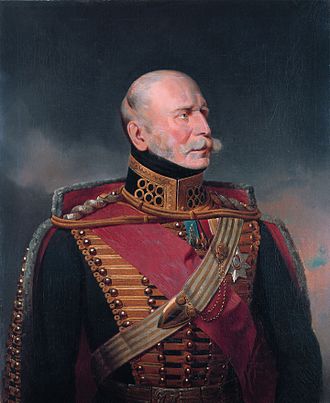
Ernest Augustus, King of Hanover
Ernest Augustus, King of Hanover (1771–1851), ruled Hanover from 1837 until his death. Despite being the fifth son of George III of the United Kingdom and Hanover, Ernest became king due to the lack of legitimate heirs among his elder brothers. Known for his conservative stance, he faced controversy during his reign, notably for voiding a liberal constitution and dismissing the Göttingen Seven, including the Brothers Grimm. His reign saw Hanover joining the German customs union in 1850, and he was succeeded by his son, George V.
Ernest Augustus was born to King George III and Queen Charlotte at Buckingham House, London, on 5 June 1771. His early life included an education in Hanover, intended to distance him from the influence of his extravagant elder brother, George, Prince of Wales. His maternal uncle, Duke Ernest of Mecklenburg, was among his sponsors at baptism, reflecting his royal lineage.

Kingdom of Hanover
The Kingdom of Hanover was established in 1814 by the Congress of Vienna, marking the restoration of George III to his Hanoverian territories after the Napoleonic era. It was part of a personal union with Great Britain from 1714 to 1837, ruled by the House of Hanover, a cadet branch of the House of Welf. The Kingdom became the fourth-largest state in the German Confederation, playing a significant role in the region. Its administration was managed by a viceroy, often a younger member of the British royal family. The personal union ended in 1837 with Queen Victoria's accession, as Hanoverian law restricted female succession.
The Kingdom of Hanover was ruled by the House of Hanover, a cadet branch of the House of Welf. George III, who never visited Hanover, was its first king, followed by his son Ernest Augustus and later his grandson, George V. The kingdom was initially part of the Electorate of Hanover within the Holy Roman Empire, formed from the Duchy of Brunswick-Lüneburg. After the dissolution of the Holy Roman Empire, it was elevated to a kingdom, reflecting its prominent dynastic heritage and political significance in Northern Germany.
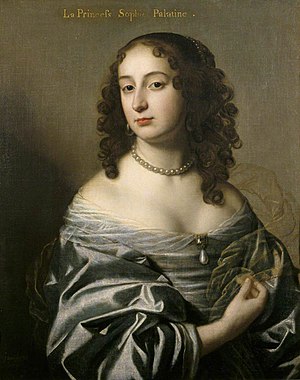
Sophia of Hanover
Sophia of Hanover, born Princess Sophia of the Palatinate, was the Electress of Hanover from 1692 to 1698. She became the heiress presumptive to the British throne under the Act of Settlement 1701, being a granddaughter of King James VI and I. Although she died shortly before ascending the throne, her son George I succeeded Queen Anne, marking the beginning of the Hanoverian dynasty in Britain. Known for her patronage of the arts, Sophia significantly contributed to the development of Herrenhausen Palace and its gardens and engaged with philosophers like Gottfried Leibniz.
Sophia was born in The Hague to Frederick V, Elector Palatine, and Elizabeth Stuart, the daughter of King James VI and I. Her family sought refuge in the Dutch Republic following the Thirty Years' War. Sophia married Ernest Augustus of Brunswick-Lüneburg, with whom she had seven children who reached adulthood, including George I of Great Britain. Her family connections played a pivotal role in shaping European royal history.

Frederica of Hanover
Frederica of Hanover, Queen of Greece from 1947 to 1964, played a significant role as both queen and queen mother. Known for her social initiatives during Greece's civil war, she established "children's towns" to aid war-affected refugees. Despite retiring after King Paul’s death in 1964, she continued to influence Greek politics through her son, King Constantine II, and was often seen as a behind-the-scenes power figure. Frederica's life spanned significant historical events, from her early years in Nazi Germany to her royal duties in Greece, providing a multifaceted legacy.
Born in 1917 in the Duchy of Brunswick, Frederica was the only daughter of Duke Ernest Augustus of Brunswick and Princess Viktoria Luise of Prussia. Her maternal grandfather was Kaiser Wilhelm II, and her paternal lineage included the British royal family. The political upheavals of World War I saw her family lose their thrones, shaping her early life amidst the changing European landscape.
Hanover Surname Meaning, Origin, and History
The surname "Hanover" likely originates from the German phrase "(am) hohen Ufer," meaning "on the high (river) bank," referring to the city's geographic location. Hanover, now a significant city in Lower Saxony, Germany, developed from a medieval village into an important urban center due to its strategic position on trade routes and its historical role as the capital of various states, including the Electorate of Hanover, which had personal union ties with the British monarchy.
VIEW MOREWhere to Find Genealogy Records for Hanover
We’ve analyzed YourRoots tree and records data to uncover where genealogists are finding key sources such as census, birth certificates, marriage records, and obituaries for the Hanover family. Explore our most popular genealogy record sources for the Hanover surname to learn more.
VIEW MOREAbout YourRoots
Explore your family tree geographically
Import your GEDCOM file to transform your family tree into an interactive global map. See your roots laid out visually and understand your true geographic heritage.
Powerful tools like "Trace Back To Me" instantly map your family's migration paths from a chosen ancestor all the way back to you.
Discover ancestors beyond "end-of-line" automatically
Import your family tree and let AI expand it for you. AI Ancestor Finder scans "end-of-line" ancestors to uncover their parents across hundreds of family lines at once. AI Deep Research analyzes selected ancestors and family clusters, suggesting relevant records and next steps.
Turn on Auto Research Mode to get new discoveries daily or weekly, so your tree keeps growing even while you're away.
Find more DNA matches across all DNA tests
Combine your DNA data with your family tree to unlock the full power of YourRoots DNA Match. Connect with relatives across major testing services — Ancestry, 23andMe, MyHeritage, and more.
View your matches' maps and trees to identify shared ancestors, and soon you'll be able to add them directly to your own tree and map.
Ancestry DNA analysis that goes deeper than others
Unlock exclusive reports that reveal your deeper origins.
- Deep Ancestry Report — Analyze 130+ ethnicities, sub-regions, and 1,800+ communities in one detailed view.
- Global & Native American Reports — Developed with Stanford researchers to uncover hidden ancestries across all 22 chromosomes.
- Ancient DNA Series — Compare your DNA with 1,000+ ancient genomes from Viking, Celtic, and early American civilizations.
Sign up to explore more
Create a free account to navigate family trees, view ancestors, and discover connections.
Coming Soon
We're actively working on many new features for YourRoots. Features marked v2 are ones we're planning to launch soon.
Have a particular feature request? Let us know below!