
Sign up to explore more
Create a free account to navigate family trees, view ancestors, and discover connections.
Sign up to explore more
Create a free account to navigate family trees, view ancestors, and discover connections.
Kaiser Family Genealogy & History
Discover the Global Legacy of the Kaiser Surname
The Kaiser surname originates from the German imperial title "Kaiser," meaning "emperor" in English. This title traces back to the Latin "Caesar," a nod to Julius Caesar's legacy. While the name is not exceedingly common, occurring in about 0.05% of the German population, it ranks 41st in Germany as of the early 21st century. The Kaiser name has notable prevalence in central Germany, the southern Black Forest region, and parts of Southern Germany. Beyond Germany, the surname is also found in Austria and the Czech Republic, with variations such as Kayser, Kaijser, and Keiser extending its reach.
As time progressed, the Kaiser surname evolved and spread geographically, primarily within Germany. By the 17th century, the name had established itself in vital regions that were central to German culture. The 18th century marked a period of migration, further dispersing the Kaiser family tree across different areas and eventually beyond Germanic borders. This expansion reflects the adaptability of the Kaiser lineage, which has contributed to its global presence over the centuries.
YourRoots data provides valuable insights into the historical journey of the Kaiser family. It documents the surname's emergence in the early 16th century, emphasizing its deep roots in German culture and society. The dataset highlights the growth of the Kaiser family through the centuries, illustrating how the surname diversified and established new lines in Europe and North America by the 19th century. This detailed genealogical information enriches our understanding of the Kaiser family's evolution and its enduring legacy.
For genealogy enthusiasts and family-tree researchers, YourRoots data offers a comprehensive resource to explore the Kaiser family tree. It reveals a rich tapestry of historical connections and migrations, aiding those interested in tracing their Kaiser genealogy and uncovering personal ties to this storied surname.
Find the Kaiser Family Tree
Search more Kaiser trees & genealogy records
Records
-
MKMabel F Kaiser1898–1983Individual Tree PersonParents: Herman Kaiser & Margaret ShenefieldScore: AMKMabel F Kaiser1898–1983Individual Tree PersonParents: Herman Kaiser & Margaret ShenefieldScore: A
-
NKNancy Lou Kaiser1948–2021Individual Tree PersonParents: James Carlisle & Ruth CarlisleScore: ANKNancy Lou Kaiser1948–2021Individual Tree PersonParents: James Carlisle & Ruth CarlisleScore: A
-
SKSophia Kaiser1872–1954Individual Tree PersonParents: Bernard Kaiser & Mary HammerSpouse: Anthony HessChildren: Raymond, Victor, Walter, Lucile, Emma, Frank, Elsie, Corine, Sophia, Lawrence, Maryann, AnthonyScore: ASKSophia Kaiser1872–1954Individual Tree PersonParents: Bernard Kaiser & Mary HammerSpouse: Anthony HessChildren: Raymond, Victor, Walter, Lucile, Emma, Frank, Elsie, Corine, Sophia, Lawrence, Maryann, AnthonyScore: A
-
RKRobert Clayson Kaiser1912–1986Individual Tree PersonParents: Herman Kaiser & Margaret ShenefieldScore: ARKRobert Clayson Kaiser1912–1986Individual Tree PersonParents: Herman Kaiser & Margaret ShenefieldScore: A
-
GKGertraud Kaiser1642–1722Individual Tree PersonParents: Hans Kaiser & Maria FlaviusSpouse: Elias SherrillChildren: MargaretScore: AGKGertraud Kaiser1642–1722Individual Tree PersonParents: Hans Kaiser & Maria FlaviusSpouse: Elias SherrillChildren: MargaretScore: A
-
MKMicheal C. Kaiser1947–2014Individual Tree PersonParents: Richard Kaiser & Dorthy L'HuillerScore: AMKMicheal C. Kaiser1947–2014Individual Tree PersonParents: Richard Kaiser & Dorthy L'HuillerScore: A
-
JKJudith Ann Kaiser1946–2020Individual Tree PersonParents: John KaiserSpouse: John HartleyScore: AJKJudith Ann Kaiser1946–2020Individual Tree PersonParents: John KaiserSpouse: John HartleyScore: A
-
CKClara J Kaiser1894–1985Individual Tree PersonParents: Clemens Kaiser & Mary KreogerSpouse: Friedrich BittlingerChildren: Edward, FrederickScore: ACKClara J Kaiser1894–1985Individual Tree PersonParents: Clemens Kaiser & Mary KreogerSpouse: Friedrich BittlingerChildren: Edward, FrederickScore: A
-
FKFrank Clem Kaiser1898–1979Individual Tree PersonParents: Clemens Kaiser & Mary KreogerSpouse: Jenett CooperChildren: Frank, Vincent, MaryScore: AFKFrank Clem Kaiser1898–1979Individual Tree PersonParents: Clemens Kaiser & Mary KreogerSpouse: Jenett CooperChildren: Frank, Vincent, MaryScore: A
-
EKElizebeth Kaiser1849–1928Individual Tree PersonParents: Andrew Cotterman & Barbara StoeverSpouse: David KaiserChildren: Nellie, Elmer, Arthur, Sarah, Josiah, Elverda, BlanchScore: AEKElizebeth Kaiser1849–1928Individual Tree PersonParents: Andrew Cotterman & Barbara StoeverSpouse: David KaiserChildren: Nellie, Elmer, Arthur, Sarah, Josiah, Elverda, BlanchScore: A
-
EKElla Kaiser1878–1965Individual Tree PersonParents: George Sr & Sarah HoagSpouse: Charles DufresneChildren: Isabelle, VirginiaScore: AEKElla Kaiser1878–1965Individual Tree PersonParents: George Sr & Sarah HoagSpouse: Charles DufresneChildren: Isabelle, VirginiaScore: A
-
FKFrances May Kaiser1881–1969Individual Tree PersonParents: Frederick Kaiser & Josephine PreisserSpouse: Alonzo ChaseChildren: Marjorie, Frederick, HelenScore: AFKFrances May Kaiser1881–1969Individual Tree PersonParents: Frederick Kaiser & Josephine PreisserSpouse: Alonzo ChaseChildren: Marjorie, Frederick, HelenScore: A
-
LKLily Eugenie Kaiser1906–2006Individual Tree PersonParents: William Kaiser & Mary ZubickScore: ALKLily Eugenie Kaiser1906–2006Individual Tree PersonParents: William Kaiser & Mary ZubickScore: A
-
JKJohn Kaiser1848–1916Individual Tree PersonSpouse: Mary WojciechowskiChildren: Joseph, Vincent, Mary, Pelaga, Alexander, Carl, AnnaScore: AJKJohn Kaiser1848–1916Individual Tree PersonSpouse: Mary WojciechowskiChildren: Joseph, Vincent, Mary, Pelaga, Alexander, Carl, AnnaScore: A
-
MKMathis Kaiser1590–1615Individual Tree PersonParents: Mathis KAISER & Magdalena FreyChildren: Michael, Mathis, Melchior, VerenaScore: AMKMathis Kaiser1590–1615Individual Tree PersonParents: Mathis KAISER & Magdalena FreyChildren: Michael, Mathis, Melchior, VerenaScore: A
-
JKJohn H. Kaiser1856–1928Individual Tree PersonParents: Theodore Kaiser & Anna KaiserScore: AJKJohn H. Kaiser1856–1928Individual Tree PersonParents: Theodore Kaiser & Anna KaiserScore: A
-
CKCarl August Kaiser1819–1849Individual Tree PersonParents: Ernst Kaiser & Anna DiesingSpouse: Louisa WuttkeChildren: Carl, GottfriedScore: ACKCarl August Kaiser1819–1849Individual Tree PersonParents: Ernst Kaiser & Anna DiesingSpouse: Louisa WuttkeChildren: Carl, GottfriedScore: A
-
FKFrances Kaiser1904–1994Individual Tree PersonParents: Henry Kaiser & Daisy SaylorSpouse: Herbert Blackwell, William BlackwellChildren: James, William, Donald, DonnaScore: AFKFrances Kaiser1904–1994Individual Tree PersonParents: Henry Kaiser & Daisy SaylorSpouse: Herbert Blackwell, William BlackwellChildren: James, William, Donald, DonnaScore: A
-
SKSophie Marie Franziska Kaiser1890–1944Individual Tree PersonParents: Karl Kaiser & Henriette BasseSpouse: Johann LuthmerChildren: HertaScore: ASKSophie Marie Franziska Kaiser1890–1944Individual Tree PersonParents: Karl Kaiser & Henriette BasseSpouse: Johann LuthmerChildren: HertaScore: A
-
MKMagdalena Brigitta Kaiser1530–1610Individual Tree PersonParents: Fridolin Kaiser & Maria RuedSpouse: Conrad DeulinChildren: BarbaraScore: AMKMagdalena Brigitta Kaiser1530–1610Individual Tree PersonParents: Fridolin Kaiser & Maria RuedSpouse: Conrad DeulinChildren: BarbaraScore: A
Search more trees & records for
Kaiser for free
Tracing Your Kaiser Family Lineage
Origin of the Kaiser Family: Where does the Kaiser surname come from?
The Kaiser surname is first noted in historical records in Germany during the early 16th century, marking the beginning of its genealogical journey. This early appearance connects to the foundational branches of family trees, indicating a heritage that is deeply rooted in German culture and society. The name itself, which translates to "emperor" in German, suggests a lineage that may have held significance or prestige in its early contexts.
Genealogy and Early Family History of Kaiser
As the Kaiser family expanded in its formative centuries, it primarily flourished within Germany, where numerous family lines emerged. Throughout the 16th century, the surname gained traction, particularly in key regions that formed the heart of Germanic culture. By the 17th century, branches of the Kaiser family were established, continuing to grow and interconnect as they navigated the evolving landscape of European society.
The 18th century saw the Kaiser name further diversify as families began to migrate and establish themselves in new areas. This period contributed to the spread of the surname beyond its original Germanic roots, creating a more extensive family network that began to branch out across various regions. The evolution of the Kaiser family tree during these centuries reflects the adaptability and resilience of its members as they faced historical challenges and opportunities.
Tracing the Kaiser Family Tree Through the Centuries
In subsequent centuries, the Kaiser surname continued to expand its reach, notably into other parts of Europe and eventually across the Atlantic. By the early 19th century, many Kaisers had settled in the United States, where they established new family lines and contributed to the rich tapestry of American ancestry. This migration pattern illustrates the transcontinental journey of the Kaiser family, showcasing its growth from a localized German heritage to a more global presence.
Throughout the 19th and early 20th centuries, the Kaiser surname flourished in North America, where it became increasingly prominent. Families began to form clusters in various regions across the United States, intertwining with the broader historical narratives of immigration and settlement. The continued evolution of the Kaiser family tree during these periods highlights a dynamic history that connects individuals across generations and continents.
Where to Find Kaiser Genealogy Records Today
The modern spread of the Kaiser surname in the 20th and 21st centuries showcases its global presence, with descendants of the original German lines now found in various countries around the world. This expansion reflects the ongoing journey of the Kaiser family, as individuals continue to explore their roots and connections to the past. Readers are encouraged to delve into the YourRoots database to uncover their own Kaiser genealogy records and trace their unique family histories.
Famous People with Kaiser (and Their Family Tree)
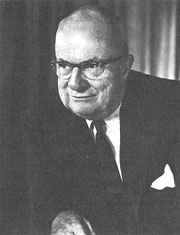
Henry J. Kaiser
Henry J. Kaiser was a pioneering American industrialist renowned for his significant contributions to shipbuilding and construction, particularly during World War II. He founded the Kaiser Shipyards, which produced Liberty and Victory ships using innovative mass-production techniques like welding. Kaiser's ventures extended beyond shipbuilding to include Kaiser Aluminum, Kaiser Steel, and the automobile companies Kaiser-Frazer and Kaiser Motors. He also made a lasting impact on healthcare by organizing Kaiser Permanente. His diverse business interests spanned real estate, civic construction projects, and even television broadcasting, marking him as a versatile and influential figure in American industry.
Born on May 9, 1882, in Sprout Brook, New York, Henry J. Kaiser was the son of Franz and Anna Marie Kaiser, ethnic German immigrants. His father worked as a shoemaker, and Henry started his career as a cash boy in Utica, New York. He later moved to Washington state, where he began a successful career in construction. Henry married Bess Fosburgh, the daughter of a Virginia lumberman, and they had two children, Edgar Kaiser, Sr. and Henry Kaiser, Jr. His family's immigrant background and early experiences played a pivotal role in shaping his industrious spirit.

George Kaiser
George Bruce Kaiser, born on July 29, 1942, in Tulsa, Oklahoma, is a prominent American billionaire businessman and philanthropist. As chairman of BOK Financial Corporation, Kaiser transformed it into a $23.9 billion bank operating in nine states. He is recognized for expanding Kaiser-Francis Oil Company into one of the largest nonpublic energy exploration companies in the U.S. A notable figure in philanthropy, Kaiser ranks third among top American philanthropists, focusing on childhood poverty and early education through the George Kaiser Family Foundation.
Kaiser's family history is marked by resilience, with his parents being Jewish refugees from Nazi Germany. His father, Herman George Kaiser, was an attorney in Berlin until dismissed by the Nazis. The family settled in Tulsa, where they joined an uncle's oil drilling business, laying the foundation for George's future success.
Gunnar Kaiser
Gunnar Kaiser (1976–2023) was a German teacher, writer, and YouTuber known for his controversial views during the COVID-19 pandemic. Born in Cologne, he studied philosophy, German philology, and Romance studies at the University of Cologne. After teaching German and philosophy in Bonn and Cologne, he left his teaching career in 2021 to focus on his YouTube channel and writing. His YouTube channel gained notoriety for its association with the "neue Rechte" and conspiracy theories, eventually reaching 258,000 subscribers. Kaiser authored the novel "Unter der Haut" and non-fiction works like "Der Kult," which achieved significant recognition on bestseller lists. His work often critiqued government measures and cancel culture, sparking both support and criticism.

Axel Kaiser
Axel Kaiser, born on July 4, 1981, is a prominent Chilean writer, lawyer, and political scientist, renowned for his expertise in liberalism and free-market economics. He is a member of the Mont Pelerin Society and has contributed to Forbes, among other publications. Kaiser's notable works include "The Tyranny of Equality" and "The Populist Deception." He has also served as a full professor at the Universidad del Desarrollo and Universidad de los Andes, where he taught Latin American Politics. His influence as a public intellectual was recognized in a 2017 La Segunda poll that ranked him among Chile's most admired intellectuals.
Axel Kaiser hails from a German-Chilean family. His father, Hans Christian Kaiser Wagner, was involved in the National Party as a youth leader. Axel's paternal grandfather, Friedrich Ernst Kaiser Richter, was a German immigrant who fled Nazi Germany in 1936 and settled in Villarrica, Chile. Friedrich became the 9th mayor of Villarrica, serving from 1956 to 1957. Axel is also the brother of Vanessa Kaiser, a former scholar and director of a libertarian think tank, and Johannes Kaiser, a right-wing politician in Chile.
Ken Kaiser
Kenneth John Kaiser (1945–2017) was a distinguished American League umpire in Major League Baseball, serving from 1977 to 1999. Known for wearing uniform number 21, Kaiser officiated in notable events such as the World Series in 1987 and 1997, and the All-Star Game in 1991. Before joining the major leagues, he had a unique stint as a professional wrestler known as "The Hatchet Man." Despite being voted the Most Colorful Umpire in 1986, his career ended in 1999 following a mass resignation attempt by umpires. Kaiser's autobiography, "Planet of the Umps," provides insights into his 36-year baseball career.
Kaiser Surname Meaning, Origin, and History
The surname "Kaiser" originates from the German imperial title "Kaiser," meaning emperor, which itself is derived from the Latin title "Caesar." This surname is most commonly found in Germany, particularly in central regions and the southern half of the Black Forest, as well as in Austria and the Czech Republic. Variations of the surname include Kayser, Kaijser, Keiser, Kiser, and Kyser, with Dutch cognates such as Keizer and De Keyser.
VIEW MOREWhere to Find Genealogy Records for Kaiser
We’ve analyzed YourRoots tree and records data to uncover where genealogists are finding key sources such as census, birth certificates, marriage records, and obituaries for the Kaiser family. Explore our most popular genealogy record sources for the Kaiser surname to learn more.
VIEW MOREAbout YourRoots
Explore your family tree geographically
Import your GEDCOM file to transform your family tree into an interactive global map. See your roots laid out visually and understand your true geographic heritage.
Powerful tools like "Trace Back To Me" instantly map your family's migration paths from a chosen ancestor all the way back to you.
Discover ancestors beyond "end-of-line" automatically
Import your family tree and let AI expand it for you. AI Ancestor Finder scans "end-of-line" ancestors to uncover their parents across hundreds of family lines at once. AI Deep Research analyzes selected ancestors and family clusters, suggesting relevant records and next steps.
Turn on Auto Research Mode to get new discoveries daily or weekly, so your tree keeps growing even while you're away.
Find more DNA matches across all DNA tests
Combine your DNA data with your family tree to unlock the full power of YourRoots DNA Match. Connect with relatives across major testing services — Ancestry, 23andMe, MyHeritage, and more.
View your matches' maps and trees to identify shared ancestors, and soon you'll be able to add them directly to your own tree and map.
Ancestry DNA analysis that goes deeper than others
Unlock exclusive reports that reveal your deeper origins.
- Deep Ancestry Report — Analyze 130+ ethnicities, sub-regions, and 1,800+ communities in one detailed view.
- Global & Native American Reports — Developed with Stanford researchers to uncover hidden ancestries across all 22 chromosomes.
- Ancient DNA Series — Compare your DNA with 1,000+ ancient genomes from Viking, Celtic, and early American civilizations.
Sign up to explore more
Create a free account to navigate family trees, view ancestors, and discover connections.
Coming Soon
We're actively working on many new features for YourRoots. Features marked v2 are ones we're planning to launch soon.
Have a particular feature request? Let us know below!