
Sign up to explore more
Create a free account to navigate family trees, view ancestors, and discover connections.
Sign up to explore more
Create a free account to navigate family trees, view ancestors, and discover connections.
Kaplan Family Genealogy & History
Discover the Global Legacy of the Kaplan Surname
The Kaplan surname has intriguing origins and meanings, reflecting a diverse historical background. It originates from the Latin term "capellanus," associated with individuals responsible for St. Martin of Tours' sacred cloak. This term evolved into various forms across European languages, including Yiddish, German, English, French, and more, often signifying a clergyman or a priest. Interestingly, in Turkey, Kaplan translates to "tiger," a popular surname following the surname reform under Mustafa Kemal Atatürk, reflecting a cultural shift distinct from its European counterpart.
The Kaplan surname has seen significant geographical and cultural evolution. In European languages, it became associated with religious roles, spreading through regions like Poland, Hungary, and Norway. As an Ashkenazi Jewish surname, Kaplan often suggests descent from the priestly Kohanim lineage, similar to "Cohen." By the 18th and 19th centuries, the Kaplan name was prominent in Eastern Europe, with notable individuals contributing to religious and cultural communities. The name's migration to the United States marked a new chapter, expanding its reach and influence.
According to YourRoots data, the Kaplan surname first appeared in Lithuania during the early 17th century, establishing a foundational point for the Kaplan family tree. This aligns with historical narratives of the surname's spread across Eastern Europe, notably into Belarus and Russia by the 19th century. YourRoots records further document the Kaplan family's migration to the United States in the early 20th century, highlighting their adaptability and resilience as they integrated into new communities while maintaining their ancestral connections.
For those researching the Kaplan family tree, YourRoots offers invaluable genealogy records, tracing the Kaplan surname's journey from its Lithuanian origins to its present-day global presence. This rich tapestry of history and migration is a testament to the enduring legacy of the Kaplan name, providing a wealth of information for anyone exploring Kaplan genealogy or records.
Find the Kaplan Family Tree
Search more Kaplan trees & genealogy records
Records
-
BKBarney G Kaplan1904–1962Individual Tree PersonParents: Julius Kaplan & Anna FineScore: ABKBarney G Kaplan1904–1962Individual Tree PersonParents: Julius Kaplan & Anna FineScore: A
-
EKEdward B. Kaplan1875–1948Individual Tree PersonParents: David Kaplan & Badana KabachnikSpouse: Rose GreenbergChildren: Louis, Samuel, Esther, EliScore: AEKEdward B. Kaplan1875–1948Individual Tree PersonParents: David Kaplan & Badana KabachnikSpouse: Rose GreenbergChildren: Louis, Samuel, Esther, EliScore: A
-
PKPhilip David Kaplan1898–1964Individual Tree PersonParents: Barnet Kabrun & Ida PolenSpouse: Anne GoldbergScore: APKPhilip David Kaplan1898–1964Individual Tree PersonParents: Barnet Kabrun & Ida PolenSpouse: Anne GoldbergScore: A
-
CKCharmaine Perry Kaplan1940–2007Individual Tree PersonParents: William Perry & Frances PerryScore: ACKCharmaine Perry Kaplan1940–2007Individual Tree PersonParents: William Perry & Frances PerryScore: A
-
EKElinor Sue Kaplan1934–2007Individual Tree PersonParents: Herbert Kaplan & Gertrude Colt\CholdenkoSpouse: Martin MyersScore: AEKElinor Sue Kaplan1934–2007Individual Tree PersonParents: Herbert Kaplan & Gertrude Colt\CholdenkoSpouse: Martin MyersScore: A
-
HKHerbert Samuel Kaplan1906–1989Individual Tree PersonParents: Samual Kaplan & Esther BarashSpouse: Gertrude Colt\CholdenkoChildren: ElinorScore: AHKHerbert Samuel Kaplan1906–1989Individual Tree PersonParents: Samual Kaplan & Esther BarashSpouse: Gertrude Colt\CholdenkoChildren: ElinorScore: A
-
HKHirsch Tzvi \ Hershel KAPLAN1772–1834Individual Tree PersonParents: Nochim Kakrevouski & Sonja KutzmanSpouse: Dusha KAPLANChildren: Shura, Owsiej, Pesel, Lieb, David, Leizer, Yoseyf, Minya, SchneurScore: AHKHirsch Tzvi \ Hershel KAPLAN1772–1834Individual Tree PersonParents: Nochim Kakrevouski & Sonja KutzmanSpouse: Dusha KAPLANChildren: Shura, Owsiej, Pesel, Lieb, David, Leizer, Yoseyf, Minya, SchneurScore: A
-
BKBarnard Kaplan1903–1961Individual Tree PersonParents: Barnet Kabrun & Ida PolenSpouse: Lottie WeinsteinScore: ABKBarnard Kaplan1903–1961Individual Tree PersonParents: Barnet Kabrun & Ida PolenSpouse: Lottie WeinsteinScore: A
-
IKIsarel Solomon 'Izzy' CAPLAN Kaplan1885–1949Individual Tree PersonParents: Solomon Caplan & Hannah Caplan)Spouse: Annie (Kaplan)Children: Fedinand, NormaScore: AIKIsarel Solomon 'Izzy' CAPLAN Kaplan1885–1949Individual Tree PersonParents: Solomon Caplan & Hannah Caplan)Spouse: Annie (Kaplan)Children: Fedinand, NormaScore: A
-
BKBenjamin Kaplan1908–1975Individual Tree PersonParents: Samual Kaplan & Esther BarashSpouse: Gladys ScholnickChildren: PhyllisScore: ABKBenjamin Kaplan1908–1975Individual Tree PersonParents: Samual Kaplan & Esther BarashSpouse: Gladys ScholnickChildren: PhyllisScore: A
-
MKMarcia Kaplan1916–2005Individual Tree PersonParents: Samuel Kaplan & Ethel MarcusScore: AMKMarcia Kaplan1916–2005Individual Tree PersonParents: Samuel Kaplan & Ethel MarcusScore: A
-
RKRose I. Kaplan1900–1988Individual Tree PersonParents: Samual Kaplan & Esther BarashSpouse: Mark YellonChildren: Donald, AlvinScore: ARKRose I. Kaplan1900–1988Individual Tree PersonParents: Samual Kaplan & Esther BarashSpouse: Mark YellonChildren: Donald, AlvinScore: A
-
CKCarol D Kaplan1935–2019Individual Tree PersonParents: John Johnson & Mabel JohnsonSpouse: Fremond Kaplan, Monte Kaplan, Vic Damone, Robert DeLeon, David FROST, Sidney POITIER, Fredrick GLUSMANScore: ACKCarol D Kaplan1935–2019Individual Tree PersonParents: John Johnson & Mabel JohnsonSpouse: Fremond Kaplan, Monte Kaplan, Vic Damone, Robert DeLeon, David FROST, Sidney POITIER, Fredrick GLUSMANScore: A
-
RKRebecca "Bea" Kaplan1902–1999Individual Tree PersonParents: Samual Kaplan & Esther BarashSpouse: William LearnerScore: ARKRebecca "Bea" Kaplan1902–1999Individual Tree PersonParents: Samual Kaplan & Esther BarashSpouse: William LearnerScore: A
-
SKSara Kaplan1901–1963Individual Tree PersonParents: Jacob Levi & Leah FreedmanSpouse: Hayman KaplanChildren: Maury, JosephineScore: ASKSara Kaplan1901–1963Individual Tree PersonParents: Jacob Levi & Leah FreedmanSpouse: Hayman KaplanChildren: Maury, JosephineScore: A
-
BKBernard Kaplan1914–1979Individual Tree PersonParents: Joseph Kaplan & Sarah StackSpouse: Selma KaplanScore: ABKBernard Kaplan1914–1979Individual Tree PersonParents: Joseph Kaplan & Sarah StackSpouse: Selma KaplanScore: A
-
MKMorris Kaplan1888–1959Individual Tree PersonParents: Caplan None & Rose CaplanSpouse: Celia KaplanChildren: Charles, Lester, Isaac, Beatrice, SolScore: AMKMorris Kaplan1888–1959Individual Tree PersonParents: Caplan None & Rose CaplanSpouse: Celia KaplanChildren: Charles, Lester, Isaac, Beatrice, SolScore: A
-
SKSamual Kaplan1877–1954Individual Tree PersonParents: Jacob Kaplan & Marie KaplanSpouse: Esther BarashChildren: Herbert, Rose, Rebecca, Benjamin, GilbertScore: ASKSamual Kaplan1877–1954Individual Tree PersonParents: Jacob Kaplan & Marie KaplanSpouse: Esther BarashChildren: Herbert, Rose, Rebecca, Benjamin, GilbertScore: A
-
GKGertrude Kaplan1912–1986Individual Tree PersonParents: Samuel Kaplan & Ethel MarcusSpouse: Louis ClareScore: AGKGertrude Kaplan1912–1986Individual Tree PersonParents: Samuel Kaplan & Ethel MarcusSpouse: Louis ClareScore: A
-
NKNathan David Kaplan1877–1952Individual Tree PersonParents: Hyman Kaplan & Yetta NamonSpouse: Mamie KaplanChildren: Fredericka, Namon, LouisScore: ANKNathan David Kaplan1877–1952Individual Tree PersonParents: Hyman Kaplan & Yetta NamonSpouse: Mamie KaplanChildren: Fredericka, Namon, LouisScore: A
Search more trees & records for
Kaplan for free
Tracing Your Kaplan Family Lineage
Origin of the Kaplan Family: Where does the Kaplan surname come from?
The Kaplan surname is rooted in historical records that trace back to Lithuania, marking its earliest known appearance during the early 17th century. This initial documentation serves as the foundational point for the Kaplan family tree, establishing the beginnings of genealogical connections that would unfold over centuries. As families began to branch out from this origin, the Kaplan name would take on new significance in various cultures and regions.
Genealogy and Early Family History of Kaplan
During the 17th century, the Kaplan family began to spread beyond its Lithuanian roots, with significant lines developing in neighboring Belarus. As the centuries progressed, particularly into the 19th century, the family continued to expand, with notable branches emerging in Russia. These early generations laid the groundwork for a complex family tree, as Kaplan families adapted to their environments and established new connections.
In the evolving landscape of Eastern Europe, the Kaplan surname became associated with various trades and professions, contributing to the family's wider social tapestry. Each branch of the Kaplan family contributed to the growth of their lineage, forging connections that would intertwine with other family names in the region, thus enriching the genealogical narrative of the Kaplans.
Tracing the Kaplan Family Tree Through the Centuries
As the Kaplan surname transitioned into the 19th century, it witnessed substantial growth and migration, with families establishing roots in Russia and beginning their journey to the United States. This migration continued into the early 20th century, where the Kaplan name found a new home and a vibrant community in the United States. Each movement across borders represented not just a physical relocation but also an expansion of the Kaplan family tree, linking diverse histories and experiences.
The global spread of the Kaplan surname illustrates a rich tapestry of genealogical connections. By the mid-20th century, Kaplan families had established themselves in various regions, adopting new identities while honoring their ancestral roots. This ongoing journey highlights the resilience and adaptability of the Kaplan family as they navigated the complexities of history and migration.
Where to Find Kaplan Genealogy Records Today
In the modern centuries, the Kaplan surname has continued to thrive, with a significant presence in the United States and other countries. The family has woven its legacy into the fabric of many diverse communities, showcasing a rich history that spans generations. For those seeking to explore their own connections to the Kaplan name, the YourRoots database offers a wealth of genealogy records that can help unravel the intricacies of family trees and foster connections among descendants of this storied lineage.
Famous People with Kaplan (and Their Family Tree)

Thomas Kaplan
Thomas Scott Kaplan, born on September 14, 1962, is a renowned Franco-American businessman, philanthropist, and art collector, best known as the world's largest private collector of Rembrandt's works. As the chairman and chief investment officer of The Electrum Group LLC, Kaplan has made significant strides in the natural resources sector, notably with Apex Silver Mines and Leor Exploration & Production LLC. His strategic investments in gold and silver have been influential, earning him recognition for highlighting jurisdictional risks in mining, known as the "Kaplan Doctrine." Kaplan also chairs the International Alliance for the Protection of Heritage in Conflict Areas (ALIPH), reflecting his dedication to global heritage preservation.
Thomas Kaplan was born in New York City to Lillian Jean Kaplan and Jason "Jay" Kaplan, and he comes from a Jewish family. His passion for conservation and art was nurtured from a young age, inspiring his later ventures, including the creation of the field conservation group Panthera and The Leiden Collection. Kaplan's educational journey led him to Oxford University, where he earned multiple degrees in history, under the mentorship of prominent historians.

Gabe Kaplan
Gabriel Weston Kaplan, born on March 31, 1945, in Brooklyn, New York City, is a multifaceted American entertainer renowned for his work as an actor, comedian, and professional poker player. He gained fame in the 1970s sitcom "Welcome Back, Kotter," where he played the titular role of Gabe Kotter. Kaplan also made significant strides in the poker world, achieving notable success at events like the World Series of Poker and the World Poker Tour. His accomplishments in poker include winning the main event at Amarillo Slim's Super Bowl of Poker and hosting "High Stakes Poker" on PokerGO.

Robert D. Kaplan
Robert D. Kaplan, born June 23, 1952, is a renowned American author and geopolitical analyst known for his insightful work on foreign affairs and travel. His influential article "The Coming Anarchy" and books like "Balkan Ghosts" have shaped discussions on global conflicts and cultural tensions. Kaplan has held notable positions, including Senior Fellow at the Center for a New American Security and Chief Geopolitical Analyst at Stratfor. He has been recognized as one of the world's top global thinkers by Foreign Policy magazine and currently holds the Robert Strausz-Hupé Chair in Geopolitics at the Foreign Policy Research Institute.
Kaplan grew up in Far Rockaway, New York, in a Jewish family. His father, Philip Alexander Kaplan, was a truck driver for the New York Daily News, who inspired Kaplan's early interest in history. He has an older brother named Stephen Kaplan. Kaplan's family background and upbringing significantly influenced his career path and perspectives.
Deborah Kaplan
Deborah Kaplan, born on November 11, 1970, is a renowned American screenwriter and film director. Known for her collaboration with Harry Elfont, she has co-written and directed popular films such as "Can't Hardly Wait" and "Josie and the Pussycats." Her work, often featuring prominent actors like Jennifer Love Hewitt, Ethan Embry, and Rachael Leigh Cook, highlights her significant contributions to the film industry. Kaplan's education at NYU's Tisch School of the Arts laid the foundation for her successful career in Hollywood.

Fanny Kaplan
Fanny Efimovna Kaplan, born Feiga Haimovna Roytblat, was a notable Russian Socialist-Revolutionary who attempted to assassinate Vladimir Lenin in 1918. Known for her involvement with the Socialist Revolutionary Party, she considered Lenin a "traitor to the revolution" after the Bolsheviks banned her party. Kaplan shot Lenin as he left a Moscow factory, which led to severe injuries but not his immediate death. Her actions are historically significant, as they prompted the Soviet government to reinstate capital punishment.
Kaplan was born into a Jewish family, with her father working as a teacher. She had seven siblings and was home-educated. Despite the uncertainty surrounding her original surname, it is known she lived in Odessa and became a revolutionary at a young age.
Kaplan Surname Meaning, Origin, and History
The surname "Kaplan" has Latin origins, deriving from the term "capellanus," which referred to a clergyman or a servant of one, and has appeared in various European languages such as Yiddish, German, and French. In Turkey, however, "Kaplan" means "tiger" and became a popular surname during the surname reform initiated by Mustafa Kemal Atatürk. The name is also common among Ashkenazi Jews, often indicating descent from the priestly lineage or kohanim.
VIEW MOREWhere to Find Genealogy Records for Kaplan
We’ve analyzed YourRoots tree and records data to uncover where genealogists are finding key sources such as census, birth certificates, marriage records, and obituaries for the Kaplan family. Explore our most popular genealogy record sources for the Kaplan surname to learn more.
VIEW MOREAbout YourRoots
Explore your family tree geographically
Import your GEDCOM file to transform your family tree into an interactive global map. See your roots laid out visually and understand your true geographic heritage.
Powerful tools like "Trace Back To Me" instantly map your family's migration paths from a chosen ancestor all the way back to you.
Discover ancestors beyond "end-of-line" automatically
Import your family tree and let AI expand it for you. AI Ancestor Finder scans "end-of-line" ancestors to uncover their parents across hundreds of family lines at once. AI Deep Research analyzes selected ancestors and family clusters, suggesting relevant records and next steps.
Turn on Auto Research Mode to get new discoveries daily or weekly, so your tree keeps growing even while you're away.
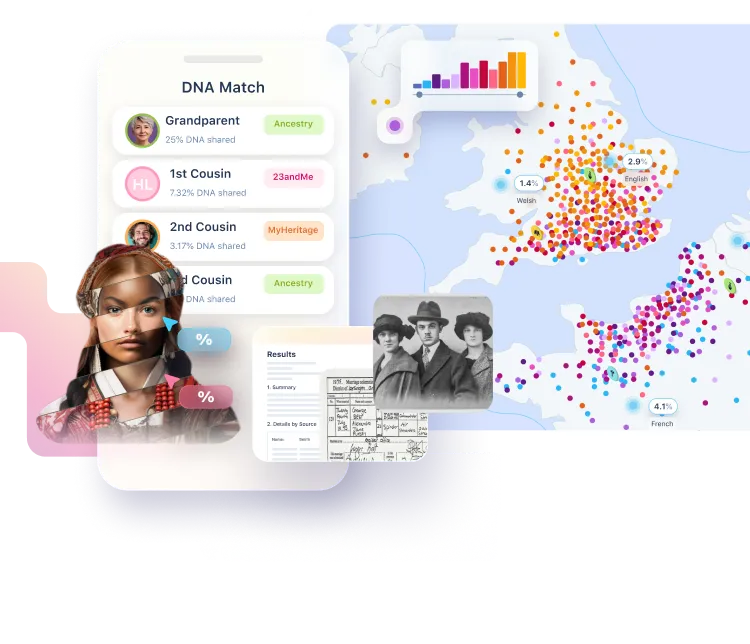
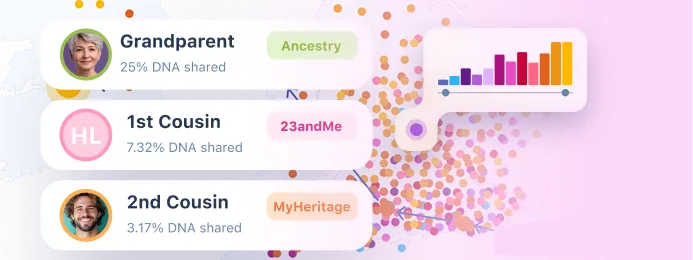
Find more DNA matches across all DNA tests
Combine your DNA data with your family tree to unlock the full power of YourRoots DNA Match. Connect with relatives across major testing services — Ancestry, 23andMe, MyHeritage, and more.
View your matches' maps and trees to identify shared ancestors, and soon you'll be able to add them directly to your own tree and map.
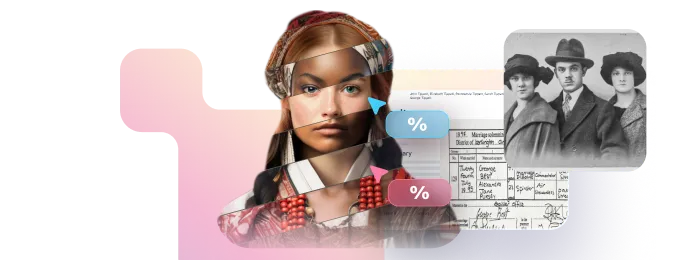
Ancestry DNA analysis that goes deeper than others
Unlock exclusive reports that reveal your deeper origins.
- Deep Ancestry Report — Analyze 130+ ethnicities, sub-regions, and 1,800+ communities in one detailed view.
- Global & Native American Reports — Developed with Stanford researchers to uncover hidden ancestries across all 22 chromosomes.
- Ancient DNA Series — Compare your DNA with 1,000+ ancient genomes from Viking, Celtic, and early American civilizations.
Sign up to explore more
Create a free account to navigate family trees, view ancestors, and discover connections.
Coming Soon
We're actively working on many new features for YourRoots. Features marked v2 are ones we're planning to launch soon.
Have a particular feature request? Let us know below!