
Sign up to explore more
Create a free account to navigate family trees, view ancestors, and discover connections.
Sign up to explore more
Create a free account to navigate family trees, view ancestors, and discover connections.
Savoy Family Genealogy & History
Discover the Global Legacy of the Savoy Surname
The Savoy surname originates from the cultural-historical region of Savoy, situated in the Western Alps, on the boundary between Occitania and Piedmont. The name Savoy likely stems from the Late Latin term "Sapaudia," referring to a fir or upland forest, illustrating the geographic and cultural significance of the area. As a surname, Savoy emerged alongside the rise of the House of Savoy, which played a pivotal role in the region's history, evolving from the County of Savoy during the 11th to 14th centuries to the Duchy of Savoy, a significant feudal power in Europe.
The evolution of the Savoy surname is intertwined with the dynamic history of the Savoy region, which saw its territories expand from what is now the modern French Savoie and Haute-Savoie to parts of western Italy and southwestern Switzerland. The influence of the House of Savoy extended into Piedmont, making it a central player in the politics between France and Italy. This geographic and political expansion reflects how the Savoy family tree spread culturally and geographically over the centuries, leaving a lasting legacy in European history.
The YourRoots dataset provides valuable insights into the genealogy of the Savoy surname, tracing its roots back to France. It confirms the early presence of the Savoy family in this region, aligning with historical records of the surname's origins. The dataset highlights the expansion of the Savoy lineage from the 11th century onwards, with notable movements to North America by the 17th century, where the family further diversified and established itself in Canada and the United States.
For genealogical researchers, the YourRoots data enriches the understanding of the Savoy family tree, offering a comprehensive view of its historical spread and cultural legacy. This information serves as a valuable resource for those seeking to explore their Savoy ancestry, connecting modern descendants to their historical roots in the Western Alps and beyond.
Find the Savoy Family Tree
Search more Savoy trees & genealogy records
Records
-
MSMahaut Mathilda Albon, Countess of Savoy1105–1145Individual Tree PersonParents: Guigues Albon & Mathilde EnglandSpouse: Amadeus DeMaurienneChildren: HumbertScore: AMSMahaut Mathilda Albon, Countess of Savoy1105–1145Individual Tree PersonParents: Guigues Albon & Mathilde EnglandSpouse: Amadeus DeMaurienneChildren: HumbertScore: A
-
DSDonatille Roy Savoy1885–1973Individual Tree PersonParents: Sevigne Roy & Emelia RoyScore: ADSDonatille Roy Savoy1885–1973Individual Tree PersonParents: Sevigne Roy & Emelia RoyScore: A
-
PSPhyllis Kay Savoy1947–1989Individual Tree PersonParents: Neal Savoy & Cordelia WatsonSpouse: Harry ChismScore: APSPhyllis Kay Savoy1947–1989Individual Tree PersonParents: Neal Savoy & Cordelia WatsonSpouse: Harry ChismScore: A
-
BSBeatrix Of Savoy1198–1266Individual Tree PersonParents: Thomas Savoy & Beatrice GenevaSpouse: Raymond BerengerChildren: Margaret, Beatrice, Sanchia, Marguerite, EleanorScore: ABSBeatrix Of Savoy1198–1266Individual Tree PersonParents: Thomas Savoy & Beatrice GenevaSpouse: Raymond BerengerChildren: Margaret, Beatrice, Sanchia, Marguerite, EleanorScore: A
-
DSDavid Savoy1779–1869Individual Tree PersonParents: Armand Savoie & Anastasie BroSpouse: Hélène HierlihyChildren: Mary, Daniel\Donald, Philip, James, Elizabeth, Mary, David, Amand, Helene\Ellen, Margaret, Roseanne, Roxanne, JeanneScore: ADSDavid Savoy1779–1869Individual Tree PersonParents: Armand Savoie & Anastasie BroSpouse: Hélène HierlihyChildren: Mary, Daniel\Donald, Philip, James, Elizabeth, Mary, David, Amand, Helene\Ellen, Margaret, Roseanne, Roxanne, JeanneScore: A
-
ESEmanuele Filiberto of Savoy1705–1705Individual Tree PersonParents: Victor SAVOIE & Anne d'ORLÉANSScore: AESEmanuele Filiberto of Savoy1705–1705Individual Tree PersonParents: Victor SAVOIE & Anne d'ORLÉANSScore: A
-
TSThomas I Savoy1177–1233Individual Tree PersonParents: Humbert Savoy & Beatrix VienneSpouse: Beatrix Faucigny, Marguerite GenevaChildren: Beatrice, Amadeo, Peter, Wilhelm, Philip, Guisard, Countess, Thomas, Bonifacio, Margherita, Umberto, Avita, Alasia, Amadeo, Filippo, Guglielmo, Margareta, Marguerite, (Count, Alicia, Raimond, Wilhelm, Guiscard, Countess, Aimone, Jeanne, Thomas, Agnes, Beatrice, Beatrice, Beatrix, Tommaso, Beatrix, Amadeo, Pierre, Pietro, Boniface, Agatha, PiersScore: ATSThomas I Savoy1177–1233Individual Tree PersonParents: Humbert Savoy & Beatrix VienneSpouse: Beatrix Faucigny, Marguerite GenevaChildren: Beatrice, Amadeo, Peter, Wilhelm, Philip, Guisard, Countess, Thomas, Bonifacio, Margherita, Umberto, Avita, Alasia, Amadeo, Filippo, Guglielmo, Margareta, Marguerite, (Count, Alicia, Raimond, Wilhelm, Guiscard, Countess, Aimone, Jeanne, Thomas, Agnes, Beatrice, Beatrice, Beatrix, Tommaso, Beatrix, Amadeo, Pierre, Pietro, Boniface, Agatha, PiersScore: A
-
MSMarie Adélaïde of Savoy1685–1712Individual Tree PersonParents: Victor SardiniëSpouse: Louis BurgundyChildren: Louis, Louis, LouisScore: AMSMarie Adélaïde of Savoy1685–1712Individual Tree PersonParents: Victor SardiniëSpouse: Louis BurgundyChildren: Louis, Louis, LouisScore: A
-
HSHumbert II Count of Savoy1095–1103Individual Tree PersonParents: Amadeus Maurienne & Joan GenevaSpouse: of GiselaChildren: Adela, AmadeusScore: AHSHumbert II Count of Savoy1095–1103Individual Tree PersonParents: Amadeus Maurienne & Joan GenevaSpouse: of GiselaChildren: Adela, AmadeusScore: A
-
BSBeatrice of Savoy1200–1266Individual Tree PersonParents: Thomas Savoy & Beatrix ProvenceSpouse: Count IV, Manfredo Saluzzo, Charles dAnjou, King Spain**Children: Éléonore, Beatrix, Margaretha, Comte, Alphonso, ISABELLA, JoanScore: ABSBeatrice of Savoy1200–1266Individual Tree PersonParents: Thomas Savoy & Beatrix ProvenceSpouse: Count IV, Manfredo Saluzzo, Charles dAnjou, King Spain**Children: Éléonore, Beatrix, Margaretha, Comte, Alphonso, ISABELLA, JoanScore: A
-
VSVittorio Amedeo I of Savoy1587–1637Individual Tree PersonParents: Charles-Emmanuel Savoie & Caterina SpainSpouse: Chrestienne BourbonChildren: Adelheid, François-Hyacinthe, Carlo, MargheritaScore: AVSVittorio Amedeo I of Savoy1587–1637Individual Tree PersonParents: Charles-Emmanuel Savoie & Caterina SpainSpouse: Chrestienne BourbonChildren: Adelheid, François-Hyacinthe, Carlo, MargheritaScore: A
-
CSCatherine Michelle of Spain de Austria von Habsburg : Duchess consort of Savoy1567–1597Individual Tree PersonParents: King II & Elisabeth SpainSpouse: Charles SavoieChildren: Tommaso, Marie, Francesca, Emanuel, Isabelle, Giovanna, Philip, Marguerite, John, VictorScore: ACSCatherine Michelle of Spain de Austria von Habsburg : Duchess consort of Savoy1567–1597Individual Tree PersonParents: King II & Elisabeth SpainSpouse: Charles SavoieChildren: Tommaso, Marie, Francesca, Emanuel, Isabelle, Giovanna, Philip, Marguerite, John, VictorScore: A
-
MSMarshall Durock Savoy1876–1936Individual Tree PersonParents: william NoneSpouse: Nellie BanksChildren: ottis, Marshall, Nellie, Eva, A, JohnScore: AMSMarshall Durock Savoy1876–1936Individual Tree PersonParents: william NoneSpouse: Nellie BanksChildren: ottis, Marshall, Nellie, Eva, A, JohnScore: A
-
CSCharles (Carlo) Emmanuele de Savoie Duke of Savoy1562–1630Individual Tree PersonParents: Emanuele Savoy & Margaret BerrySpouse: Catalina SavoyChildren: Thomas, Emanuele, Prince, EmanueleScore: ACSCharles (Carlo) Emmanuele de Savoie Duke of Savoy1562–1630Individual Tree PersonParents: Emanuele Savoy & Margaret BerrySpouse: Catalina SavoyChildren: Thomas, Emanuele, Prince, EmanueleScore: A
-
CSCarlo I of Savoy1468–1490Individual Tree PersonParents: Amadeus Duke) & Yolande FranceScore: ACSCarlo I of Savoy1468–1490Individual Tree PersonParents: Amadeus Duke) & Yolande FranceScore: A
-
CSCorrine Magadeline Savoy1902–1953Individual Tree PersonParents: Amon Savoy & Celina ColetteScore: ACSCorrine Magadeline Savoy1902–1953Individual Tree PersonParents: Amon Savoy & Celina ColetteScore: A
-
MSMaria Beatrice of Portugal (Savoie) Duchess Savoy1504–1538Individual Tree PersonParents: Manuel Algarves & Maria PortugalSpouse: Charles SavoyChildren: Emanuele, Adriano, Louis, Gianmaria, CaterinaScore: AMSMaria Beatrice of Portugal (Savoie) Duchess Savoy1504–1538Individual Tree PersonParents: Manuel Algarves & Maria PortugalSpouse: Charles SavoyChildren: Emanuele, Adriano, Louis, Gianmaria, CaterinaScore: A
-
CSCharles III Duke of Savoy1486–1553Individual Tree PersonSpouse: Maria SavoyChildren: Emanuele, Adriano, Louis, Gianmaria, CaterinaScore: ACSCharles III Duke of Savoy1486–1553Individual Tree PersonSpouse: Maria SavoyChildren: Emanuele, Adriano, Louis, Gianmaria, CaterinaScore: A
-
BSBenjamin S Savoy1910–2001Individual Tree PersonParents: Frank Savoy & Lillian TaliaferroSpouse: Louise WilsonScore: ABSBenjamin S Savoy1910–2001Individual Tree PersonParents: Frank Savoy & Lillian TaliaferroSpouse: Louise WilsonScore: A
-
BSBeatrice Savoy1198–1267Individual Tree PersonParents: Thomas Savoie & Margaret GenevaSpouse: Raymond ProvenceChildren: Eleanor, MargaretScore: ABSBeatrice Savoy1198–1267Individual Tree PersonParents: Thomas Savoie & Margaret GenevaSpouse: Raymond ProvenceChildren: Eleanor, MargaretScore: A
Search more trees & records for
Savoy for free
Tracing Your Savoy Family Lineage
Origin of the Savoy Family: Where does the Savoy surname come from?
The earliest known appearance of the Savoy surname can be traced back to France, marking a significant milestone in the family’s genealogical history. This initial record provides a foundation for understanding the beginnings of the Savoy family tree, highlighting its roots in a region rich in culture and history. It sets the stage for the evolution of the surname and its descendants over the centuries.
Genealogy and Early Family History of Savoy
During the early centuries, the Savoy family began to establish its presence primarily in France, where multiple branches of the family tree emerged. The 11th century saw notable growth in the region, as families began to spread their roots and form connections across various localities. As time progressed into the 12th and 13th centuries, the Savoy lineage continued to develop, creating ties that would influence future generations.
The expansion of the surname during these formative years highlights the importance of community and kinship among the Savoy families. The connections established during this time laid the groundwork for future migrations and the branching out of the family tree into new territories.
Tracing the Savoy Family Tree Through the Centuries
As the centuries progressed, the Savoy surname began to spread beyond its French origins. By the 17th century, members of the Savoy family were found in Canada, marking the beginning of a new chapter in their genealogical journey. The 18th century further saw the family’s migration to the United States, where they began to establish themselves in various regions, enriching the fabric of their heritage.
The 19th century brought significant growth in the United States, as Savoy families continued to expand, further diversifying their branches across the country. This global migration reflected broader historical movements and the adaptability of the Savoy lineage, which continued to thrive across different continents and cultures.
Where to Find Savoy Genealogy Records Today
In modern centuries, the Savoy surname has maintained a presence in various regions around the world, particularly in North America. The early 20th century marked a period of substantial growth, with families continuing to document their histories and connections. Today, individuals interested in tracing their Savoy heritage can explore the extensive records available in the YourRoots database, connecting their own family trees to this rich lineage.
Famous People with Savoy (and Their Family Tree)

House of Savoy
The House of Savoy, an influential Franco-Italian royal dynasty, was established in 1003 in Savoy, now part of southeastern France. It expanded its power from the County of Savoy to rule regions like the Kingdom of Sicily and Piedmont-Sardinia, eventually leading the unification of Italy in 1861. The dynasty ruled the Kingdom of Italy until 1946, with notable kings including Victor Emmanuel II and Umberto I. The House of Savoy briefly ruled Spain in the 19th century and played a crucial role in European politics through strategic alliances and marriages.
The House of Savoy traces its origins to Humbert I "Biancamano," Count of Sabaudia, whose exact ancestry remains uncertain. The family possibly originated from the County of Vienne. Over generations, they expanded their influence through strategic marriages and territorial acquisitions, such as Otto of Savoy's marriage to Marchioness Adelaide of Turin, which brought important territories into the family's possession.

Prince Eugene of Savoy
Prince Eugene of Savoy (1663–1736) was a preeminent field marshal and strategic genius of the Holy Roman Empire and Austrian Habsburg dynasty. Celebrated for his military prowess, he played a pivotal role in major conflicts like the Siege of Vienna, War of the Spanish Succession, and Austro-Turkish wars. His notable victories at the Battles of Zenta, Blenheim, and Belgrade solidified his legacy as one of Europe's greatest commanders, while his diplomatic acumen secured alliances against Bourbon powers. Eugene also left an architectural mark with the Baroque Belvedere Palace in Vienna.
Born in Paris to Eugene Maurice, Count of Soissons, and Olympia Mancini, niece of Cardinal Mazarin, Eugene was initially set for a clerical path. His mother’s involvement in court intrigues and scandals led to her downfall, ultimately affecting Eugene's early life. Raised by his paternal grandmother and aunt, he later pursued a military career, joining the service of Emperor Leopold I of the Holy Roman Empire.

Duchy of Savoy
The Duchy of Savoy was a prominent territorial entity in the Savoyard state from 1416 to 1847, evolving from the County of Savoy under the rule of Amadeus VIII. As a key player in the Holy Roman Empire, it held significant influence, particularly during the Renaissance. The Duchy expanded through strategic wars and alliances, notably against the Duchy of Montferrat and Marquisate of Saluzzo. It was also a cultural hub, encouraging arts and architecture in Italian Piedmont. Despite periods of stagnation and French pressure, it remained a pivotal region in European politics.
The Duchy was established by Sigismund, Holy Roman Emperor, who elevated the County of Savoy into a duchy for Amadeus VIII. The House of Savoy controlled a diverse array of territories, including parts of modern-day France, Italy, and Switzerland, under a composite monarchy. This family maintained its influence despite internal challenges and external pressures, demonstrating resilience and adaptability throughout its history.
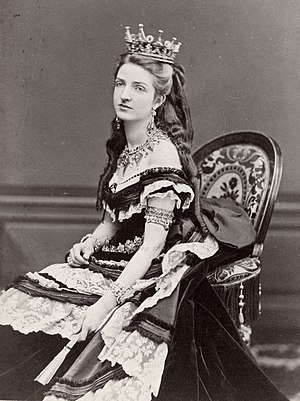
Margherita of Savoy
Margherita of Savoy, born Margherita Maria Teresa Giovanna, served as Queen of Italy from 1878 to 1900 through her marriage to King Umberto I. Known for her political acumen and charismatic public presence, she played a crucial role in enhancing the popularity of the Italian monarchy. Her ability to engage with the public by embracing local customs and traditions significantly strengthened her influence, making her more popular than her husband. As queen, she gathered a circle of conservative intellectuals and artists, the Circolo della regina, which further solidified her impact on Italian society.
Margherita was the daughter of Prince Ferdinando of Savoy, Duke of Genoa, and Princess Elisabeth of Saxony. After her father's death in 1855, her mother remarried Major Nicholas Bernoud, Marchese di Rapallo. Raised with a strong intellectual curiosity, Margherita received an advanced education, preparing her for her future role as queen.

Princess Mafalda of Savoy
Princess Mafalda of Savoy, a member of the Italian royal family, was born on 19 November 1902. As the second daughter of King Victor Emmanuel III of Italy and Elena of Montenegro, she became notable for her marriage to Philipp, Landgrave of Hesse, in 1925. During World War II, Adolf Hitler and Joseph Goebbels viewed her as a threat, leading to her arrest and imprisonment in the Buchenwald concentration camp. Tragically, she died there on 28 August 1944, following an Allied bombing. Her life was marked by her royal connections and her unfortunate demise during a tumultuous period in history.
Mafalda was the second child of King Victor Emmanuel III and Queen Elena of Italy, with siblings Yolanda, Umberto, Giovanna, and Maria Francesca. She shared a close bond with her mother, from whom she inherited a passion for music and the arts. Her family played significant roles in Italian and European history, with her younger brother, Umberto, eventually becoming King Umberto II of Italy. Her marriage linked her to the German royal family, as her husband Philipp was a grandson of German Emperor Frederick III.
Savoy Surname Meaning, Origin, and History
The surname "Savoy" originates from a cultural-historical region in the Western Alps, known as Savoie in French. This area, historically significant as part of the Kingdom of Burgundy and later the Duchy of Savoy, derives its name from the Late Latin "Sapaudia," referring to a fir or upland forest. The region's strategic location made it a focal point in European political dynamics, especially during the Italian unification in the 19th century.
VIEW MOREWhere to Find Genealogy Records for Savoy
We’ve analyzed YourRoots tree and records data to uncover where genealogists are finding key sources such as census, birth certificates, marriage records, and obituaries for the Savoy family. Explore our most popular genealogy record sources for the Savoy surname to learn more.
VIEW MOREAbout YourRoots
Explore your family tree geographically
Import your GEDCOM file to transform your family tree into an interactive global map. See your roots laid out visually and understand your true geographic heritage.
Powerful tools like "Trace Back To Me" instantly map your family's migration paths from a chosen ancestor all the way back to you.
Discover ancestors beyond "end-of-line" automatically
Import your family tree and let AI expand it for you. AI Ancestor Finder scans "end-of-line" ancestors to uncover their parents across hundreds of family lines at once. AI Deep Research analyzes selected ancestors and family clusters, suggesting relevant records and next steps.
Turn on Auto Research Mode to get new discoveries daily or weekly, so your tree keeps growing even while you're away.
Find more DNA matches across all DNA tests
Combine your DNA data with your family tree to unlock the full power of YourRoots DNA Match. Connect with relatives across major testing services — Ancestry, 23andMe, MyHeritage, and more.
View your matches' maps and trees to identify shared ancestors, and soon you'll be able to add them directly to your own tree and map.
Ancestry DNA analysis that goes deeper than others
Unlock exclusive reports that reveal your deeper origins.
- Deep Ancestry Report — Analyze 130+ ethnicities, sub-regions, and 1,800+ communities in one detailed view.
- Global & Native American Reports — Developed with Stanford researchers to uncover hidden ancestries across all 22 chromosomes.
- Ancient DNA Series — Compare your DNA with 1,000+ ancient genomes from Viking, Celtic, and early American civilizations.
Sign up to explore more
Create a free account to navigate family trees, view ancestors, and discover connections.
Coming Soon
We're actively working on many new features for YourRoots. Features marked v2 are ones we're planning to launch soon.
Have a particular feature request? Let us know below!