
Sign up to explore more
Create a free account to navigate family trees, view ancestors, and discover connections.

Sign up to explore more
Create a free account to navigate family trees, view ancestors, and discover connections.
Stagg Family Genealogy & History
Discover the Global Legacy of the Stagg Surname
The Stagg surname first emerged in England during the early 16th century, marking the beginning of a noteworthy genealogical journey. This surname likely originated from a nickname or occupational name, reflecting an aspect of the individual's life or work. Over time, Stagg became established as a family name, symbolizing the lineage and heritage of those who bore it.
As centuries progressed, the Stagg family name spread geographically, particularly throughout England in the 16th and 17th centuries. Notable concentrations of the Stagg family appeared in the Midlands and the South of England, establishing family roots that would flourish over generations. By the 18th century, many Stagg family members migrated to North America, contributing to the growth and diversification of the Stagg family tree.
YourRoots data enriches our understanding by confirming the presence of the Stagg surname in England from the early 16th century. This aligns with historical narratives of the family's expansion during the 17th and 18th centuries, as descendants established new branches in North America. The YourRoots dataset highlights the interconnectedness of Stagg genealogy, offering insights into the family's migration patterns and development over time.
For genealogists and family historians, YourRoots provides a valuable resource for tracing the Stagg family tree. The data underscores the global distribution of the Stagg surname, revealing a rich tapestry of connections across continents. This comprehensive view of Stagg genealogy offers a deeper understanding of the family's enduring legacy and ongoing narrative.
Find the Stagg Family Tree
Search more Stagg trees & genealogy records
Records
-
HSHilda May Stagg1894–1984Individual Tree PersonParents: Ernest Slagg & Elizabeth SaundersScore: AHSHilda May Stagg1894–1984Individual Tree PersonParents: Ernest Slagg & Elizabeth SaundersScore: A
-
MSMichael Crawford Stagg1859–1937Individual Tree PersonParents: Sylvester Stagg & Mary SnellSpouse: Martha PeakChildren: Mary, Hollis, Harry, John, CharlesScore: AMSMichael Crawford Stagg1859–1937Individual Tree PersonParents: Sylvester Stagg & Mary SnellSpouse: Martha PeakChildren: Mary, Hollis, Harry, John, CharlesScore: A
-
JSJoseph Stagg1910–1969Individual Tree PersonParents: John Stagg & Mary JellySpouse: Ann JobsonScore: AJSJoseph Stagg1910–1969Individual Tree PersonParents: John Stagg & Mary JellySpouse: Ann JobsonScore: A
-
WSWilliam Stagg1814–1873Individual Tree PersonParents: Thomas Stagg & Mary HelleryScore: AWSWilliam Stagg1814–1873Individual Tree PersonParents: Thomas Stagg & Mary HelleryScore: A
-
JSJosiah Stagg1741–1793Individual Tree PersonParents: Nicholas Stagg & Geesje FranciscoSpouse: Elizabeth LouwChildren: Abraham, Michael, Thomas, Elizabeth, Sarah, Josiah, Elizabeth, ThomasScore: AJSJosiah Stagg1741–1793Individual Tree PersonParents: Nicholas Stagg & Geesje FranciscoSpouse: Elizabeth LouwChildren: Abraham, Michael, Thomas, Elizabeth, Sarah, Josiah, Elizabeth, ThomasScore: A
-
LSLinda May Stagg1914–1986Individual Tree PersonParents: Alfred Stagg & Mabel ThorneSpouse: Arthur PhilpottScore: ALSLinda May Stagg1914–1986Individual Tree PersonParents: Alfred Stagg & Mabel ThorneSpouse: Arthur PhilpottScore: A
-
ESEva Phyllis Stagg1911–1982Individual Tree PersonParents: Frederick Stagg & Ellen ThorneSpouse: Stanley JohnstonScore: AESEva Phyllis Stagg1911–1982Individual Tree PersonParents: Frederick Stagg & Ellen ThorneSpouse: Stanley JohnstonScore: A
-
MSMary Lucinda "Tennie" STAGG1851–1939Individual Tree PersonParents: James Stagg & Margaret AnthonySpouse: Alfred ShugartChildren: William, Lyda, Henry, Burse, Homer, Ada, Berry, Beulah, Verbal, Maggie, Julius, WilliamScore: AMSMary Lucinda "Tennie" STAGG1851–1939Individual Tree PersonParents: James Stagg & Margaret AnthonySpouse: Alfred ShugartChildren: William, Lyda, Henry, Burse, Homer, Ada, Berry, Beulah, Verbal, Maggie, Julius, WilliamScore: A
-
DSDouglas Graham STAGG1930–2010Individual Tree PersonParents: Ira STAGG & Alice DAVIESSpouse: Valerie FREETHScore: ADSDouglas Graham STAGG1930–2010Individual Tree PersonParents: Ira STAGG & Alice DAVIESSpouse: Valerie FREETHScore: A
-
HSHenry Stagg1780–1859Individual Tree PersonParents: Thomas Staggs & Mary WarnerSpouse: Mary CotgroveChildren: William, Elizabeth, Harriett, Thomas, Isabel, Emma, Betsy, AnnScore: AHSHenry Stagg1780–1859Individual Tree PersonParents: Thomas Staggs & Mary WarnerSpouse: Mary CotgroveChildren: William, Elizabeth, Harriett, Thomas, Isabel, Emma, Betsy, AnnScore: A
-
MSMargaret Stagg1941–2021Individual Tree PersonParents: Victor John & Linda EllenSpouse: Neville StaggScore: AMSMargaret Stagg1941–2021Individual Tree PersonParents: Victor John & Linda EllenSpouse: Neville StaggScore: A
-
ESElizabeth Stagg1815–1887Individual Tree PersonParents: Thomas Stagg & Mary HellerySpouse: Richard PerryChildren: Elizabeth, Richard, Emma, Mary, AnnaScore: AESElizabeth Stagg1815–1887Individual Tree PersonParents: Thomas Stagg & Mary HellerySpouse: Richard PerryChildren: Elizabeth, Richard, Emma, Mary, AnnaScore: A
-
DSDudley A'Court Stagg1910–1972Individual Tree PersonParents: Charles Stagg & May SimmondsSpouse: Leslie LawrenceScore: ADSDudley A'Court Stagg1910–1972Individual Tree PersonParents: Charles Stagg & May SimmondsSpouse: Leslie LawrenceScore: A
-
LSLenore Mary Stagg1904–1996Individual Tree PersonParents: Alfred Stagg & Caroline ReckScore: ALSLenore Mary Stagg1904–1996Individual Tree PersonParents: Alfred Stagg & Caroline ReckScore: A
-
JSJoshua Stagg1795–1871Individual Tree PersonParents: George StaggChildren: Lydia, Hugh, SarahScore: AJSJoshua Stagg1795–1871Individual Tree PersonParents: George StaggChildren: Lydia, Hugh, SarahScore: A
-
JSJohn Alfred Stagg1901–1979Individual Tree PersonParents: Alfred Stagg & Caroline ReckSpouse: Irene ZylmaScore: AJSJohn Alfred Stagg1901–1979Individual Tree PersonParents: Alfred Stagg & Caroline ReckSpouse: Irene ZylmaScore: A
-
GSGeorge W. Stagg1793–1854Individual Tree PersonParents: George StaggSpouse: Jemima FurrChildren: Thomas, Matilda, Alva, William, Mary, John, Almira, Joseph, GeorgeScore: AGSGeorge W. Stagg1793–1854Individual Tree PersonParents: George StaggSpouse: Jemima FurrChildren: Thomas, Matilda, Alva, William, Mary, John, Almira, Joseph, GeorgeScore: A
-
CSCharles Henry Alfred Stagg1879–1947Individual Tree PersonParents: Henry Stagg & Louisa DodgeSpouse: May SimmondsChildren: DudleyScore: ACSCharles Henry Alfred Stagg1879–1947Individual Tree PersonParents: Henry Stagg & Louisa DodgeSpouse: May SimmondsChildren: DudleyScore: A
-
WSWalter Edmund Stagg1896–1969Individual Tree PersonParents: Alfred Stagg & Caroline ReckSpouse: Louise EblingChildren: MabelScore: AWSWalter Edmund Stagg1896–1969Individual Tree PersonParents: Alfred Stagg & Caroline ReckSpouse: Louise EblingChildren: MabelScore: A
-
FSFrederick Stagg1887–1954Individual Tree PersonParents: Ernest Slagg & Elizabeth SaundersSpouse: Ellen ThorneChildren: EvaScore: AFSFrederick Stagg1887–1954Individual Tree PersonParents: Ernest Slagg & Elizabeth SaundersSpouse: Ellen ThorneChildren: EvaScore: A
Search more trees & records for
Stagg for free
Tracing Your Stagg Family Lineage
Origin of the Stagg Family: Where does the Stagg surname come from?
The Stagg surname first appeared in England during the early 16th century, marking the beginnings of a rich genealogical history. This initial record serves as a foundation for understanding the family's roots and the branches that would emerge over time. The presence of Stagg in England during this period hints at the family's early connections to the land and its future migrations.
Genealogy and Early Family History of Stagg
Throughout the 16th and 17th centuries, the Stagg family began to spread across England, establishing family lines that would flourish in various regions. Areas such as the Midlands and the South of England saw a significant concentration of Stagg families, who started to build their family trees and develop their identities. The establishment of these family branches during this time laid the groundwork for future generations to follow.
As the centuries progressed, the Stagg family continued to expand, with descendants moving to new areas and creating additional branches. The 18th century marked a notable shift as many Stagg families began to migrate to North America, seeking new opportunities and contributing to the growth of the family lineage. This migration not only diversified the family tree but also connected Stagg descendants across the Atlantic.
Tracing the Stagg Family Tree Through the Centuries
From the early days in England to the burgeoning family presence in North America, the Stagg surname has witnessed considerable expansion over the centuries. By the late 18th century and into the 19th century, the Stagg family experienced a notable increase in the United States, with many families establishing roots in various states. This global spread continued into the 20th century, as Stagg descendants were found in countries such as Canada and Australia, further enriching the family history.
The evolution of the Stagg surname illustrates a dynamic journey, reflecting broader patterns of migration and family development across generations. As families branched out and settled in new regions, they contributed to a diverse tapestry of Stagg genealogy. This interconnectedness reveals not only the resilience of the Stagg family but also the ongoing narrative of their ancestry.
Where to Find Stagg Genealogy Records Today
In the modern centuries, the Stagg surname has established a significant presence globally, with descendants thriving in various parts of the world. The early 21st century has seen a renewed interest in genealogy, allowing individuals to trace their Stagg roots back through time and connect with relatives across the globe. Readers are encouraged to explore the YourRoots database to uncover their own Stagg family history and discover the connections that bind them to this fascinating lineage.
Famous People with Stagg (and Their Family Tree)

Amos Alonzo Stagg
Amos Alonzo Stagg was a pioneering figure in American sports, renowned for his substantial contributions as an athlete and coach. Born on August 16, 1862, he excelled in multiple sports, chiefly American football, where he served as head coach at the University of Chicago, leading the Maroons to national championships in 1905 and 1913. Stagg's influence extended to basketball and baseball, where he innovated the modern five-player basketball lineup and created the batting cage. His legacy is cemented in the College Football Hall of Fame and the Basketball Hall of Fame. Stagg's commitment to sports and athletic excellence established him as a pivotal figure in the evolution of American collegiate athletics.

James Stagg
James Martin Stagg was a pivotal figure in World War II meteorology, best known for his critical role in the success of D-Day. As the Chief Meteorological Officer, SHAEF, he advised General Eisenhower to delay the Allied invasion of Europe from 5 to 6 June 1944, ensuring favorable weather conditions. This decision was instrumental in the success of Operation Overlord. Stagg's distinguished career includes leading the British Polar Expedition and serving as director of services at the Meteorological Office. His contributions earned him honors such as the Officer of the Order of the British Empire and the US Legion of Merit.
James Stagg was born on 30 June 1900 in Musselburgh, East Lothian, Scotland, to Alexander C. Stagg and Helen (Ellen) Stagg. He was educated in Dalkeith and Edinburgh, Scotland, laying the foundation for his future accomplishments in meteorology.

George T. Stagg
George T. Stagg is a distinguished bourbon whiskey, renowned for its high proof and uncut, unfiltered nature, produced by the Buffalo Trace Distillery. As a part of the prestigious "Antique Collection" series, this bourbon is aged for approximately 15 years and is released annually in the fall, with an additional spring release since 2005. It has garnered numerous accolades, including top rankings in Jim Murray's "Whisky Bible" and multiple gold medals at the San Francisco World Spirits Competition. The 2015 release was notably recognized as "#3 of Top 65 Five-Star Spirits" by F. Paul Pacult's Spirit Journal.

Simon Stagg
Simon Stagg is a prominent fictional character in DC Comics, known for his role as an antagonist to the superhero Metamorpho. Created by Bob Haney and Ramona Fradon, Stagg is the unscrupulous CEO of Stagg Enterprises and plays a pivotal role in transforming Rex Mason into Metamorpho. His character is frequently depicted in conflict with iconic heroes like Batman, the Flash, and Green Lantern. Stagg has been featured in various media adaptations, including The Flash and Wonder Woman 1984, portrayed by actors William Sadler and Oliver Cotton respectively, enhancing his recognition in the DC Universe.
Simon Stagg is the father of Sapphire Stagg. In the comics, his family dynamics are complex, with storylines involving his interactions with his daughter and other characters like Metamorpho and Java. These narratives often explore Stagg's manipulative nature in the context of his family relationships.
Lindsey Stagg
Lindsey Anne Stagg, born in 1970 in Northampton, is best known for her role as Pandora Braithwaite in the popular TV adaptations of "The Secret Diary of Adrian Mole, Aged 13¾" (1985) and "The Growing Pains of Adrian Mole" (1987). Discovered by Michael Napier Brown, she stood out among 500 girls auditioned for the part. Despite her early success, Stagg did not enjoy acting and left the profession after 1987. Today, she is a National Childbirth Trust trained doula, supporting families in Stockport and Manchester.
Lindsey Stagg is the daughter of Barbara A. (née Leney) and Terence F. Stagg, who married in 1966 in Rochford, Essex. She married Michael P. Varley in 2000 in Derbyshire, and they have three sons.
Stagg Surname Meaning, Origin, and History
The surname "Stagg" is associated with various notable individuals from diverse fields such as sports, politics, music, and science. Noteworthy figures include Amos Alonzo Stagg, a prominent American collegiate coach, and James Stagg, a British meteorologist instrumental during World War II. The name also appears in popular culture and commercial products, including a fictional character in DC Comics and brands like Stagg Chili.
VIEW MOREWhere to Find Genealogy Records for Stagg
We’ve analyzed YourRoots tree and records data to uncover where genealogists are finding key sources such as census, birth certificates, marriage records, and obituaries for the Stagg family. Explore our most popular genealogy record sources for the Stagg surname to learn more.
VIEW MOREAbout YourRoots
Explore your family tree geographically
Import your GEDCOM file to transform your family tree into an interactive global map. See your roots laid out visually and understand your true geographic heritage.
Powerful tools like "Trace Back To Me" instantly map your family's migration paths from a chosen ancestor all the way back to you.
Discover ancestors beyond "end-of-line" automatically
Import your family tree and let AI expand it for you. AI Ancestor Finder scans "end-of-line" ancestors to uncover their parents across hundreds of family lines at once. AI Deep Research analyzes selected ancestors and family clusters, suggesting relevant records and next steps.
Turn on Auto Research Mode to get new discoveries daily or weekly, so your tree keeps growing even while you're away.
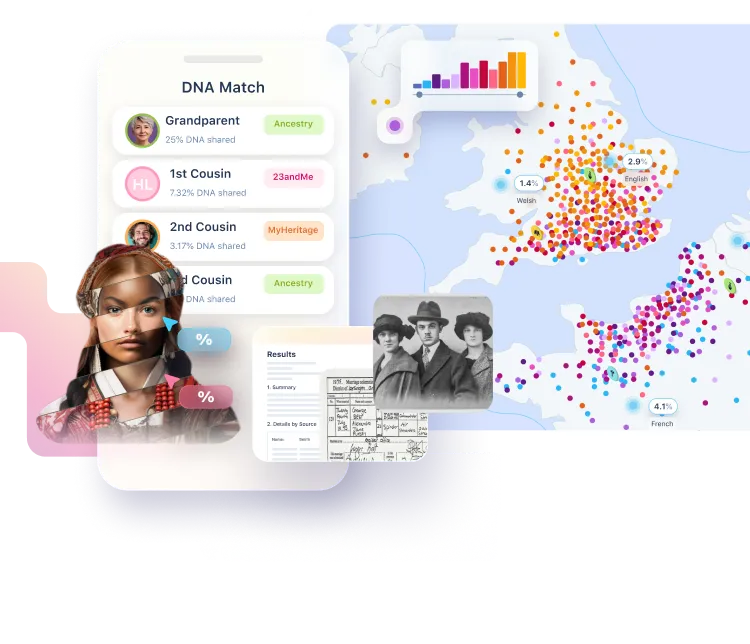
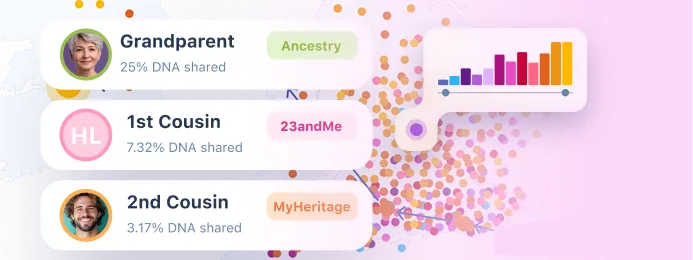
Find more DNA matches across all DNA tests
Combine your DNA data with your family tree to unlock the full power of YourRoots DNA Match. Connect with relatives across major testing services — Ancestry, 23andMe, MyHeritage, and more.
View your matches' maps and trees to identify shared ancestors, and soon you'll be able to add them directly to your own tree and map.
Ancestry DNA analysis that goes deeper than others
Unlock exclusive reports that reveal your deeper origins.
- Deep Ancestry Report — Analyze 130+ ethnicities, sub-regions, and 1,800+ communities in one detailed view.
- Global & Native American Reports — Developed with Stanford researchers to uncover hidden ancestries across all 22 chromosomes.
- Ancient DNA Series — Compare your DNA with 1,000+ ancient genomes from Viking, Celtic, and early American civilizations.
Sign up to explore more
Create a free account to navigate family trees, view ancestors, and discover connections.
Coming Soon
We're actively working on many new features for YourRoots. Features marked v2 are ones we're planning to launch soon.
Have a particular feature request? Let us know below!