
Sign up to explore more
Create a free account to navigate family trees, view ancestors, and discover connections.
Sign up to explore more
Create a free account to navigate family trees, view ancestors, and discover connections.
Worcester Family Genealogy & History
Discover the Global Legacy of the Worcester Surname
The Worcester surname is of English origin, first appearing in genealogical records within England. This name has historical roots tied to the British Isles, offering a glimpse into the societal frameworks from which the Worcester families emerged. Over time, the surname became associated with various professions and contributions to community life, marking its significance in family history contexts.
Throughout the centuries, the Worcester name experienced geographical and cultural expansion. Originating in England, it spread across the country in the 14th century, with notable growth in both urban and rural areas during the 15th and 16th centuries. By the 17th century, the Worcester surname had begun to appear internationally, particularly in the Americas, reflecting broader migration patterns and cultural exchanges.
YourRoots data supports the historical trajectory of the Worcester surname by confirming its English origins and subsequent global spread. The records highlight the surname's presence in England from early times, with significant migration to the United States by the 18th century. This data enriches the understanding of the Worcester genealogy, emphasizing the diverse and expansive nature of the Worcester family tree.
For modern genealogy researchers, YourRoots offers a comprehensive resource to explore Worcester records, tracing the surname's evolution across continents. This global perspective provides valuable insights for those delving into the Worcester family tree, enhancing the narrative of this historically significant name.
Find the Worcester Family Tree
Search more Worcester trees & genealogy records
Records
-
MWMartha Maria Worcester1839–1890Individual Tree PersonParents: Noah Worcester & Mariah TrothScore: AMWMartha Maria Worcester1839–1890Individual Tree PersonParents: Noah Worcester & Mariah TrothScore: A
-
EWEvelyn Edith Worcester1919–1989Individual Tree PersonParents: Wayne Sr & Theadora PersonScore: AEWEvelyn Edith Worcester1919–1989Individual Tree PersonParents: Wayne Sr & Theadora PersonScore: A
-
HWHerbt A Worcester1893–1939Individual Tree PersonParents: Frank Worcester & Florence MurphyScore: AHWHerbt A Worcester1893–1939Individual Tree PersonParents: Frank Worcester & Florence MurphyScore: A
-
EWEldad Worcester1763–1853Individual Tree PersonParents: Eldad Worcester & Rebecca OsgoodSpouse: Esther WorcesterChildren: William, Eldad, Horatio, Alfred, Horatio, Rebecca, Henry, George, Rhoda, Caroline, JohnScore: AEWEldad Worcester1763–1853Individual Tree PersonParents: Eldad Worcester & Rebecca OsgoodSpouse: Esther WorcesterChildren: William, Eldad, Horatio, Alfred, Horatio, Rebecca, Henry, George, Rhoda, Caroline, JohnScore: A
-
EWElizabeth Hastings (Somerset), Countess of Worcester1546–1621Individual Tree PersonParents: Francis alumna & Catherine HuntingdonSpouse: Edward WorchesterChildren: Henry, William, Charles, Lady, Frances, ChristopherScore: AEWElizabeth Hastings (Somerset), Countess of Worcester1546–1621Individual Tree PersonParents: Francis alumna & Catherine HuntingdonSpouse: Edward WorchesterChildren: Henry, William, Charles, Lady, Frances, ChristopherScore: A
-
LWLydia J. Worcester1870–1935Individual Tree PersonParents: William Worcester & Marilda SeversonSpouse: John HadleyChildren: Ernest, Milo, Carol, Ruth, JohnScore: ALWLydia J. Worcester1870–1935Individual Tree PersonParents: William Worcester & Marilda SeversonSpouse: John HadleyChildren: Ernest, Milo, Carol, Ruth, JohnScore: A
-
GWGeorge Henry Russell Worcester1876–1940Individual Tree PersonParents: George Worcester & Eliza CookSpouse: Rachel CondonChildren: Florence, Helena, PhillipaScore: AGWGeorge Henry Russell Worcester1876–1940Individual Tree PersonParents: George Worcester & Eliza CookSpouse: Rachel CondonChildren: Florence, Helena, PhillipaScore: A
-
DWDiana Worcester1835–1921Individual Tree PersonParents: Willard Wight & Mandana GiffordChildren: Willard, MaratonScore: ADWDiana Worcester1835–1921Individual Tree PersonParents: Willard Wight & Mandana GiffordChildren: Willard, MaratonScore: A
-
CWCountess Elizabeth Anne de Witham of Worcester1503–1584Individual Tree PersonParents: Christopher Witham & Lady BedingfieldSpouse: Albert Browne, Sir BrownChildren: Thomas, Henry*, Thomas, Nicholas, Henry, Katherine, Andrew, William, Margaret, Thomas, John, Denys, Charlotte, Roger, Jone, Richard, Mary, Sir, Elizabeth, Francis, SimonScore: ACWCountess Elizabeth Anne de Witham of Worcester1503–1584Individual Tree PersonParents: Christopher Witham & Lady BedingfieldSpouse: Albert Browne, Sir BrownChildren: Thomas, Henry*, Thomas, Nicholas, Henry, Katherine, Andrew, William, Margaret, Thomas, John, Denys, Charlotte, Roger, Jone, Richard, Mary, Sir, Elizabeth, Francis, SimonScore: A
-
HWHendrik Henry Beaufort-Somerset 2nd Earl of Worcester1496–1549Individual Tree PersonParents: Charles Somerset & Elisabeth HerbertSpouse: Elizabeth BrowneChildren: LucyScore: AHWHendrik Henry Beaufort-Somerset 2nd Earl of Worcester1496–1549Individual Tree PersonParents: Charles Somerset & Elisabeth HerbertSpouse: Elizabeth BrowneChildren: LucyScore: A
-
LWLewis Eugene Worcester1923–2007Individual Tree PersonParents: Lewis Worcester & Mary TaylorSpouse: Arlene HarthausScore: ALWLewis Eugene Worcester1923–2007Individual Tree PersonParents: Lewis Worcester & Mary TaylorSpouse: Arlene HarthausScore: A
-
LWLady Englefield Hastings-Somerset Countess of Worcester1556–1621Individual Tree PersonParents: Francis Huntingdon & Katherine HuntingdonSpouse: William Worcester, John WorchesterChildren: 1st, Henry,, Blanche, Charles, Catherine, Frances, Katherine, Blanche, Frances, Elizabeth, Francis, ChristopherScore: ALWLady Englefield Hastings-Somerset Countess of Worcester1556–1621Individual Tree PersonParents: Francis Huntingdon & Katherine HuntingdonSpouse: William Worcester, John WorchesterChildren: 1st, Henry,, Blanche, Charles, Catherine, Frances, Katherine, Blanche, Frances, Elizabeth, Francis, ChristopherScore: A
-
CWCharles Walton Worcester1875–1937Individual Tree PersonParents: Samuel Worcester & Henrietta PottsSpouse: Anna McDonoughChildren: Charles, RuthScore: ACWCharles Walton Worcester1875–1937Individual Tree PersonParents: Samuel Worcester & Henrietta PottsSpouse: Anna McDonoughChildren: Charles, RuthScore: A
-
CWCordilla Worcester1876–1899Individual Tree PersonParents: William Worcester & Marilda SeversonScore: ACWCordilla Worcester1876–1899Individual Tree PersonParents: William Worcester & Marilda SeversonScore: A
-
KWKarel de Beaufort-Somerset Earl van Worcester1460–1526Individual Tree PersonParents: Sir Whitney & Lady StaffordshireSpouse: Elizabeth West, Elizabeth Herbert,, Eleanor SuttonChildren: Sir, George, Mary, Elizabeth, Charles, HenryScore: AKWKarel de Beaufort-Somerset Earl van Worcester1460–1526Individual Tree PersonParents: Sir Whitney & Lady StaffordshireSpouse: Elizabeth West, Elizabeth Herbert,, Eleanor SuttonChildren: Sir, George, Mary, Elizabeth, Charles, HenryScore: A
-
SWStanley S. Worcester1903–1970Individual Tree PersonParents: Ed Worcester & Stella VeatchScore: ASWStanley S. Worcester1903–1970Individual Tree PersonParents: Ed Worcester & Stella VeatchScore: A
-
HWHenry Somerset 1st Marquess of Worcester1577–1646Individual Tree PersonParents: Edward Worcester & Elisabeth HastingsScore: AHWHenry Somerset 1st Marquess of Worcester1577–1646Individual Tree PersonParents: Edward Worcester & Elisabeth HastingsScore: A
-
FWFrederick Persson Worcester1916–2001Individual Tree PersonParents: Wayne Sr & Theadora PersonScore: AFWFrederick Persson Worcester1916–2001Individual Tree PersonParents: Wayne Sr & Theadora PersonScore: A
-
EWEdward Worcester1550–1590Individual Tree PersonParents: Richard Wooster & Agnes KinghamSpouse: Elizabeth AllenChildren: WilliamScore: AEWEdward Worcester1550–1590Individual Tree PersonParents: Richard Wooster & Agnes KinghamSpouse: Elizabeth AllenChildren: WilliamScore: A
-
JWJames Thomas Worcester1853–1927Individual Tree PersonParents: Noah Worcester & Mariah TrothSpouse: Rhoda BlackChildren: WalterScore: AJWJames Thomas Worcester1853–1927Individual Tree PersonParents: Noah Worcester & Mariah TrothSpouse: Rhoda BlackChildren: WalterScore: A
Search more trees & records for
Worcester for free
Tracing Your Worcester Family Lineage
Origin of the Worcester Family: Where does the Worcester surname come from?
The Worcester surname first appears in genealogical records from England, marking the beginnings of family trees associated with this name. This early documentation connects the Worcester lineage to foundational roots in the British Isles, establishing a crucial link for those tracing their ancestry. The historical context of this time period offers insight into the societal structures and communities from which the Worcester families emerged.
Genealogy and Early Family History of Worcester
In subsequent centuries, the Worcester family began to spread throughout England, with notable concentrations in various regions. During the 14th century, the surname saw an increase in its presence, particularly in urban centers and rural areas alike, as families expanded and established their own branches. The 15th and 16th centuries marked significant growth, as the Worcester name began to take root in different localities, creating a diverse tapestry of family connections.
As branches of the family tree developed over time, individuals with the Worcester surname contributed to their communities, often engaging in trades and local governance. This period not only solidified the family’s presence but also set the stage for future generations to explore their heritage. The evolution of family ties during these centuries reflects a dynamic interplay of social and economic factors that shaped the Worcester lineage.
Tracing the Worcester Family Tree Through the Centuries
From the 17th century onward, the Worcester surname began to expand beyond England’s borders, appearing in various parts of the globe. The 18th century saw a notable migration to the Americas, where many Worcesters established themselves, particularly in the United States. This transatlantic movement contributed to a diverse and expansive family tree, with branches reaching into different regions and cultures.
During the 19th and early 20th centuries, the Worcester name continued to flourish, reflecting the broader patterns of migration and settlement. Families adapted to new environments while maintaining connections to their English heritage, further enriching the genealogy of the Worcester lineage. Throughout these centuries, each family branch added depth to the collective history of the Worcester surname, emphasizing its global significance.
Where to Find Worcester Genealogy Records Today
In the modern centuries, the Worcester surname has established a presence in multiple countries, with significant populations in the United States and continued ties to its English origins. The global spread of the Worcester name allows for a rich exploration of family histories, with connections spanning continents. Readers are encouraged to delve into the YourRoots database to uncover their own family stories and explore the intricate branches of the Worcester family tree.
Famous People with Worcester (and Their Family Tree)

Charles Somerset, 1st Earl of Worcester
Charles Somerset, 1st Earl of Worcester, was a prominent English nobleman and politician in the late 15th and early 16th centuries. Known for his role as Lord Chamberlain to King Henry VIII, he was instrumental in organizing the Field of Cloth of Gold in 1520, a significant diplomatic event. Somerset was invested as a Knight of the Garter and created Baron Herbert of Ragland, Chepstow, and Gower. In 1514, he was elevated to the Earl of Worcester. His strategic marriages and high-ranking positions connected him with influential nobility, enhancing his status and legacy within the Tudor court.
Born around 1460, Charles Somerset was the illegitimate son of Henry Beaufort, 3rd Duke of Somerset, and Joan Hill. Despite his illegitimacy, he was legitimized, allowing him to secure prestigious roles and titles. His lineage links back to the Beaufort family, a prominent English noble house. Somerset's descendants include the Marquesses of Worcester and the Dukes of Beaufort, underscoring his enduring impact on British aristocracy.

Samuel Worcester
Samuel Austin Worcester (1798–1859) was a pivotal American missionary, translator, and defender of Cherokee sovereignty. He notably collaborated with Elias Boudinot to establish the Cherokee Phoenix, the first Native American newspaper printed in English and Cherokee syllabary. Worcester played a crucial role in the landmark Supreme Court case Worcester v. Georgia (1832), which affirmed Cherokee sovereignty against state laws. Despite opposition from President Jackson, Worcester's commitment to the Cherokee cause persisted, leading him to establish a printing press in Indian Territory and continue translating the Bible into Cherokee.
Born in Peacham, Vermont, Worcester hailed from a long line of ministers, with his father, Rev. Leonard Worcester, being the seventh generation of pastors. His father also worked as a printer, a skill Worcester adopted and utilized throughout his career. Samuel Worcester's family roots trace back to England, with a strong tradition of religious service.
Earl of Worcester
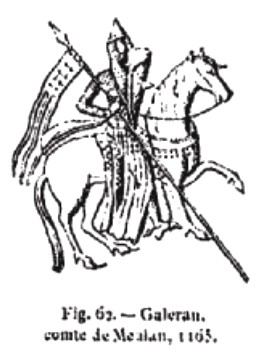
The Earl of Worcester is a historically significant title within the Peerage of England, created five times since 1138. Notable figures include Waleran de Beaumont, the first Earl, and Thomas Percy, a military commander who fought in the Hundred Years' War. Richard Beauchamp, John Tiptoft, and Charles Somerset also held the title, with Somerset later becoming Marquess of Worcester and Duke of Beaufort. The title's history is marked by periods of extinction, forfeiture, and restoration, reflecting the tumultuous political landscape of medieval and early modern England.
The first Earl, Waleran de Beaumont, was a Norman noble and son of Robert de Beaumont, 1st Earl of Leicester, and Elizabeth of Vermandois. Thomas Percy, the second Earl, was the son of Henry de Percy, 3rd Baron Percy, and Mary of Lancaster, and brother to Henry Percy, 1st Earl of Northumberland. Richard Beauchamp, the third Earl, was the son of William de Beauchamp, a descendant of Thomas de Beauchamp, 11th Earl of Warwick. John Tiptoft, the fourth Earl, descended from John Tiptoft, Speaker of the House of Commons. The fifth creation was in favor of Charles Somerset, the legitimized son of Henry Beaufort, 3rd Duke of Somerset.

Richard Faulkner, Baron Faulkner of Worcester
Richard Oliver Faulkner, Baron Faulkner of Worcester, is a prominent Labour Party politician and life peer, born on March 22, 1946, in Manchester, England. Educated at Merchant Taylors' School and Worcester College, Oxford, he has been a dedicated political figure, serving as a councillor in Merton and an advisor in several general elections. Elevated to the peerage in 1999, he is actively engaged in political interests such as transport, sport, human rights, and health. Faulkner is the Vice Chair of the All-Party Parliamentary Group on Industrial Heritage and the UK trade envoy to Taiwan. Additionally, he chairs the Alderney Gambling Control Commission and has co-authored several books on Britain's railways.
Richard Faulkner is married to Susan (née Heyes), and they have two daughters. His family includes his brother, David Faulkner, who was a civil servant.

Joseph Emerson Worcester
Joseph Emerson Worcester (1784–1865) was a prominent American lexicographer known for his role in the "dictionary wars" against Noah Webster. Worcester's dictionaries emphasized traditional pronunciation and spelling, contrasting Webster's Americanized approach. His Comprehensive Pronouncing and Explanatory English Dictionary, published in 1830, was a significant achievement, leading to accusations of plagiarism from Webster. Despite these challenges, Worcester's work was respected and widely used, maintaining a strong market presence until the late 19th century. He also contributed to educational resources with works on geography and history, earning LL.D. degrees from Brown University and Dartmouth College.
Worcester Surname Meaning, Origin, and History
The surname "Worcester" is of English origin. It has been borne by a variety of notable individuals across different fields, including acting, medicine, zoology, history, and activism, reflecting a diverse legacy.
VIEW MOREWhere to Find Genealogy Records for Worcester
We’ve analyzed YourRoots tree and records data to uncover where genealogists are finding key sources such as census, birth certificates, marriage records, and obituaries for the Worcester family. Explore our most popular genealogy record sources for the Worcester surname to learn more.
VIEW MOREAbout YourRoots
Explore your family tree geographically
Import your GEDCOM file to transform your family tree into an interactive global map. See your roots laid out visually and understand your true geographic heritage.
Powerful tools like "Trace Back To Me" instantly map your family's migration paths from a chosen ancestor all the way back to you.
Discover ancestors beyond "end-of-line" automatically
Import your family tree and let AI expand it for you. AI Ancestor Finder scans "end-of-line" ancestors to uncover their parents across hundreds of family lines at once. AI Deep Research analyzes selected ancestors and family clusters, suggesting relevant records and next steps.
Turn on Auto Research Mode to get new discoveries daily or weekly, so your tree keeps growing even while you're away.
Find more DNA matches across all DNA tests
Combine your DNA data with your family tree to unlock the full power of YourRoots DNA Match. Connect with relatives across major testing services — Ancestry, 23andMe, MyHeritage, and more.
View your matches' maps and trees to identify shared ancestors, and soon you'll be able to add them directly to your own tree and map.
Ancestry DNA analysis that goes deeper than others
Unlock exclusive reports that reveal your deeper origins.
- Deep Ancestry Report — Analyze 130+ ethnicities, sub-regions, and 1,800+ communities in one detailed view.
- Global & Native American Reports — Developed with Stanford researchers to uncover hidden ancestries across all 22 chromosomes.
- Ancient DNA Series — Compare your DNA with 1,000+ ancient genomes from Viking, Celtic, and early American civilizations.
Sign up to explore more
Create a free account to navigate family trees, view ancestors, and discover connections.
Coming Soon
We're actively working on many new features for YourRoots. Features marked v2 are ones we're planning to launch soon.
Have a particular feature request? Let us know below!