
Sign up to explore more
Create a free account to navigate family trees, view ancestors, and discover connections.
Sign up to explore more
Create a free account to navigate family trees, view ancestors, and discover connections.
Darcy Family Genealogy & History
Discover the Global Legacy of the Darcy Surname
The Darcy surname, with its roots in the Norman barony of Arcy in what is now Northern France, holds a significant place in the tapestry of English history. Emerging from the Norman conquest of England, the surname Darcy—along with its variants such as Darci, Darcie, and Darcey—became a recognizable name in the English-speaking world. The name's origins reflect both geographical and cultural transitions as it migrated from the French region to become embedded in English society, later serving as an anglicized form of the Gaelic surname Ó Dorchaidhe.
Throughout history, the Darcy surname has been carried by notable figures in various fields, from politics and science to literature and sports. The 12th century marked the beginning of the surname's spread across England, with the Darcy family establishing branches in different regions. By the 17th century, the Darcy name had made its way to the United States, illustrating a growing transatlantic connection. The 18th century saw a notable presence of the surname in Ireland, highlighting the family's adaptability to new cultural contexts.
YourRoots data confirms the longstanding presence of the Darcy surname in England starting from the early medieval period. This aligns closely with known historical accounts, showing how the Darcy genealogy expanded significantly during the 12th through 15th centuries. The YourRoots insights provide a detailed view of how the Darcy family tree branched out over time, contributing to a rich historical narrative. This data enriches our understanding of the Darcy family's movements, showcasing their resilience and adaptability across centuries.
For genealogy and family-tree researchers, the YourRoots dataset offers a comprehensive resource for tracing the Darcy lineage. It highlights the global spread of the surname, reflecting historical migrations and expansions. This wealth of information provides valuable context for those exploring their own connections to the Darcy family tree, ensuring a deeper understanding of their heritage and the historical journey of their ancestors.
Find the Darcy Family Tree
Search more Darcy trees & genealogy records
Records
-
HDHenry Darcy1535–1612Individual Tree PersonParents: Arthur Knayth & Maria CarewSpouse: Katherine TyrwhittChildren: KatherineScore: AHDHenry Darcy1535–1612Individual Tree PersonParents: Arthur Knayth & Maria CarewSpouse: Katherine TyrwhittChildren: KatherineScore: A
-
JDJoseph Matthew Darcy1907–1908Individual Tree PersonParents: Joseph D'Arcy & Madeline D'ArcyScore: AJDJoseph Matthew Darcy1907–1908Individual Tree PersonParents: Joseph D'Arcy & Madeline D'ArcyScore: A
-
TDThomas Darcy1506–1558Individual Tree PersonParents: Roger Darcy & Elizabeth WyndhamSpouse: Elizabeth VEREChildren: John, Thomasine, JohnScore: ATDThomas Darcy1506–1558Individual Tree PersonParents: Roger Darcy & Elizabeth WyndhamSpouse: Elizabeth VEREChildren: John, Thomasine, JohnScore: A
-
EDEdward Darcy1543–1612Individual Tree PersonParents: Arthur Darcy & Lady CarewScore: AEDEdward Darcy1543–1612Individual Tree PersonParents: Arthur Darcy & Lady CarewScore: A
-
MDMary Darcy1567–1644Individual Tree PersonParents: Lady (Kitson) & Lady (Kitson)Spouse: Thomas ColchesterChildren: Elizabeth, PenelopeScore: AMDMary Darcy1567–1644Individual Tree PersonParents: Lady (Kitson) & Lady (Kitson)Spouse: Thomas ColchesterChildren: Elizabeth, PenelopeScore: A
-
RDRobert Darcy1391–1449Individual Tree PersonParents: Thomas Darcy & Daughter TorelSpouse: Alice FitzlangleyChildren: Robert, Alice, John, Margaret, Katherine, Eleanor, Anne, ElizabethScore: ARDRobert Darcy1391–1449Individual Tree PersonParents: Thomas Darcy & Daughter TorelSpouse: Alice FitzlangleyChildren: Robert, Alice, John, Margaret, Katherine, Eleanor, Anne, ElizabethScore: A
-
TDThomas Darcy1506–1558Individual Tree PersonParents: Roger Darcy & Elizabeth WyndhamSpouse: Elizabeth VereChildren: Alberic, Henry, Arthur, Constance, Elizabeth, John, Mary, Richard, ThomasineScore: ATDThomas Darcy1506–1558Individual Tree PersonParents: Roger Darcy & Elizabeth WyndhamSpouse: Elizabeth VereChildren: Alberic, Henry, Arthur, Constance, Elizabeth, John, Mary, Richard, ThomasineScore: A
-
BDBarbara Darcy1600–1662Individual Tree PersonParents: Conyers Arci & Dorothy BalasyseSpouse: Matthew HuttonChildren: MaryScore: ABDBarbara Darcy1600–1662Individual Tree PersonParents: Conyers Arci & Dorothy BalasyseSpouse: Matthew HuttonChildren: MaryScore: A
-
SDSir Roger (Lord of Nottinghamshire) DARCY1253–1284Individual Tree PersonParents: Philip DARCY & Isabel BERTRAMSpouse: Lady DEATONChildren: Lord, PhilipScore: ASDSir Roger (Lord of Nottinghamshire) DARCY1253–1284Individual Tree PersonParents: Philip DARCY & Isabel BERTRAMSpouse: Lady DEATONChildren: Lord, PhilipScore: A
-
TDThomas Anthony Darcy1893–1979Individual Tree PersonParents: Anthony Darcy & Bridget CahillSpouse: Kathleen HilliearChildren: Mary, AnthonyScore: ATDThomas Anthony Darcy1893–1979Individual Tree PersonParents: Anthony Darcy & Bridget CahillSpouse: Kathleen HilliearChildren: Mary, AnthonyScore: A
-
NDNorman II Lord Darcy1062–1115Individual Tree PersonParents: Norman d'Arcy & Adelina CourtSpouse: Mrs DarcyChildren: Robert, HenryScore: ANDNorman II Lord Darcy1062–1115Individual Tree PersonParents: Norman d'Arcy & Adelina CourtSpouse: Mrs DarcyChildren: Robert, HenryScore: A
-
TDThomas Darcy1506–1558Individual Tree PersonParents: Sir III & Elizabeth WentworthSpouse: Lady DeVereChildren: Mary, John, HenryScore: ATDThomas Darcy1506–1558Individual Tree PersonParents: Sir III & Elizabeth WentworthSpouse: Lady DeVereChildren: Mary, John, HenryScore: A
-
MDMaud DArcy1525–1585Individual Tree PersonParents: Jane M'Riccard & Sir IrelandSpouse: Thomas Cusack, Sir ColleyChildren: Mary, Sir, Eleanor, George, Catherine, LadyScore: AMDMaud DArcy1525–1585Individual Tree PersonParents: Jane M'Riccard & Sir IrelandSpouse: Thomas Cusack, Sir ColleyChildren: Mary, Sir, Eleanor, George, Catherine, LadyScore: A
-
TDThomas Darcy1506–1558Individual Tree PersonParents: Elizabeth Wentworth & Roger IIISpouse: Elizabeth VEREChildren: John, Maria, HenryScore: ATDThomas Darcy1506–1558Individual Tree PersonParents: Elizabeth Wentworth & Roger IIISpouse: Elizabeth VEREChildren: John, Maria, HenryScore: A
-
RDRoger Darcy1474–1508Individual Tree PersonParents: John Boteler & Elizabeth LangstonSpouse: Elizabeth WentworthChildren: ThomasScore: ARDRoger Darcy1474–1508Individual Tree PersonParents: John Boteler & Elizabeth LangstonSpouse: Elizabeth WentworthChildren: ThomasScore: A
-
RDRosemary Teresa Darcy1927–2004Individual Tree PersonParents: Leonard Sr & Helen CareySpouse: Edward GreeneScore: ARDRosemary Teresa Darcy1927–2004Individual Tree PersonParents: Leonard Sr & Helen CareySpouse: Edward GreeneScore: A
-
MDMichael Thomas Darcy1885–1947Individual Tree PersonParents: Anthony Darcy & Bridget CahillScore: AMDMichael Thomas Darcy1885–1947Individual Tree PersonParents: Anthony Darcy & Bridget CahillScore: A
-
JDJohn 5th Baron D'Arcy of Knaith Darcy1377–1411Individual Tree PersonParents: Philip Darcy & Elizabeth GreySpouse: Margaret GreyChildren: PhilipScore: AJDJohn 5th Baron D'Arcy of Knaith Darcy1377–1411Individual Tree PersonParents: Philip Darcy & Elizabeth GreySpouse: Margaret GreyChildren: PhilipScore: A
-
JDJoan Johanne Darcy1500–1575Individual Tree PersonParents: William Darcy & Euphemia LahntonSpouse: Richard Yorke, Richard YorkeChildren: Lady, EdmundScore: AJDJoan Johanne Darcy1500–1575Individual Tree PersonParents: William Darcy & Euphemia LahntonSpouse: Richard Yorke, Richard YorkeChildren: Lady, EdmundScore: A
-
JDJohn Joseph Darcy1916–1977Individual Tree PersonParents: John Darcy & Mary ClynesSpouse: Hermanette MahlerScore: AJDJohn Joseph Darcy1916–1977Individual Tree PersonParents: John Darcy & Mary ClynesSpouse: Hermanette MahlerScore: A
Search more trees & records for
Darcy for free
Tracing Your Darcy Family Lineage
Origin of the Darcy Family: Where does the Darcy surname come from?
The earliest known appearance of the Darcy surname is recorded in England during the early medieval period. This marks the beginning of the family tree, connecting the Darcy lineage to the historical and cultural context of the time. The roots of the surname are deeply embedded in English heritage, reflecting the family's early ties to the land and its evolving society.
Genealogy and Early Family History of Darcy
As the centuries progressed, the Darcy family began to spread throughout England, establishing itself in key regions. During the 12th century, the surname saw increased prevalence, with families branching out and creating distinct lines within the family tree. This growth continued into the 13th and 14th centuries, which saw a significant rise in the number of recorded Darcys, indicating a flourishing network of family connections.
The late medieval period, particularly the 15th century, marked a peak in the Darcy family's presence in England. Many branches of the family tree emerged, showing the adaptability and resilience of the Darcys in various social and economic climates. The connections forged during these times laid the groundwork for future generations, contributing to the rich tapestry of the Darcy lineage.
Tracing the Darcy Family Tree Through the Centuries
The expansion of the Darcy surname continued into the early modern period, witnessing migration trends that spread the family across regions. In the 17th century, the surname began to appear in the United States, indicating the beginning of a transatlantic connection for many Darcy families. This movement was further exemplified in the 18th century, when the surname found a notable presence in Ireland, showcasing the family's adaptability to new environments.
In the 19th century, the Darcy lineage further diversified, with families establishing roots in various countries, including a continued presence in the United States. The 20th century continued this trend of global spread, with Darcy families likely intermingling with broader communities and contributing to the cultural mosaic of their new locales. This evolution exemplifies the dynamic nature of the Darcy family tree, continuously branching out and connecting with different cultures.
Where to Find Darcy Genealogy Records Today
In modern centuries, the Darcy surname has maintained its presence globally, with families continuing to explore their lineage and connections. In the 21st century, descendants of the Darcy family can be found in numerous countries, reflecting the historical migrations and expansions of their ancestors. Readers are encouraged to delve into the YourRoots database to uncover their own connections to the Darcy family tree and explore the rich history that accompanies their surname.
Famous People with Darcy (and Their Family Tree)
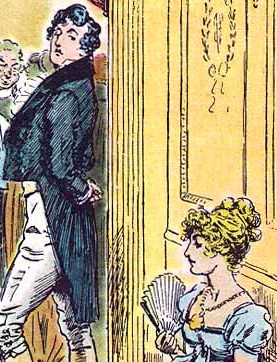
Mr. Darcy
Fitzwilliam Darcy, commonly known as Mr. Darcy, is a central character in Jane Austen's 1813 novel "Pride and Prejudice." As a wealthy gentleman with an income exceeding £10,000 a year, Darcy owns the grand estate of Pemberley in Derbyshire. Initially portrayed as aloof and proud, he becomes romantically interested in Elizabeth Bennet, the novel's protagonist. Despite obstacles, including his initial interference in the budding romance between his friend Bingley and Elizabeth's sister Jane, Darcy evolves after Elizabeth's criticisms. He ultimately displays a gentlemanlike manner, winning Elizabeth's heart and marrying her. Keywords: Mr. Darcy, Pride and Prejudice, Jane Austen, Elizabeth Bennet, Pemberley, romantic hero.

Luke Darcy
Luke Darcy, born on 12 July 1975, is a former Australian rules footballer known for his successful career with the Western Bulldogs in the AFL. Notable achievements include winning the Charles Sutton Medal in 2001 and receiving the Leigh Matthews Trophy in 2002. Darcy served as the Bulldogs' leading goalkicker in 2004 and captained the team from 2005 to 2006. Post-retirement, he transitioned to a media career, providing expert commentary for Network Ten and later joining the Seven Network. He also co-hosted Triple M Melbourne's "The Hot Breakfast" and hosted Seven's "Talking Footy," showcasing his versatility in sports broadcasting.
Luke Darcy is the son of David Darcy, a former Footscray player and coach at South Adelaide in the SANFL. The Darcy family has a strong football lineage, with Luke's son, Sam Darcy, being drafted by the Western Bulldogs in 2021 under the father-son rule.

Thomas Darcy, 1st Baron Darcy de Darcy
Thomas Darcy, 1st Baron Darcy de Darcy, was an influential English nobleman born around 1467. Renowned for his military prowess, he held several key positions, including Constable of Bamburgh Castle and Captain of Berwick. In 1509, he was appointed as a Knight of the Garter and served as a Warden of the East Marches. Darcy's political career was marked by his service to Henry VII, and he was actively involved in diplomatic missions, such as peace negotiations with Scotland. Despite his achievements, he was executed in 1537 for high treason during the Pilgrimage of Grace, opposing the Dissolution of the Monasteries.
Thomas Darcy was the only son and heir of Sir William Darcy and Euphemia Langton. The Darcy family had longstanding roots in Lincolnshire, dating back to the Domesday survey when Norman de Areci held thirty lordships. Over generations, the family name evolved and they acquired additional lands, including the Templehurst estate in Yorkshire during Edward III's reign. Thomas Darcy's lineage and marriages connected him to notable families, further cementing his status in English nobility.

Emma Darcy
Emma Darcy is the pseudonym for the Australian writing duo Wendy and Frank Brennan, who made a significant mark in the romance genre with over 45 novels. Their work, spanning from 1983 to 2001, sold 60 million copies, becoming a staple in the romance literary landscape. Notably, their crime novel "Who Killed Angelique?" won the Ned Kelly Award for Best First Novel in 2002. The Emma Darcy Award Contest, established in 1993, further underscores their influence by nurturing emerging authors. Keywords: Emma Darcy, romance novels, crime fiction, Ned Kelly Award, Australian authors.
Wendy Brennan, the creative force behind Emma Darcy post-1995, was born in Australia and had an Honours degree in Latin. She was the sister of romance writer Miranda Lee and was survived by three sons and five grandchildren. Wendy's husband, Frank Brennan, was a businessman, and together they formed the writing partnership that became Emma Darcy.
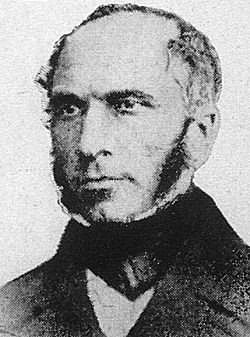
Henry Darcy
Henry Philibert Gaspard Darcy was a pioneering French engineer renowned for his significant contributions to hydraulics, notably Darcy's law, which describes the flow in porous media. Born in Dijon on June 10, 1803, Darcy excelled in his engineering career, implementing a pressurized water system for Dijon and modifying the Prony equation, leading to the Darcy-Weisbach equation. He also advanced the design of the Pitot tube and held prominent roles such as Chief Engineer and Chief Director for Water and Pavements in Paris. His work laid foundational principles still utilized in hydrogeology today, with the unit of permeability, the darcy, named in his honor.
Darcy was born to a family in Dijon, France, and despite the early death of his father in 1817, his mother supported his education by borrowing funds for his tutors.
Darcy Surname Meaning, Origin, and History
The surname "Darcy" originates from the Norman barony of Arcy in what is now Northern France and gained popularity in England following the Norman conquest. It is also used as an anglicization for the Gaelic surname Ó Dorchaidhe. While primarily a surname, Darcy has some popularity as a given name and has inspired derived names like Darcene.
VIEW MOREWhere to Find Genealogy Records for Darcy
We’ve analyzed YourRoots tree and records data to uncover where genealogists are finding key sources such as census, birth certificates, marriage records, and obituaries for the Darcy family. Explore our most popular genealogy record sources for the Darcy surname to learn more.
VIEW MOREAbout YourRoots
Explore your family tree geographically
Import your GEDCOM file to transform your family tree into an interactive global map. See your roots laid out visually and understand your true geographic heritage.
Powerful tools like "Trace Back To Me" instantly map your family's migration paths from a chosen ancestor all the way back to you.
Discover ancestors beyond "end-of-line" automatically
Import your family tree and let AI expand it for you. AI Ancestor Finder scans "end-of-line" ancestors to uncover their parents across hundreds of family lines at once. AI Deep Research analyzes selected ancestors and family clusters, suggesting relevant records and next steps.
Turn on Auto Research Mode to get new discoveries daily or weekly, so your tree keeps growing even while you're away.
Find more DNA matches across all DNA tests
Combine your DNA data with your family tree to unlock the full power of YourRoots DNA Match. Connect with relatives across major testing services — Ancestry, 23andMe, MyHeritage, and more.
View your matches' maps and trees to identify shared ancestors, and soon you'll be able to add them directly to your own tree and map.
Ancestry DNA analysis that goes deeper than others
Unlock exclusive reports that reveal your deeper origins.
- Deep Ancestry Report — Analyze 130+ ethnicities, sub-regions, and 1,800+ communities in one detailed view.
- Global & Native American Reports — Developed with Stanford researchers to uncover hidden ancestries across all 22 chromosomes.
- Ancient DNA Series — Compare your DNA with 1,000+ ancient genomes from Viking, Celtic, and early American civilizations.
Sign up to explore more
Create a free account to navigate family trees, view ancestors, and discover connections.
Coming Soon
We're actively working on many new features for YourRoots. Features marked v2 are ones we're planning to launch soon.
Have a particular feature request? Let us know below!