
Sign up to explore more
Create a free account to navigate family trees, view ancestors, and discover connections.
Sign up to explore more
Create a free account to navigate family trees, view ancestors, and discover connections.
Fay Family Genealogy & History
Discover the Global Legacy of the Fay Surname
The surname Fay is a fascinating example of a name with dual origins, arising independently in both France and Ireland. From the French perspective, Fay may have originated from the Norman surname "de Fae," which itself has several interpretations. It might be locational, linked to areas rich in beech trees, or it could derive from words meaning magical or faithful. In Ireland, the name Fay is an Anglicized version of the Gaelic surnames Ó Fiaich and Ó Fathaigh, signifying descendants of individuals with names meaning 'raven' or 'foundation'. This rich tapestry of meanings reflects the multifaceted roots of the Fay family tree.
Over centuries, the Fay surname has evolved and spread through various regions. The French-Norman origin of Fay entered England and Ireland during the Norman conquests of the 12th and 13th centuries. In Ireland, the Norman-derived variant of Fay became most common in Westmeath, Cavan, and Monaghan. Meanwhile, the Irish Gaelic forms emerged independently, adding to the cultural complexity of the Fay genealogy. As families moved and settled across different areas, their names adapted, resulting in a diverse array of Fay records and branches.
YourRoots dataset confirms the early presence of the Fay surname in England from the 12th century, aligning with historical accounts of its introduction during the Norman period. By the 16th century, the Fay name had established itself significantly in England, with family branches expanding their influence. The 17th century marked a period of migration, particularly to the Americas, contributing to the global spread of the Fay family tree. These insights enrich our understanding of how the Fay surname has adapted and endured over time.
Today, Fay genealogy records reveal a surname that has traversed continents, with significant populations in the United States and other regions. The YourRoots database offers a wealth of resources for those interested in tracing their Fay heritage, providing a valuable tool for genealogy enthusiasts seeking to connect with their family roots and explore the intricate lineage of the Fay family.
Find the Fay Family Tree
Search more Fay trees & genealogy records
Records
-
HFHarriet Eleanor Fay1829–1924Public Tree Person5 treesScore: AHFHarriet Eleanor Fay1829–1924Public Tree Person5 treesScore: A
-
JFJonathan Fay1724–1800Public Tree Person5 treesScore: AJFJonathan Fay1724–1800Public Tree Person5 treesScore: A
-
EFEthel May Fay1893–1979Individual Tree PersonParents: Francis Fay & Ada ForttScore: AEFEthel May Fay1893–1979Individual Tree PersonParents: Francis Fay & Ada ForttScore: A
-
FFFrank Raymond Fay1929–1999Individual Tree PersonParents: Francis Fay & Mary MandevilleScore: AFFFrank Raymond Fay1929–1999Individual Tree PersonParents: Francis Fay & Mary MandevilleScore: A
-
FFFlorence E Yankey Fay1908–1985Individual Tree PersonParents: Harvey Yankee & Grace KirkScore: AFFFlorence E Yankey Fay1908–1985Individual Tree PersonParents: Harvey Yankee & Grace KirkScore: A
-
SFSamuel Howard Fay1804–1847Individual Tree PersonParents: Samuel Fay & Harriet HowardSpouse: Susan FayChildren: Harriet, Clara, William, Susan, AnnScore: ASFSamuel Howard Fay1804–1847Individual Tree PersonParents: Samuel Fay & Harriet HowardSpouse: Susan FayChildren: Harriet, Clara, William, Susan, AnnScore: A
-
MFMaude Belle Fay1887–1986Individual Tree PersonSpouse: Ralph BastianChildren: Kenneth, RalphScore: AMFMaude Belle Fay1887–1986Individual Tree PersonSpouse: Ralph BastianChildren: Kenneth, RalphScore: A
-
SFSarah Ann Fay1875–1950Individual Tree PersonParents: James Reed & Nancy ReedSpouse: George FayChildren: Mabel, Dessie, MabelScore: ASFSarah Ann Fay1875–1950Individual Tree PersonParents: James Reed & Nancy ReedSpouse: George FayChildren: Mabel, Dessie, MabelScore: A
-
JFJames L Fay1863–1948Individual Tree PersonParents: luke Fay & Mary BrannenSpouse: Mary CrieghtonChildren: Charles, MaryScore: AJFJames L Fay1863–1948Individual Tree PersonParents: luke Fay & Mary BrannenSpouse: Mary CrieghtonChildren: Charles, MaryScore: A
-
MFMildred T Fay1924–2014Individual Tree PersonParents: Thomas Fay & Annetta SedoreScore: AMFMildred T Fay1924–2014Individual Tree PersonParents: Thomas Fay & Annetta SedoreScore: A
-
FFFrank Michael Fay1892–1943Individual Tree PersonParents: Michael Fay & Catharine DoughertyScore: AFFFrank Michael Fay1892–1943Individual Tree PersonParents: Michael Fay & Catharine DoughertyScore: A
-
HFHerbert C Fay1906–1968Individual Tree PersonParents: John Fay & Mary QuigleySpouse: Josephine FayScore: AHFHerbert C Fay1906–1968Individual Tree PersonParents: John Fay & Mary QuigleySpouse: Josephine FayScore: A
-
MFMarjorie Dean Fay1910–1996Individual Tree PersonSpouse: Gilbert SweetScore: AMFMarjorie Dean Fay1910–1996Individual Tree PersonSpouse: Gilbert SweetScore: A
-
SFSamuel Howard Fay1804–1847Individual Tree PersonParents: Samuel Fay & Harriet HowardSpouse: Susan ShellmanChildren: HarrietScore: ASFSamuel Howard Fay1804–1847Individual Tree PersonParents: Samuel Fay & Harriet HowardSpouse: Susan ShellmanChildren: HarrietScore: A
-
LFLevy L Fay1904–1987Individual Tree PersonParents: James Foy & Ellen FoySpouse: Willie FayChildren: Betty, DorothyScore: ALFLevy L Fay1904–1987Individual Tree PersonParents: James Foy & Ellen FoySpouse: Willie FayChildren: Betty, DorothyScore: A
-
JFJudge Fay1748–1831Individual Tree PersonParents: Ebenezer Fay & Thankful HYDESpouse: Sarah FayChildren: ElizabethScore: AJFJudge Fay1748–1831Individual Tree PersonParents: Ebenezer Fay & Thankful HYDESpouse: Sarah FayChildren: ElizabethScore: A
-
JFJosephine Tyson Fay1912–1994Individual Tree PersonParents: Rev. Tyson & Annie TysonScore: AJFJosephine Tyson Fay1912–1994Individual Tree PersonParents: Rev. Tyson & Annie TysonScore: A
-
RFRobert Henry Fay1914–2003Individual Tree PersonParents: Frank JrScore: ARFRobert Henry Fay1914–2003Individual Tree PersonParents: Frank JrScore: A
-
gfgeorge walter fay1869–1943Individual Tree PersonParents: Norman Fay & mary waySpouse: Bertha CorayChildren: marjorie, Albert, NormanScore: Agfgeorge walter fay1869–1943Individual Tree PersonParents: Norman Fay & mary waySpouse: Bertha CorayChildren: marjorie, Albert, NormanScore: A
-
EFElizabeth Fay1777–1829Individual Tree PersonParents: Jude Fay & Sarah FairbanksSpouse: Joel NorcrossChildren: Emily, Alfred, Austin, Eli, Hiram, Joel, Lavinia, Mary, Nancy, WilliamScore: AEFElizabeth Fay1777–1829Individual Tree PersonParents: Jude Fay & Sarah FairbanksSpouse: Joel NorcrossChildren: Emily, Alfred, Austin, Eli, Hiram, Joel, Lavinia, Mary, Nancy, WilliamScore: A
Search more trees & records for
Fay for free
Tracing Your Fay Family Lineage
Origin of the Fay Family: Where does the Fay surname come from?
The Fay surname first appears in records originating from England during the early 12th century, marking the beginning of its genealogical lineage. This early mention connects to the foundational roots of the family, illustrating how the Fay name emerged within the context of medieval England. As families began to establish their identities, the Fay surname became a part of the tapestry of English heritage.
Genealogy and Early Family History of Fay
Throughout subsequent centuries, the Fay family began to spread, primarily within England, as they established their foothold in various regions. The YourRoots database reveals that during the 16th century, the surname gained significant traction, particularly in England, where family branches started to form and develop. These early families contributed to the evolving narrative of the Fay lineage as they settled in different areas and expanded their family trees.
In the 17th century, the dispersion of the Fay family intensified, with many members immigrating, particularly to the Americas. This migration resulted in the establishment of new branches of the family tree, which further enriched the Fay heritage and allowed for a diverse development of the surname across the ocean. The expansion into new territories signaled a pivotal moment in the genealogy of the Fay family, as they adapted to new environments while preserving their legacy.
Tracing the Fay Family Tree Through the Centuries
The evolution of the Fay surname can be traced across various regions throughout the centuries, reflecting a remarkable journey of growth and adaptation. In the 18th century, the family saw a notable increase in presence within the United States, marking a significant shift from its English origins. As the Fay family continued to thrive, they established roots in different parts of North America and beyond into the 19th and early 20th centuries.
During the 19th century, the surname gained considerable recognition in the United States, where numerous families with the Fay name contributed to the fabric of American society. By the early 20th century, the Fay family had spread further afield, with branches likely established in various countries, showcasing the global nature of their lineage. This expansion illustrates the interconnectedness of the Fay family history, demonstrating how they have woven themselves into diverse communities worldwide.
Where to Find Fay Genealogy Records Today
In modern centuries, the Fay surname continues to be prevalent, with significant populations found in the United States and other regions worldwide. The 20th and 21st centuries have seen an ongoing interest in genealogy, allowing descendants to explore their Fay heritage and connect with their family roots. For those looking to delve deeper into their own family connections, the YourRoots database offers a wealth of resources to trace and expand upon the rich
Famous People with Fay (and Their Family Tree)

Dorothy Fay
Dorothy Fay, born Dorothy Alice Fay Southworth, was a celebrated American actress, renowned for her roles in Western movies during the late 1930s and early 1940s. She starred alongside famous Western icons like Buck Jones and William Elliott and appeared in films such as "Song of the Buckaroo" and "Sundown on the Prairie" with her husband, Tex Ritter. Fay also participated in the acclaimed MGM film "The Philadelphia Story." Her career was marked by a transition into retirement after her marriage in 1941, yet she remained connected to the entertainment world through public appearances and her involvement with the Grand Ole Opry.
Dorothy Fay was born in Prescott, Arizona, to parents Harry T. Southworth, a medical doctor, and Harriet Fay Fox. She pursued her education at the University of Southern California and the Royal Academy of Dramatic Art in London, reflecting a strong academic background that complemented her acting career. Fay's roots in Prescott remained important throughout her life, as she chose to be interred alongside her parents at Mountain View Cemetery in her hometown.
Meagen Fay
Meagen Fay is a distinguished American actress celebrated for her diverse roles in television. Known for her portrayal of Roxy in "Ohara" (1987–1988) and Principal Halloron in "Life with Louie" (1995–1998), Fay has made significant contributions to the entertainment industry. Her career includes memorable performances as Gretchen Mannkusser in "Malcolm in the Middle" (2002–2004) and Rhonda in "Loot" (2022). With a career that began at Chicago's The Second City, she has appeared in numerous TV shows like "Seinfeld," "Gilmore Girls," and "Two and a Half Men." Meagen Fay made her directorial debut with "Kunstler" at the 59 East 59 Theaters in Manhattan, showcasing her multifaceted talent.

Bill Fay
Bill Fay, an influential English singer-songwriter, left an indelible mark on the music world with his thought-provoking compositions. Born on September 9, 1943, Fay gained initial recognition with his early albums, "Bill Fay" (1970) and "Time of the Last Persecution" (1971), released under the Deram label. Despite being dropped by the label, his work experienced a resurgence in the 1990s, gaining cult status. Fay's triumphant return to music saw the release of several acclaimed albums, including "Life Is People" (2012) and "Who Is the Sender?" (2015). His legacy is celebrated through numerous covers by artists like Wilco and The War on Drugs, underscoring his enduring influence on contemporary music.

Sidney Bradshaw Fay
Sidney Bradshaw Fay, an eminent American historian born on April 13, 1896, in Washington, D.C., is celebrated for his influential work on the causes of World War I. His groundbreaking book, "The Origins of the World War" (1928), challenged the prevailing narrative by suggesting that blame for the war was not solely on Germany, but also on the Allies, particularly Russia and Serbia. Fay, a Harvard alumnus, taught at prestigious institutions such as Dartmouth, Smith, Harvard, and Yale. His research emphasized the impact of secret alliances and other geopolitical factors on the war's outbreak. Fay's contributions to historical scholarship earned him membership in the American Academy of Arts and Sciences and the American Philosophical Society.
Paul B. Fay
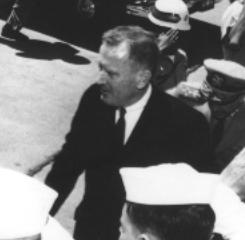
Paul B. Fay Jr. (1918–2009) was a prominent figure in U.S. naval history and politics, known for his role as Acting United States Secretary of the Navy in November 1963 and as a close confidant of President John F. Kennedy. Fay's notable achievements include his service in the U.S. Navy during World War II, where he earned a Bronze Star, and his contribution to Kennedy's political campaigns. He was appointed Undersecretary of the Navy during Kennedy's presidency and authored the best-seller "The Pleasure of His Company" about his friendship with Kennedy. Fay also had a successful career in business, founding William Hutchinson & Co and serving as a director and trustee for various organizations.
Paul B. Fay Jr. was born in San Francisco, California, and after completing his education at The Thacher School and Stanford University, he worked for his father's construction firm, Fay Improvement Co. He married Anita Marcus in 1946, and they had three children: Katherine Fay, Paul Fay III, and Sally Fay Cottingham. The family maintained connections to the San Francisco area, where Fay later passed away in Woodside, California.
Fay Surname Meaning, Origin, and History
The surname "Fay" has origins in both Ireland and France. In France, it may derive from the Norman "de Fae," linked to locations with beech trees or meanings of enchantment and loyalty. In Ireland, it can be an Anglicization of Gaelic surnames like Ó Fiaich or Ó Fathaigh, meaning "descendant of Fiach" or "descendant of Fathadh," respectively. The name was introduced to Ireland through Norman influence in the 12th and 13th centuries.
VIEW MOREWhere to Find Genealogy Records for Fay
We’ve analyzed YourRoots tree and records data to uncover where genealogists are finding key sources such as census, birth certificates, marriage records, and obituaries for the Fay family. Explore our most popular genealogy record sources for the Fay surname to learn more.
VIEW MOREAbout YourRoots
Explore your family tree geographically
Import your GEDCOM file to transform your family tree into an interactive global map. See your roots laid out visually and understand your true geographic heritage.
Powerful tools like "Trace Back To Me" instantly map your family's migration paths from a chosen ancestor all the way back to you.
Discover ancestors beyond "end-of-line" automatically
Import your family tree and let AI expand it for you. AI Ancestor Finder scans "end-of-line" ancestors to uncover their parents across hundreds of family lines at once. AI Deep Research analyzes selected ancestors and family clusters, suggesting relevant records and next steps.
Turn on Auto Research Mode to get new discoveries daily or weekly, so your tree keeps growing even while you're away.
Find more DNA matches across all DNA tests
Combine your DNA data with your family tree to unlock the full power of YourRoots DNA Match. Connect with relatives across major testing services — Ancestry, 23andMe, MyHeritage, and more.
View your matches' maps and trees to identify shared ancestors, and soon you'll be able to add them directly to your own tree and map.
Ancestry DNA analysis that goes deeper than others
Unlock exclusive reports that reveal your deeper origins.
- Deep Ancestry Report — Analyze 130+ ethnicities, sub-regions, and 1,800+ communities in one detailed view.
- Global & Native American Reports — Developed with Stanford researchers to uncover hidden ancestries across all 22 chromosomes.
- Ancient DNA Series — Compare your DNA with 1,000+ ancient genomes from Viking, Celtic, and early American civilizations.
Sign up to explore more
Create a free account to navigate family trees, view ancestors, and discover connections.
Coming Soon
We're actively working on many new features for YourRoots. Features marked v2 are ones we're planning to launch soon.
Have a particular feature request? Let us know below!